 Woyɛ dino bɛn? Nsɛmmisa agoro
 Dino ko
 Dino mmirikatuo
 Dino agodie nketewa
 Stika nwoma
 Dino TOP nhyehyɛeɛ
 Ma me nwanwa!
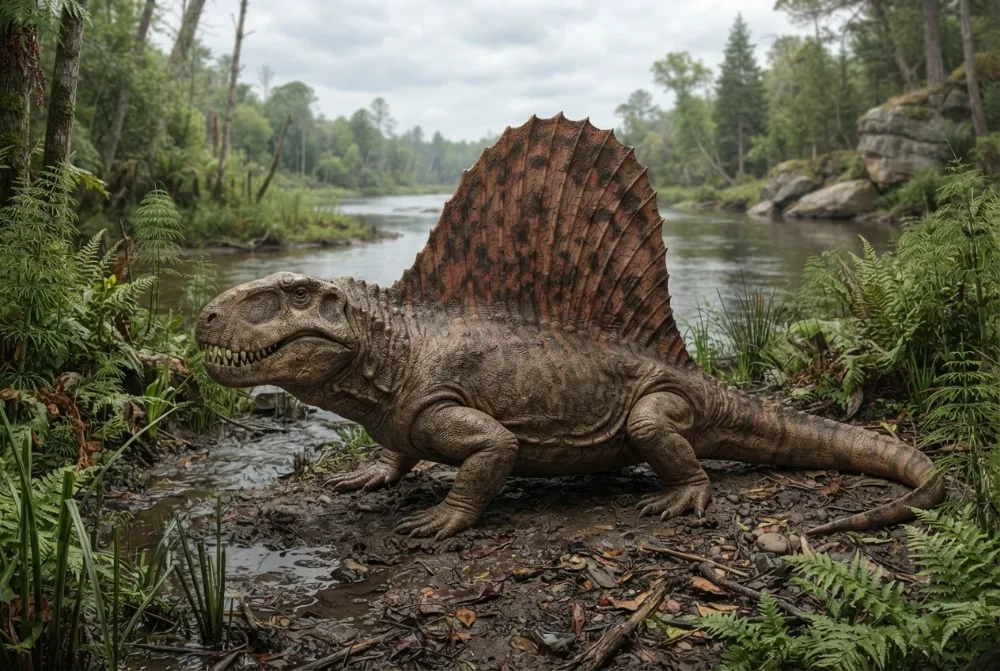
Dimetrodon
Dimetrodon was a fierce predator that lived long before the first dinosaurs. It had a big sail on its back made of long spines, and it is actually more closely related to mammals like us than to dinosaurs.12
Berɛ bɛn na ɛtenaa ase?
Na ne kɛseɛ yɛ sɛn?
Na ne tenten yɛ sɛn?
Na ne mu yɛ duru sɛn?
 ne tenten te sɛ nkraman 5 firi hwene kɔsi dua🍌ne tenten te sɛ kwadu 26 a wɔde abɔ toatoa so🍉ne mu duru te sɛ watamɛlɔn 50🧸ne mu duru te sɛ nkɔkɔaa sukuu mmofra 13🎒ne mu duru te sɛ sukuu mmofra 8🏃anka ɔbɛtumi atu mmirika mita 100 wɔ sikɛn 18 mu (onipa a ɔyɛ ntɛm sen biara hia 9.6)
Dimetrodon kɛseɛ yɛ sɛn sɛ wode toto WO ho a?
Akontaa nko ara wɔ wo browser mu. Yɛnkora biribiara so, na yɛmmfa biribiara nkɔ baabiara.
Na ɛyɛ ntɛm sɛn?


Nsɛm a ɛyɛ anigye
Dimetrodon is often mistaken for a dinosaur, but it is actually a synapsid, meaning it is more closely related to mammals than to reptiles.12
The sail on its back was made of very long bones from its spine, and scientists think it might have been used to attract mates or scare off rivals.1
Dimetrodon had different-sized teeth in its jaws, including sharp fangs, which helped it eat a variety of prey.1
It lived during the Permian Period, about 40 million years before the first dinosaurs appeared.1
Fossils show that Dimetrodon sometimes ate other animals that were hiding in burrows during droughts.1
Another sail-backed animal called Edaphosaurus lived at the same time, but it was a plant-eater and its sail evolved separately.2
Nsɛm a wɔbisa bebree fa Dimetrodon ho
?Is Dimetrodon a dinosaur?
No, Dimetrodon is not a dinosaur. It is a synapsid, which means it is more closely related to mammals (including humans) than to reptiles or dinosaurs.12
?How big was Dimetrodon?
Most Dimetrodon species were 1.7 to 4.6 metres (5.6 to 15.1 feet) long and weighed 28 to 250 kilograms (62 to 551 pounds).1
?What did Dimetrodon eat?
Dimetrodon was a carnivore that ate fish, amphibians, reptiles, and other land animals. It was probably the top predator of its time.1
?When did Dimetrodon live?
Dimetrodon lived during the Permian Period, about 294 to 271 million years ago. That is about 40 million years before the first dinosaurs appeared.1
?Why did Dimetrodon have a sail?
Scientists think the sail was mostly used for courtship display, like showing off to mates or scaring rivals. It may also have helped warm up the body, but that is not its main purpose.1
?How fast could Dimetrodon run?
Probably up to about 20 km/h (12 mph), about as fast as a grown-up riding a bike. This is an estimate: nobody knows for sure. Dimetrodon walked on four sprawling legs, a bit like a Komodo dragon.1
?Could Dimetrodon swim?
Dimetrodon lived on land, but it may have hunted in shallow water. Its bone structure shows it was mostly terrestrial, not a strong swimmer.1
?Where did Dimetrodon live?
Most Dimetrodon fossils have been found in the southwestern United States, especially Texas and Oklahoma. Some have also been found in Germany.1
?Did Dimetrodon have feathers?
No, Dimetrodon did not have feathers. It was a reptile-like synapsid with scaly skin, not related to birds.1
Ma dino ho animdefoɔ
- Nyansahu din
- Dimetrodon
- Obi a ɔtoo din
- Cope 18783
- Kuo
- Tete abakɔsɛm mmoa
- Abusua / kuo kɛseɛ
- Sphenacodontidae3
- Nkyekyɛmu
- Synapsida > Sphenacodontia > Sphenacodontidae3
- Abotan no mfeɛ
- mfeɛ ɔpepem 299 kɔsi 267 (Asselian / Roadian)3
- Abotan nhyehyɛeɛ
- Vale, Arroyo, Belle Plains3
- Aman
- Amerika, Kanada, Gyaaman3
- Fɔsil nkyerɛwee
- 94 wɔ The Paleobiology Database mu3
- Nhunumu
- Dimetrodon was named by the American paleontologist Edward Drinker Cope in 1878, based on fossils found in Texas.13
- Wɔda so gye ho akyinnye
- Scientists still debate whether the sail of Dimetrodon was mainly used for temperature control, display, or something else.1
Baabi a nsɛm no firi
- Dimetrodon (en.wikipedia.org)
- Dimetrodon Is Not a Dinosaur: Using Tree Thinking to Understand the Ancient Relatives of Mammals and their Evolution | Evolution: Education and Outreach | Springer Nature Link (link.springer.com)
- Dimetrodon in The Paleobiology Database (CC BY 4.0): mfeɛ, mmeaeɛ, abotan nhyehyɛeɛ, nkyekyɛmu.
Asɛm biara a ɛwɔ krataafa yi so wɔ nɔma a ɛkyerɛ baabi a ɛfiri. Sɛ yɛfom biribi a, kafra, yɛyɛ dino dɔfoɔ, yɛnyɛ nyansahu nsɛmma krataa. Ka kyerɛ yɛn wɔ [email protected] na yɛbɛsiesie.
 Ɔkɔm de Rex! Dino Wiki yɛ agya bi adwuma a ɔyɛɛ maa ne babarima a ɔdɔ dino. Ɛyɛ kwa, dawurubɔ biara nni mu, akyidifoɔ biara nni mu. Mpanimfoɔ bɛtumi ama Rex aduane kakra, na aboa ama Dino Wiki atena intanɛt so.Ma Rex aduane
 Megalodon
 Sabre-toothed cat
 Woolly mammoth
 Arthropleura
 Helicoprion
 Deinosuchus