 Які ты дыназаўр? Тэст
 Бітва дыназаўраў
 Гонка дыназаўраў
 Міні-гульні пра дыназаўраў
 Альбом налепак
 ТОП-спісы дыназаўраў
 Здзіві мяне!
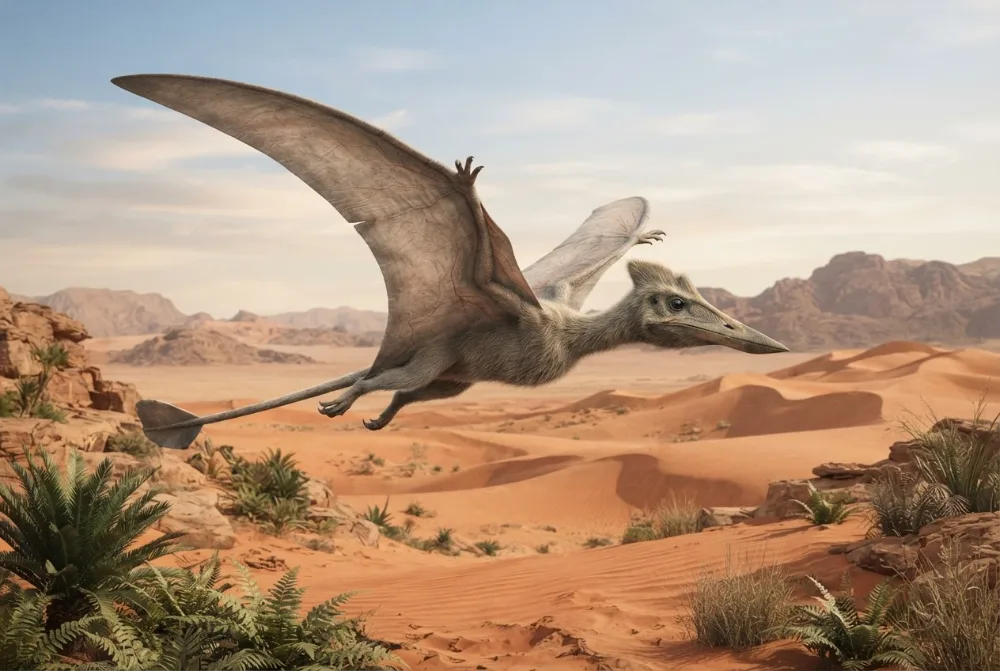
Caelestiventus
Caelestiventus was a flying reptile that lived in a hot desert during the Late Triassic, about 205 million years ago. It was one of the biggest pterosaurs of its time, with a wingspan over 1.5 meters (5 feet). Unlike most early pterosaurs, which are found in marine rocks, this one lived among sand dunes.21
Калі ён жыў?
Які ён быў вялікі?
Які ў яго быў размах крылаў?
 даўжынёй як 3 хатніх котак ад носа да хваста⚽мог бы пераляцець цэлае футбольнае поле за 7,3 с
Наколькі вялікім быў Caelestiventus у параўнанні з ТАБОЙ?
Толькі матэматыка ў тваім браўзеры. Нічога не захоўваецца і нікуды не адпраўляецца.
Наколькі ён быў хуткі?


Цікавыя факты
Caelestiventus is the only known desert-dwelling non-pterodactyloid pterosaur, and it is 65 million years older than any other desert pterosaur.21
Its skull was 17.8 centimeters (7 inches) long, and most of the skull bones were preserved in three dimensions, not squashed flat like most Triassic pterosaur fossils.1
The lower jaw of Caelestiventus was hollow and air-filled, with large openings that may have helped reduce weight for flight.1
It had three different kinds of teeth: long fang-like spikes at the front, large leaf-shaped blades, and tiny blades further back.1
The only known fossil includes most of the skull and the last finger bone of the wing, which supported the wingtip.1
Caelestiventus is closely related to Dimorphodon, a pterosaur from the Early Jurassic of Britain.21
The quarry where it was found also contained bones of crocodile-like reptiles, lizards, and small meat-eating dinosaurs.1
Пра што найчасцей пытаюцца: Caelestiventus
?Was Caelestiventus a dinosaur?
No, Caelestiventus was a pterosaur, a flying reptile, not a dinosaur.13
?How big was Caelestiventus?
It had a wingspan of at least 1.5 meters (4.9 feet) and a skull 17.8 centimeters (7 inches) long. It was one of the largest Triassic pterosaurs, and the only known specimen was not fully grown.1
?What did Caelestiventus eat?
Scientists are not sure, but its three kinds of teeth (fang-like spikes, leaf-shaped blades, and tiny blades) suggest it ate different foods, possibly insects or small animals.1
?Did Caelestiventus have feathers?
No, it did not have feathers. Like most pterosaurs, it was covered in small hair-like structures called pycnofibers.3
?When did Caelestiventus live?
It lived during the Late Triassic Period, about 205 million years ago.1
?Where was Caelestiventus found?
It was discovered in the Saints & Sinners Quarry in northeastern Utah, USA, in fossilized sand dunes.1
Для знаўцаў дыназаўраў
- Навуковая назва
- Caelestiventus
- Назву даў
- Britt et al. 20184
- Група
- Лятучыя рэптыліі
- Сямейства / клада
- Dimorphodontidae4
- Класіфікацыя
- Pterosauria4
- Узрост парод
- ад 237 да 175 мільёнаў гадоў (Carnian / Toarcian)4
- Горныя пароды
- Nugget Sandstone4
- Краіны
- ЗША4
- Знаходкі выкапняў
- 1 у базе The Paleobiology Database4
- Адкрыццё
- The fossil was discovered in 2007 by Dan Chure and George Engelmann in the Nugget Sandstone of Utah. It was named in 2018 by Britt and colleagues, honoring Robin Hansen, a geologist who helped with the excavation.14
- Навукоўцы яшчэ спрачаюцца
- Scientists are not sure if the hollow spaces in its skull and jaw were used for storing food, for making sounds, or for display.1
Адкуль бяруцца факты
- Caelestiventus (en.wikipedia.org)
- Caelestiventus hanseni gen. et sp. nov. extends the desert-dwelling pterosaur record back 65 million years | Nature Ecology & Evolution (nature.com)
- Caelestiventus hanseni - BYU Geology (geology.byu.edu)
- Caelestiventus in The Paleobiology Database (CC BY 4.0): узрост, месцы, горныя пароды, класіфікацыя.
Кожны факт на гэтай старонцы мае нумар, які паказвае на яго крыніцу. Калі мы нешта пераблыталі, прабач, мы фанаты дыназаўраў, а не навуковы часопіс. Напішы нам на [email protected], і мы ўсё выправім.
 Рэкс галодны! Dino Wiki зрабіў тата для свайго сына, які любіць дыназаўраў. Сайт бясплатны, без рэкламы і без трэкераў. Дарослыя могуць пачаставаць Рэкса, каб сайт і далей працаваў.Пакарміць Рэкса
 Pteranodon
 Quetzalcoatlus
 Dorygnathus
 Rhamphorhynchus
 Anhanguera
 Pterodactylus
 Nothosaurus
 Massospondylus
 Plateosaurus
 Coelophysis
 Podokesaurus
 Simosaurus