 Які ты дыназаўр? Тэст
 Бітва дыназаўраў
 Гонка дыназаўраў
 Міні-гульні пра дыназаўраў
 Альбом налепак
 ТОП-спісы дыназаўраў
 Здзіві мяне!
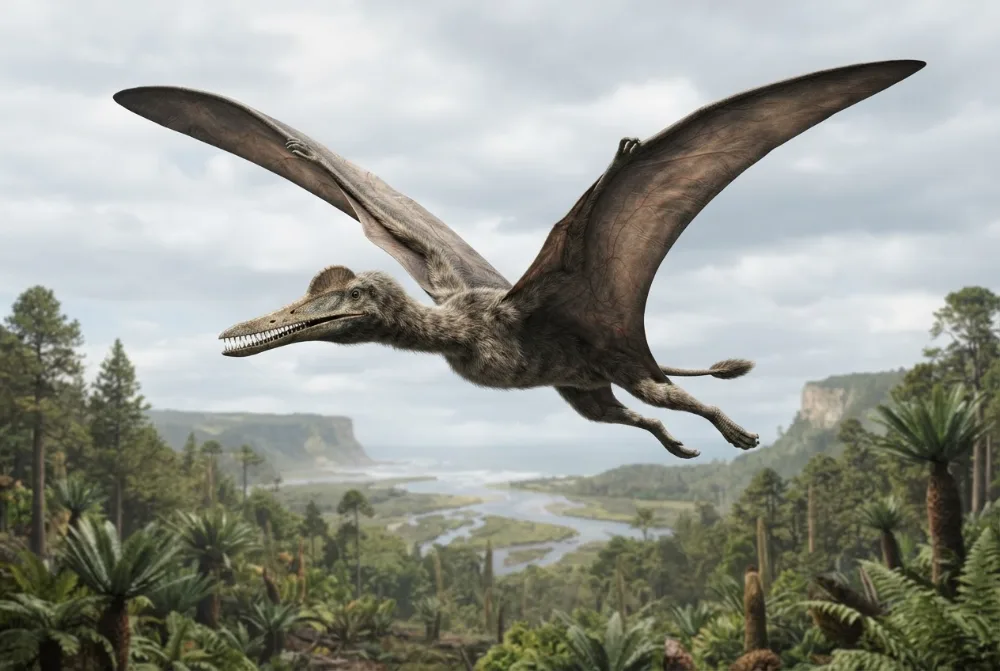
Caupedactylus
Caupedactylus was a flying reptile with a big, thin crest on its head. It had no teeth and used its beak to eat fruit. It lived about 110 million years ago in what is now Brazil.13
Калі ён жыў?
Які ён быў вялікі?
Які ў яго быў размах крылаў?
 крылы шырынёй як 2 ровараў у рад⚽мог бы пераляцець цэлае футбольнае поле за 6,5 с
Наколькі вялікім быў Caupedactylus у параўнанні з ТАБОЙ?
Толькі матэматыка ў тваім браўзеры. Нічога не захоўваецца і нікуды не адпраўляецца.
Наколькі ён быў хуткі?


Цікавыя факты
Caupedactylus had a wingspan of about 3.3 metres (11 feet), making it the largest known tapejarine pterosaur.1
Its skull was about 46 centimetres long and had a large, rounded crest that was only half a millimetre thick at the top.1
The tip of its snout curved downward, and its upper jaw had a slightly concave lower edge.1
The crest on its snout had grooves that may have held blood vessels, possibly helping with temperature control.2
Its lower jaw had a thick, slightly convex surface at the rear, and when closed it fit tightly against the upper jaw with no gap.1
The holotype specimen (MN 4726-V) is an adult, which is rare for pterosaurs from this formation.1
Пра што найчасцей пытаюцца: Caupedactylus
?What did Caupedactylus eat?
It ate fruit. Its beak had no teeth, and the Paleobiology Database lists it as a volant frugivore, meaning a flying fruit-eater.3
?How big was Caupedactylus?
Its wingspan was about 3.3 metres, making it the largest known tapejarine pterosaur. Its skull was about 46 centimetres long.1
?When did Caupedactylus live?
It lived about 110 million years ago, during the Early Cretaceous period (Albian stage).1
?Where was Caupedactylus found?
Its fossils were found in the Romualdo Formation of the Araripe Basin in northeastern Brazil.1
Для знаўцаў дыназаўраў
- Навуковая назва
- Caupedactylus
- Назву даў
- Kellner 20133
- Група
- Лятучыя рэптыліі
- Сямейства / клада
- Tapejaridae3
- Класіфікацыя
- Pterosauria > Pterodactyloidea3
- Узрост парод
- ад 120 да 113 мільёнаў гадоў (Aptian)3
- Горныя пароды
- Crato3
- Краіны
- Бразілія3
- Знаходкі выкапняў
- 1 у базе The Paleobiology Database3
- Адкрыццё
- Caupedactylus was named and described by Alexander Kellner in 2013 based on a partial skeleton found in the Romualdo Formation of Brazil.13
- Навукоўцы яшчэ спрачаюцца
- Scientists are still debating whether the bones in the front of the palate are part of the palatine bones or the maxillae.1
Адкуль бяруцца факты
- Caupedactylus (en.wikipedia.org)
- A new unusual tapejarid (Pterosauria, Pterodactyloidea) from the Early Cretaceous Romualdo Formation, Araripe Basin, Brazil (cambridge.org)
- Caupedactylus in The Paleobiology Database (CC BY 4.0): узрост, месцы, горныя пароды, класіфікацыя.
Кожны факт на гэтай старонцы мае нумар, які паказвае на яго крыніцу. Калі мы нешта пераблыталі, прабач, мы фанаты дыназаўраў, а не навуковы часопіс. Напішы нам на [email protected], і мы ўсё выправім.
 Рэкс галодны! Dino Wiki зрабіў тата для свайго сына, які любіць дыназаўраў. Сайт бясплатны, без рэкламы і без трэкераў. Дарослыя могуць пачаставаць Рэкса, каб сайт і далей працаваў.Пакарміць Рэкса
 Pteranodon
 Quetzalcoatlus
 Dorygnathus
 Rhamphorhynchus
 Anhanguera
 Pterodactylus
 Stegosaurus
 Iguanodon
 Archaeopteryx
 Giganotosaurus
 Microraptor
 Deinonychus