 Які ты дыназаўр? Тэст
 Бітва дыназаўраў
 Гонка дыназаўраў
 Міні-гульні пра дыназаўраў
 Альбом налепак
 ТОП-спісы дыназаўраў
 Здзіві мяне!
Iberomesornis
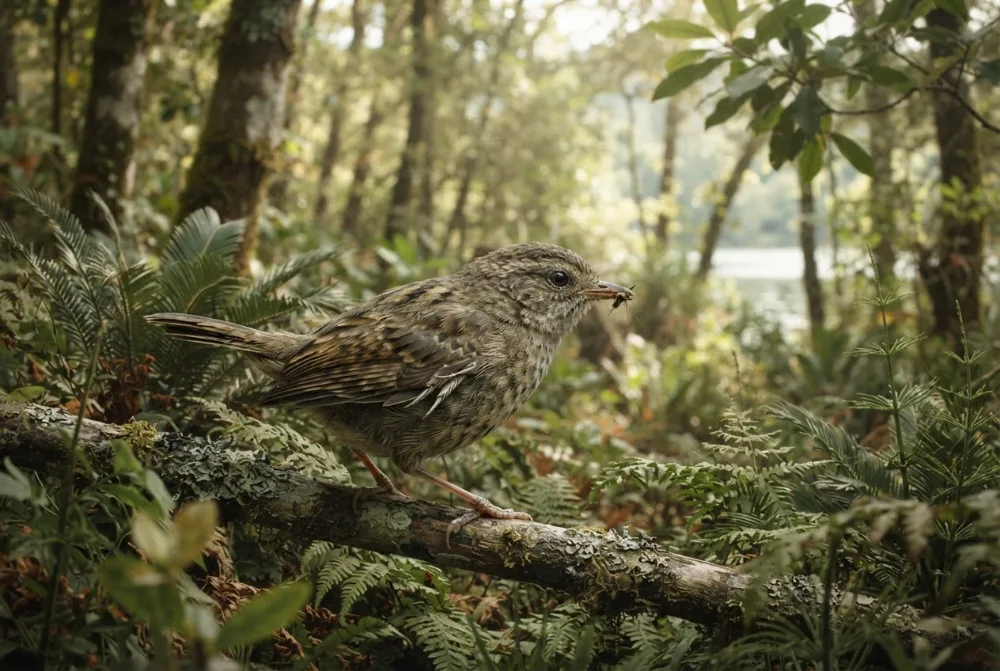
Iberomesornis was a tiny bird that lived about 125 million years ago in what is now Spain. It was no bigger than a sparrow and fluttered through warm forests near lakes, snatching insects. It was an early bird, but not a dinosaur like T. rex, it was a type of bird called an enantiornithine.1
Калі ён жыў?
Які ён быў вялікі?
Якой ён быў даўжыні?
Колькі ён важыў?
Наколькі вялікім быў Iberomesornis у параўнанні з ТАБОЙ?
Толькі матэматыка ў тваім браўзеры. Нічога не захоўваецца і нікуды не адпраўляецца.
Наколькі ён быў хуткі?


Цікавыя факты
Iberomesornis had a single claw on each wing, which is unusual for modern birds.1
Its tail was short and ended in a pygostyle, a fused bone that supports tail feathers, making it more advanced than Archaeopteryx.1
It had strong, clawed feet for perching on branches, with long curved toes and a special toe that helped it grip.1
The fossil was found in rocks that were once a forest around a lake, with a warm climate and a dry season.1
Its ribcage did not have bony uncinate processes, but scientists think it had cartilage there instead.1
Iberomesornis is one of the earliest known enantiornithine birds, a group that lived alongside dinosaurs.1
Пра што найчасцей пытаюцца: Iberomesornis
?How big was Iberomesornis?
It was tiny, no bigger than a large modern sparrow. Its wingspan was about 20 centimetres (8 inches) and it weighed 15 to 20 grams (0.5 to 0.7 ounces).1
?What did Iberomesornis eat?
Nobody knows for sure because its skull has not been found. It probably hunted insects and other small animals, catching them in the air or from the ground.1
?Could Iberomesornis fly?
Yes, it could flap its wings and fly. A 2025 study found that it had strong muscles for flapping flight, even though it lacked a bony keel on its breastbone.2
?When did Iberomesornis live?
It lived about 125 million years ago, during the Early Cretaceous period. Its fossils were found in Spain.1
Разбуральнік міфаў
Міф: Some people think Iberomesornis was a dinosaur like Velociraptor.
Праўда: It was a bird, specifically an enantiornithine, which is a type of bird that lived in the Cretaceous. Birds are related to dinosaurs, but they are not the same as non-avian dinosaurs.1
Для знаўцаў дыназаўраў
- Навуковая назва
- Iberomesornis
- Назву даў
- Sanz et al. 19903
- Група
- Першыя птушкі
- Сямейства / клада
- Enantiornithes3
- Класіфікацыя
- Theropoda > Avialae3
- Узрост парод
- ад 126 да 121 мільёнаў гадоў (Barremian)3
- Горныя пароды
- La Huérguina3
- Краіны
- Іспанія3
- Знаходкі выкапняў
- 2 у базе The Paleobiology Database3
- Адкрыццё
- The fossil was found in 1985 by Armando Díaz Romeral in Spain. It was named Iberomesornis romerali in 1992 by José Luis Sanz and José Fernando Bonaparte.1
- Навукоўцы яшчэ спрачаюцца
- Scientists are not sure what Iberomesornis ate because its skull has not been found, so they guess it ate insects and small animals.1
Адкуль бяруцца факты
- Iberomesornis (en.wikipedia.org)
- Micro-CT reconstruction reveals new information about the phylogenetic position and locomotion of the Early Cretaceous bird Iberomesornis romerali (dinosaurier-info.de)
- Iberomesornis in The Paleobiology Database (CC BY 4.0): узрост, месцы, горныя пароды, класіфікацыя.
Кожны факт на гэтай старонцы мае нумар, які паказвае на яго крыніцу. Калі мы нешта пераблыталі, прабач, мы фанаты дыназаўраў, а не навуковы часопіс. Напішы нам на [email protected], і мы ўсё выправім.
 Рэкс галодны! Dino Wiki зрабіў тата для свайго сына, які любіць дыназаўраў. Сайт бясплатны, без рэкламы і без трэкераў. Дарослыя могуць пачаставаць Рэкса, каб сайт і далей працаваў.Пакарміць Рэкса
 Archaeopteryx
 Hesperornis
 Ichthyornis
 Baptornis
 Jurapteryx
 Gobipteryx
 Stegosaurus
 Iguanodon
 Giganotosaurus
 Microraptor
 Deinonychus
 Baryonyx