 Які ты дыназаўр? Тэст
 Бітва дыназаўраў
 Гонка дыназаўраў
 Міні-гульні пра дыназаўраў
 Альбом налепак
 ТОП-спісы дыназаўраў
 Здзіві мяне!
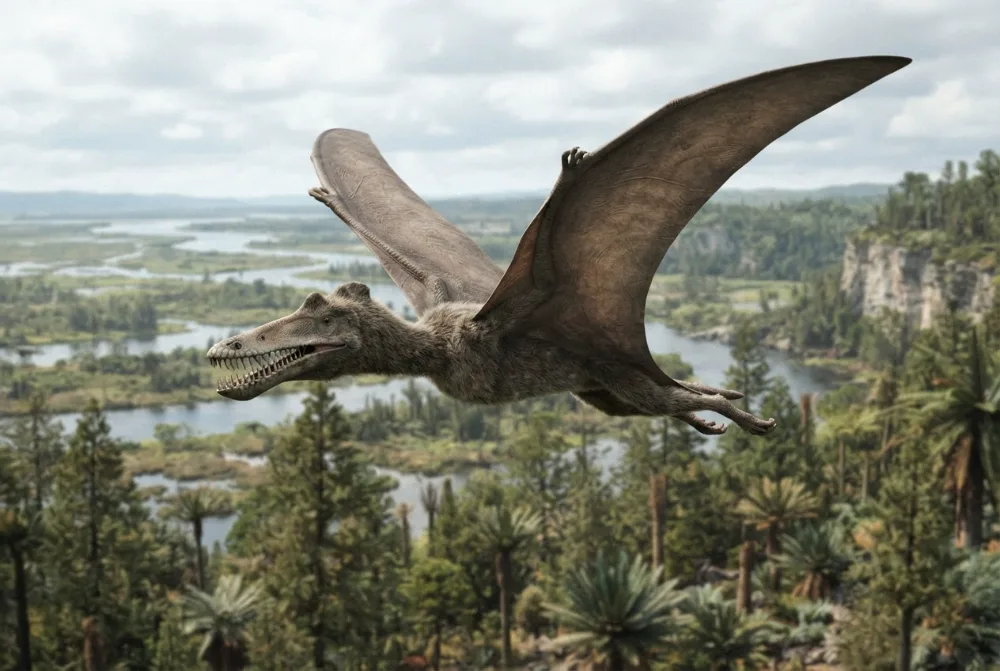
Istiodactylus
Istiodactylus was a flying reptile with a wide, blunt snout full of sharp, interlocking teeth. It lived about 120 million years ago and probably used its teeth like a cookie cutter to slice meat from big dead animals.12
Калі ён жыў?
Які ён быў вялікі?
Які ў яго быў размах крылаў?
 крылы шырынёй як 3 ровараў у рад⚽мог бы пераляцець цэлае футбольнае поле за 5,5 с
Наколькі вялікім быў Istiodactylus у параўнанні з ТАБОЙ?
Толькі матэматыка ў тваім браўзеры. Нічога не захоўваецца і нікуды не адпраўляецца.
Наколькі ён быў хуткі?


Цікавыя факты
Its skull was about 45 centimetres (18 inches) long and had a semicircle of 48 closely spaced, triangular teeth that interlocked to form a razor-edged outline.1
The lower jaw had a tooth-like projection that fit into the upper teeth, helping it bite cleanly.1
Some of its back vertebrae were fused into a structure called a notarium, which helped support its large wings.1
Its hindlimbs were very short, while its forelimbs and wing-finger were huge, making it a soaring specialist.1
For much of the 20th century, it was the only pterosaur known from three-dimensionally preserved fossils, giving scientists a rare look at pterosaur anatomy.12
Its teeth were unlike the long, curved fish-grabbing teeth of other pterosaurs, so scientists think it did not catch fish but instead scavenged.2
It lived in river and coastal environments in southern England, where the climate was warm, about 20 to 25 °C (68 to 77 °F).1
Пра што найчасцей пытаюцца: Istiodactylus
?How big was Istiodactylus?
Its wingspan was about 4.3 to 5 metres. Its skull was about 45 centimetres long.12
?What did Istiodactylus eat?
It was a scavenger. It used its sharp, interlocking teeth like a cookie cutter to slice meat from dead animals.12
?Was Istiodactylus a dinosaur?
No, it was a pterosaur, a flying reptile that lived at the same time as dinosaurs but is not a dinosaur.1
?Could Istiodactylus fly?
Yes, it was a flying reptile with large wings. It may have been a soaring specialist, gliding long distances to find food.1
Разбуральнік міфаў
Міф: Some people think Istiodactylus was a dinosaur because it lived with dinosaurs and had sharp teeth.
Праўда: Istiodactylus was a pterosaur, a flying reptile, not a dinosaur. Pterosaurs are a separate group of reptiles.1
Для знаўцаў дыназаўраў
- Навуковая назва
- Istiodactylus
- Назву даў
- Howse et al. 20013
- Група
- Лятучыя рэптыліі
- Сямейства / клада
- Ornithocheiroidea3
- Класіфікацыя
- Pterosauria > Pterodactyloidea3
- Узрост парод
- ад 126 да 120 мільёнаў гадоў (Barremian / Aptian)3
- Горныя пароды
- Wessex, Vectis, Yixian3
- Краіны
- Вялікабрытанія, Кітай3
- Знаходкі выкапняў
- 6 у базе The Paleobiology Database3
- Адкрыццё
- The first fossil was found on the Isle of Wight in 1887, and in 1901 it was named Ornithodesmus latidens. In 2001, scientists moved it to its own genus, Istiodactylus.1
- Навукоўцы яшчэ спрачаюцца
- Scientists debate whether the Chinese species Istiodactylus sinensis really belongs to this genus or to a different one, and whether it is the same as another pterosaur called Longchengpterus.1
Адкуль бяруцца факты
- Istiodactylus (en.wikipedia.org)
- New Insights into the Skull of Istiodactylus latidens (Ornithocheiroidea, Pterodactyloidea) | PLOS One (journals.plos.org)
- Istiodactylus in The Paleobiology Database (CC BY 4.0): узрост, месцы, горныя пароды, класіфікацыя.
Кожны факт на гэтай старонцы мае нумар, які паказвае на яго крыніцу. Калі мы нешта пераблыталі, прабач, мы фанаты дыназаўраў, а не навуковы часопіс. Напішы нам на [email protected], і мы ўсё выправім.
 Рэкс галодны! Dino Wiki зрабіў тата для свайго сына, які любіць дыназаўраў. Сайт бясплатны, без рэкламы і без трэкераў. Дарослыя могуць пачаставаць Рэкса, каб сайт і далей працаваў.Пакарміць Рэкса
 Pteranodon
 Quetzalcoatlus
 Dorygnathus
 Rhamphorhynchus
 Anhanguera
 Pterodactylus
 Stegosaurus
 Iguanodon
 Archaeopteryx
 Giganotosaurus
 Microraptor
 Deinonychus