 Які ты дыназаўр? Тэст
 Бітва дыназаўраў
 Гонка дыназаўраў
 Міні-гульні пра дыназаўраў
 Альбом налепак
 ТОП-спісы дыназаўраў
 Здзіві мяне!
Machairoceratops
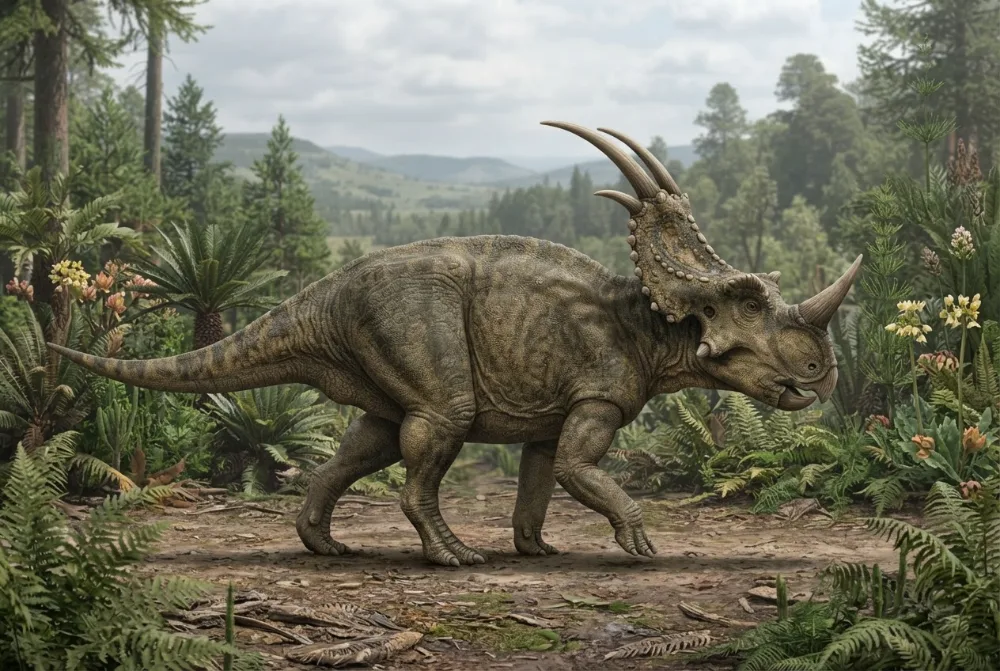
Machairoceratops was a horned dinosaur that lived in what is now Utah, USA, about 80 million years ago. It had two long, forward-curving spikes on the back of its frill, like bent swords. This dinosaur was a plant-eater that walked on four legs.12
Калі ён жыў?
Які ён быў вялікі?
Якой ён быў даўжыні?
Якога ён быў росту?
ацэнка
Колькі ён важыў?

 даўжынёй як 8 сабак ад носа да хваста🍌даўжынёй як 44 бананаў адзін за аднымвагой як 100 сабак🍉вагой як 400 кавуноў🎒вагой як 2,5 цэлых школьных класаў🐻❄️вагой як 4 белых мядзведзяў🏃мог бы прабегчы 100 метраў за 10 с (самаму хуткаму чалавеку трэба 9,6)
Наколькі вялікім быў Machairoceratops у параўнанні з ТАБОЙ?
Толькі матэматыка ў тваім браўзеры. Нічога не захоўваецца і нікуды не адпраўляецца.
Наколькі ён быў хуткі?


Цікавыя факты
Machairoceratops had two long, forward-curving spikes on the top of its frill, each about 44 cm long. These spikes had a strange groove running from base to tip, and scientists are not sure what it was for.12
Its postorbital horns (above the eyes) were about 27 cm long, but they were found detached from the skull, so their exact angle is unknown.1
This dinosaur lived about 80 million years ago, during the Late Cretaceous. At that time, a huge sea split North America into two landmasses, and Machairoceratops lived on the western part called Laramidia.12
Machairoceratops is known from only one partial skull, found in 2006. The skull includes the braincase, left squamosal, and the unique frill bones.1
It was a centrosaurine ceratopsian, a group of horned dinosaurs that usually had large nose horns and fancy frills. Machairoceratops is one of the few centrosaurines found in the southern part of Laramidia.12
The name 'cronusi' refers to Cronus, a Greek god who used a curved blade. This matches the bent-sword shape of the dinosaur's frill spikes.1
Пра што найчасцей пытаюцца: Machairoceratops
?How big was Machairoceratops?
Scientists do not know its exact size, but its skull is very close in size to Diabloceratops, another horned dinosaur. It was a medium-sized ceratopsian, probably similar in length to a small car.1
?What did Machairoceratops eat?
It was a plant-eater (herbivore) that walked on four legs and used its beak to eat plants like ferns and cycads.1
?When did Machairoceratops live?
It lived about 80 million years ago, during the Late Cretaceous Period, in what is now Utah, USA.1
?Why does Machairoceratops have bent spikes?
The two long, forward-curving spikes on its frill looked like bent swords, which is how it got its name. Scientists are not sure exactly what they were used for, but they may have been for display or defense.1
Для знаўцаў дыназаўраў
- Навуковая назва
- Machairoceratops
- Назву даў
- Lund et al. 20164
- Група
- Рагатыя дыназаўры
- Сямейства / клада
- Ceratopsidae4
- Класіфікацыя
- Ornithischia > Ceratopsia > Ceratopsidae4
- Узрост парод
- ад 84 да 72 мільёнаў гадоў (Campanian)4
- Горныя пароды
- Wahweap4
- Краіны
- ЗША4
- Знаходкі выкапняў
- 1 у базе The Paleobiology Database4
- Адкрыццё
- Machairoceratops was named in 2016 by Eric K. Lund and colleagues. The only known fossil was found in 2006 in Grand Staircase,Escalante National Monument, Utah, and is stored at the Natural History Museum of Utah.12
- Навукоўцы яшчэ спрачаюцца
- Scientists are not sure why the frill spikes have a groove along their length. It might have been for display, or something else.2
Адкуль бяруцца факты
- Machairoceratops (en.wikipedia.org)
- Paleontologists discover new species of horned dinosaur in southern Utah (nhmu.utah.edu)
- PBDB Taxon (paleobiodb.org)
- Machairoceratops in The Paleobiology Database (CC BY 4.0): узрост, месцы, горныя пароды, класіфікацыя.
Кожны факт на гэтай старонцы мае нумар, які паказвае на яго крыніцу. Калі мы нешта пераблыталі, прабач, мы фанаты дыназаўраў, а не навуковы часопіс. Напішы нам на [email protected], і мы ўсё выправім.
 Рэкс галодны! Dino Wiki зрабіў тата для свайго сына, які любіць дыназаўраў. Сайт бясплатны, без рэкламы і без трэкераў. Дарослыя могуць пачаставаць Рэкса, каб сайт і далей працаваў.Пакарміць Рэкса
 Triceratops
 Protoceratops
 Ojoceratops
 Tatankaceratops
 Psittacosaurus
 Centrosaurus
 Tyrannosaurus
 Velociraptor
 Spinosaurus
 Ankylosaurus
 Parasaurolophus
 Pteranodon