 Які ты дыназаўр? Тэст
 Бітва дыназаўраў
 Гонка дыназаўраў
 Міні-гульні пра дыназаўраў
 Альбом налепак
 ТОП-спісы дыназаўраў
 Здзіві мяне!
Navaornis
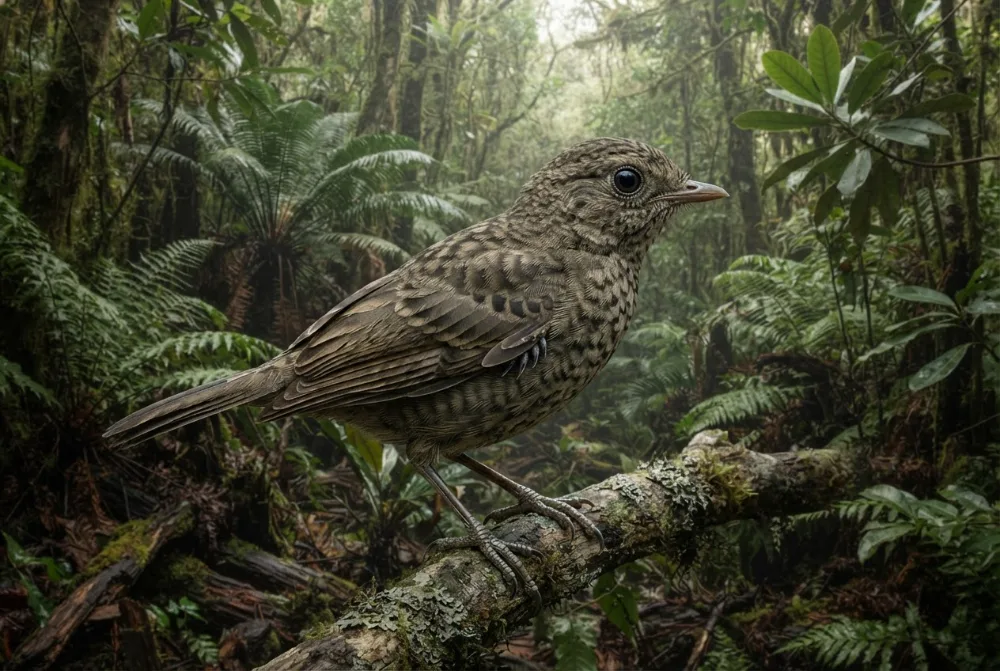
Navaornis was a starling-sized bird that lived about 80 million years ago in what is now Brazil. It had a toothless, large-eyed skull that looked almost like a modern bird, but it belonged to an ancient group called enantiornithines. Its beautifully preserved skull let scientists see inside its brain for the first time in such an old bird.12
Калі ён жыў?
Наколькі ён быў хуткі?


Цікавыя факты
Navaornis had a toothless skull with large eyes, just like many birds today, but its brain still had some ancient features like a small cerebellum and a weakly expanded telencephalon.1
Its skull is the best-preserved Mesozoic bird skull ever found, preserved in three dimensions without being flattened.1
The fossil site where Navaornis was found is very small, only about 6 square meters, but it has yielded hundreds of enantiornithine bird bones.1
Navaornis belongs to a group called Enantiornithes, which were the most diverse birds of the Mesozoic and lived on every continent except Antarctica.12
Its inner ear (bony labyrinth) was shaped like that of many modern birds but was much larger.1
Для знаўцаў дыназаўраў
- Навуковая назва
- Navaornis
- Назву даў
- Chiappe et al. 20243
- Група
- Першыя птушкі
- Сямейства / клада
- Enantiornithes3
- Класіфікацыя
- Theropoda > Avialae3
- Узрост парод
- ад 84 да 66 мільёнаў гадоў (Campanian / Maastrichtian)3
- Горныя пароды
- Adamantina3
- Краіны
- Бразілія3
- Знаходкі выкапняў
- 1 у базе The Paleobiology Database3
- Адкрыццё
- The fossil site was discovered in 2004 by William Nava, and the holotype skull was found in 2016. The species was named Navaornis hestiae by Chiappe and colleagues in 2024.13
- Навукоўцы яшчэ спрачаюцца
- Scientists are still debating exactly how Navaornis is related to other enantiornithines, because its toothless skull and modern-looking head make it hard to place in the family tree.1
Адкуль бяруцца факты
- Cretaceous bird from Brazil informs the evolution of the avian skull and brain | Nature (nature.com)
- Cretaceous bird from Brazil informs the evolution of the avian skull and brain (pmc.ncbi.nlm.nih.gov)
- Navaornis in The Paleobiology Database (CC BY 4.0): узрост, месцы, горныя пароды, класіфікацыя.
Кожны факт на гэтай старонцы мае нумар, які паказвае на яго крыніцу. Калі мы нешта пераблыталі, прабач, мы фанаты дыназаўраў, а не навуковы часопіс. Напішы нам на [email protected], і мы ўсё выправім.
 Рэкс галодны! Dino Wiki зрабіў тата для свайго сына, які любіць дыназаўраў. Сайт бясплатны, без рэкламы і без трэкераў. Дарослыя могуць пачаставаць Рэкса, каб сайт і далей працаваў.Пакарміць Рэкса
 Archaeopteryx
 Hesperornis
 Ichthyornis
 Baptornis
 Jurapteryx
 Gobipteryx
 Tyrannosaurus
 Triceratops
 Velociraptor
 Spinosaurus
 Ankylosaurus
 Parasaurolophus