 Які ты дыназаўр? Тэст
 Бітва дыназаўраў
 Гонка дыназаўраў
 Міні-гульні пра дыназаўраў
 Альбом налепак
 ТОП-спісы дыназаўраў
 Здзіві мяне!
Калі ён жыў?

Які ён быў вялікі?
Якой ён быў даўжыні?
Якога ён быў росту?
Колькі ён важыў?

 даўжынёй як 8 сабак ад носа да хваста🍌даўжынёй як 44 бананаў адзін за аднымвагой як 170 сабак🍉вагой як 680 кавуноў🎒вагой як 4 цэлых школьных класаў🐻❄️вагой як 8 белых мядзведзяў🏃мог бы прабегчы 100 метраў за 15 с (самаму хуткаму чалавеку трэба 9,6)
Наколькі вялікім быў Olorotitan у параўнанні з ТАБОЙ?
Толькі матэматыка ў тваім браўзеры. Нічога не захоўваецца і нікуды не адпраўляецца.
Наколькі ён быў хуткі?


Цікавыя факты
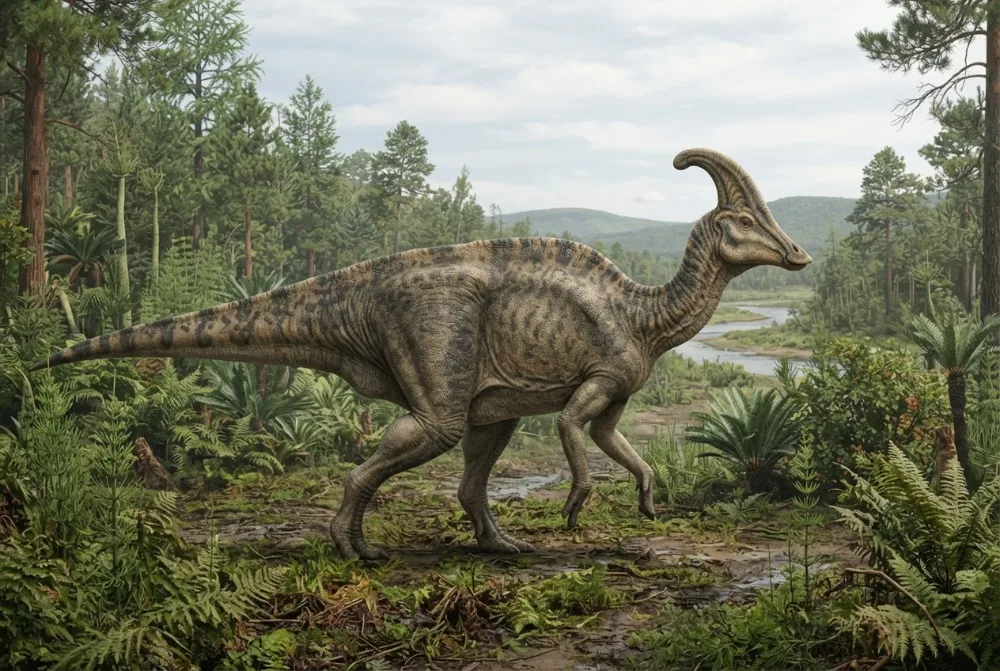
Olorotitan had a very long neck for a duck-billed dinosaur, with 18 neck bones. That is why its name means 'titanic swan'.12
Its hollow head crest was tall and helmet-shaped, made from expanded skull bones that held the nasal passages.12
The skeleton of Olorotitan is the most complete lambeosaurine (a type of duck-billed dinosaur) ever found outside North America.12
Olorotitan lived about 72 to 66 million years ago, during the Maastrichtian age of the Late Cretaceous.3
It was one of the last non-bird dinosaurs to go extinct, dying out in the great extinction event 66 million years ago.1
The tail of Olorotitan had extra connections between the bones in its upper part, which may have made that section stiff.2
Olorotitan is closely related to the North American dinosaurs Corythosaurus and Hypacrosaurus.2
Пра што найчасцей пытаюцца: Olorotitan
?How big was Olorotitan?
Olorotitan grew up to 8 metres (26 feet) long, up to 3.5 metres (11 feet) tall, and weighed between 2.6 and 3.4 metric tons.1
?What did Olorotitan eat?
Olorotitan was a plant-eater. It used its strong beak and hundreds of constantly replaced teeth to grind tough plants.1
?When did Olorotitan live?
Olorotitan lived about 72 to 66 million years ago, during the Maastrichtian age of the Late Cretaceous. It was one of the last non-bird dinosaurs to go extinct.1
?Where was Olorotitan found?
Olorotitan fossils were found in the Amur region of eastern Russia, near the Amur River. The first nearly complete skeleton was discovered between 1999 and 2001.1
?Why did Olorotitan have a crest?
The tall, hollow crest on its head was made from skull bones that held the nasal passages. It probably helped Olorotitan identify others of its kind by sight and sound.1
?Is Olorotitan a dinosaur?
Yes, Olorotitan is a dinosaur. It is a type of duck-billed dinosaur called a lambeosaurine hadrosaurid.1
Для знаўцаў дыназаўраў
- Навуковая назва
- Olorotitan
- Назву даў
- Godefroit et al. 20033
- Група
- Качканосыя
- Сямейства / клада
- Hadrosauridae3
- Класіфікацыя
- Ornithischia > Ornithopoda > Iguanodontia > Hadrosauridae3
- Узрост парод
- ад 72 да 66 мільёнаў гадоў (Maastrichtian)3
- Горныя пароды
- Udurchukan3
- Краіны
- Расія3
- Знаходкі выкапняў
- 1 у базе The Paleobiology Database3
- Адкрыццё
- Olorotitan was named by Pascal Godefroit and colleagues in 2003. The nearly complete skeleton was dug up between 1999 and 2001 in the Udurchukan Formation at Kundur, Russia.12
- Навукоўцы яшчэ спрачаюцца
- Scientists are not sure if the extra connections between the tail bones were a normal feature or a sign of disease.2
Адкуль бяруцца факты
- Olorotitan (en.wikipedia.org)
- doi:10.1016/S1631-0683(03)00017-4 (sciencepress.mnhn.fr)
- Olorotitan in The Paleobiology Database (CC BY 4.0): узрост, месцы, горныя пароды, класіфікацыя.
Кожны факт на гэтай старонцы мае нумар, які паказвае на яго крыніцу. Калі мы нешта пераблыталі, прабач, мы фанаты дыназаўраў, а не навуковы часопіс. Напішы нам на [email protected], і мы ўсё выправім.
 Рэкс галодны! Dino Wiki зрабіў тата для свайго сына, які любіць дыназаўраў. Сайт бясплатны, без рэкламы і без трэкераў. Дарослыя могуць пачаставаць Рэкса, каб сайт і далей працаваў.Пакарміць Рэкса
 Parasaurolophus
 Edmontosaurus
 Saurolophus
 Hypacrosaurus
 Corythosaurus
 Kritosaurus
 Tyrannosaurus
 Triceratops
 Velociraptor
 Spinosaurus
 Ankylosaurus
 Pteranodon