 Які ты дыназаўр? Тэст
 Бітва дыназаўраў
 Гонка дыназаўраў
 Міні-гульні пра дыназаўраў
 Альбом налепак
 ТОП-спісы дыназаўраў
 Здзіві мяне!
Tsintaosaurus
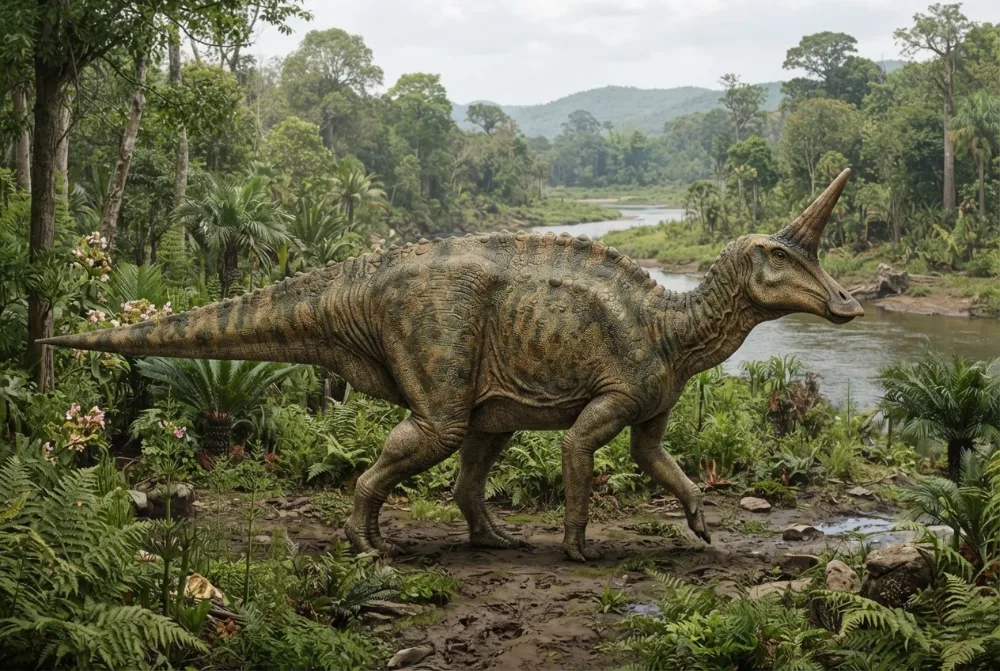
Tsintaosaurus was a duck-billed dinosaur that lived in China during the Late Cretaceous. It had a strange, hollow crest on its head that looked a bit like a unicorn horn. This plant-eater could walk on four legs or run on two to escape predators.21
Калі ён жыў?
Які ён быў вялікі?
Якой ён быў даўжыні?
Якога ён быў росту?
Колькі ён важыў?
 даўжынёй як 2,5 машын, пастаўленых у рад🍌даўжынёй як 67 бананаў адзін за адным
 вагой як 120 сабак🍉вагой як 500 кавуноў🎒вагой як 3 цэлых школьных класаў🐻❄️вагой як 6 белых мядзведзяў🏃мог бы прабегчы 100 метраў за 14 с (самаму хуткаму чалавеку трэба 9,6)
Наколькі вялікім быў Tsintaosaurus у параўнанні з ТАБОЙ?
Толькі матэматыка ў тваім браўзеры. Нічога не захоўваецца і нікуды не адпраўляецца.
Наколькі ён быў хуткі?


Цікавыя факты
Tsintaosaurus was first thought to have a unicorn-like horn, but scientists now think the crest was actually part of a larger, hollow structure on its snout.2
The crest was hollow and may have been used to make loud honking sounds to communicate with other Tsintaosaurus.2
It lived about 84 to 71 million years ago, during the Campanian stage of the Late Cretaceous.1
Tsintaosaurus is known from skulls and a partial skeleton, so scientists are still learning about its body.1
Like other hadrosaurs, Tsintaosaurus probably traveled in herds for protection.2
The name Tsintaosaurus comes from the old spelling of Qingdao, the city near where it was found.2
Пра што найчасцей пытаюцца: Tsintaosaurus
?How big was Tsintaosaurus?
About 8.3 metres (27 feet) long and weighed 2.5 tonnes (2.8 short tons), according to Wikipedia. The Natural History Museum gives a length of 12.0 metres, so estimates vary.21
?What did Tsintaosaurus eat?
It was a plant-eater. It had a duck-like beak and strong teeth for chewing vegetation.21
?Why did Tsintaosaurus have a crest?
The crest was hollow and may have been used to make loud honking sounds to communicate. It might also have helped attract mates, and the hollow tube made the crest lighter.24
?Could Tsintaosaurus swim?
It had a large tail that may have helped it swim, according to the Australian Museum. It probably lived near lakes and rivers.4
Разбуральнік міфаў
Міф: Tsintaosaurus had a single, solid horn like a unicorn.
Праўда: The crest was actually hollow and was the back part of a larger, flat crest that ran from the tip of the snout.2
Для знаўцаў дыназаўраў
- Навуковая назва
- Tsintaosaurus
- Назву даў
- Young 19585
- Група
- Качканосыя
- Сямейства / клада
- Hadrosauridae5
- Класіфікацыя
- Ornithischia > Ornithopoda > Iguanodontia > Hadrosauridae5
- Узрост парод
- ад 84 да 72 мільёнаў гадоў (Campanian)5
- Горныя пароды
- Jingangkou5
- Краіны
- Кітай5
- Знаходкі выкапняў
- 4 у базе The Paleobiology Database5
- Адкрыццё
- Chinese paleontologist C. C. Young named Tsintaosaurus in 1958 after fossils were found near Laiyang, Shandong, China.21
- Навукоўцы яшчэ спрачаюцца
- Scientists still debate the exact shape and function of Tsintaosaurus's head crest, because only a few fossils have been found.2
Адкуль бяруцца факты
- Tsintaosaurus | Natural History Museum (nhm.ac.uk)
- Tsintaosaurus (en.wikipedia.org)
- Tsintaosaurus: Discover more about this Dinosaur | Dinosaurland (dinosaurland.es)
- Dinosaurs - Tsintaosaurus spinorhinus - The Australian Museum (australian.museum)
- Tsintaosaurus in The Paleobiology Database (CC BY 4.0): узрост, месцы, горныя пароды, класіфікацыя.
Кожны факт на гэтай старонцы мае нумар, які паказвае на яго крыніцу. Калі мы нешта пераблыталі, прабач, мы фанаты дыназаўраў, а не навуковы часопіс. Напішы нам на [email protected], і мы ўсё выправім.
 Рэкс галодны! Dino Wiki зрабіў тата для свайго сына, які любіць дыназаўраў. Сайт бясплатны, без рэкламы і без трэкераў. Дарослыя могуць пачаставаць Рэкса, каб сайт і далей працаваў.Пакарміць Рэкса
 Parasaurolophus
 Edmontosaurus
 Saurolophus
 Hypacrosaurus
 Corythosaurus
 Kritosaurus
 Tyrannosaurus
 Triceratops
 Velociraptor
 Spinosaurus
 Ankylosaurus
 Pteranodon