 Home
 All dinos
 Dino groups
 Explore
 Dinos by country
 Dino vs dino
 How big were they?
 Dinos A to Z
 Who ate what?
 What dino are you? Quiz
 Dino games
 Dino battle
 Dino race
 Dino mini-games
 Sticker album
 Dino TOP lists
 Timeline
 Surprise me!
 Language: English

Leyesaurus
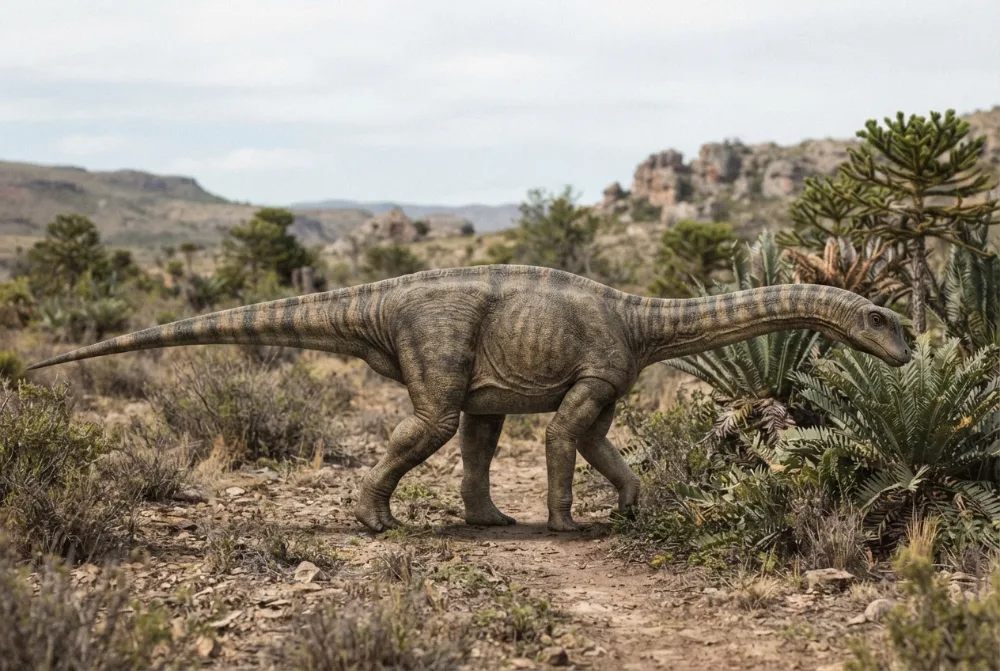
Leyesaurus was a long-necked dinosaur that lived in what is now Argentina. It walked on two legs and used its long neck to reach leaves high up in trees.1
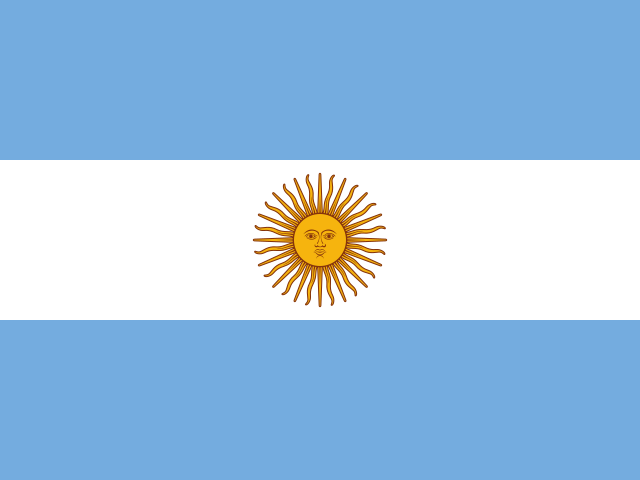 Argentina
When did it live?
Leyesaurus: 201 to 175 million years ago
How big was it?
How long was it?
How tall was it?
estimate
 as long as 2.5 dogs nose to tail🍌as long as 14 bananas end to end🏃could run 100 metres in 9.2 seconds (the fastest human needs 9.6)
How big was Leyesaurus compared to YOU?
Just maths in your browser. Nothing is saved or sent anywhere.
How fast was it?


Fun facts
Leyesaurus had an extremely long neck for its time. Its sixth neck bone was more than five times longer than it was tall, which is unique among early sauropodomorphs.1
This dinosaur is a member of the Massospondylidae family, which were plant-eating dinosaurs that spread across many continents.1
Leyesaurus lived during the Early Jurassic Period, about 201 to 174 million years ago.2
The only known skeleton of Leyesaurus is partially articulated, meaning many bones were still connected when found.1
Leyesaurus had a sharply angled snout, with its upper jaw bone rising at a 50-degree angle.1
Most asked questions about Leyesaurus
For dino experts
- Scientific name
- Leyesaurus
- Named by
- Apaldetti et al. 20114
- Group
- Long-necks
- Family / clade
- Massospondylidae4
- Classification
- Sauropodomorpha4
- Age of the rocks
- 201 to 175 million years (Hettangian / Toarcian)4
- Countries
- Argentina4
- Fossil records
- 1 in the Paleobiology Database4
- Discovery
- Leyesaurus was named in 2011 by Cecilia Apaldetti and colleagues. The fossils were found in the Quebrada del Barro Formation in San Juan Province, Argentina.1
- Still debated
- Scientists are not sure exactly how big Leyesaurus grew, because only a partial skeleton has been found.1
Where the facts come from
- A New Basal Sauropodomorph (Dinosauria: Saurischia) (journals.plos.org)
- PBDB Taxon (paleobiodb.org)
- en.wikipedia.org Leyesaurus (en.wikipedia.org)
- Leyesaurus in The Paleobiology Database (CC BY 4.0): age, places, rock formations, classification.
Every fact on this page has a number that points to its source. If we got something wrong, sorry, we are dino fans, not a science journal. Tell us at hello@dinowiki.app and we will fix it.
 Rex is hungry! Dino Wiki is a dad's project for his dino-loving son, free with no ads and no cookies. Grown-ups can feed Rex a snack to help keep it online.Feed Rex
 Brachiosaurus
 Diplodocus
 Brontosaurus
 Argentinosaurus
 Camarasaurus
 Morosaurus
 Dilophosaurus
 Stenopterygius
 Dorygnathus
 Scutellosaurus
 Sinosaurus
 Temnodontosaurus