 Zer dino zara? Galdetegia
 Dino borroka
 Dino lasterketa
 Dino minijokoak
 Pegatina-albuma
 Dino TOP zerrendak
 Harritu nazazu!
Aeolosaurus
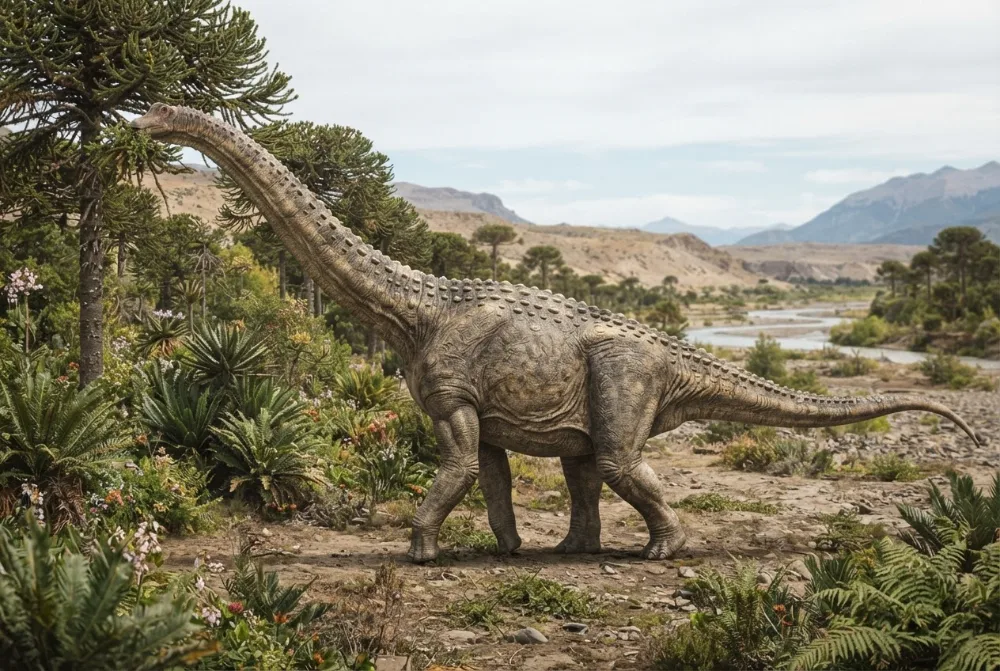
Aeolosaurus was a huge, long-necked plant eater that lived in South America near the end of the Age of Dinosaurs. It walked on four sturdy legs and probably used its long neck to reach leaves high in the trees.6
Noiz bizi izan zen?
Zein handia zen?
Zein luzea zen?
Zein altua zen?
Zein astuna zen?

 ilaran aparkatutako 22 auto bezain luze🍌bata bestearen atzean jarritako 560 banana bezain luze10 auto bezain astun🍉2900 angurria bezain astun🦒bata bestearen gainean dauden 18 jirafa bezain altu🎒haurrez betetako 18 ikasgela oso bezain astun🐻❄️33 hartz zuri bezain astun🏢34. solairuko leiho batetik begiratzeko bezain altua🏃100 metro 24 segundotan egin zitzakeen korrika (gizakirik azkarrenak 9,6 behar ditu)
Zein handia zen Aeolosaurus ZUREKIN alderatuta?
Zure nabigatzaileko kalkulu hutsak. Ez da ezer gordetzen ez inora bidaltzen.
Zein azkarra zen?


Datu dibertigarriak
Aeolosaurus lived between about 83.6 and 66 million years ago, during the Campanian and Maastrichtian ages of the Late Cretaceous.2
It belonged to a group called Aeolosaurini, which is part of the larger titanosaur family. Its closest relatives include Baurutitan, Caieiria, Gondwanatitan, and Panamericansaurus.6
Scientists have named two species: Aeolosaurus rionegrinus, the type species, and Aeolosaurus colhuehuapensis.6
Aeolosaurus fossils have been found in rocks from the Turonian to Santonian ages in central Brazil, which is older than the Campanian-Maastrichtian fossils from Argentina. This shows the genus lived over a long time and a wide area.1
The discovery of Aeolosaurus in the Marilia Formation of Brazil shows that this dinosaur survived after a marine incursion flooded parts of northern Patagonia during the Campanian-Maastrichtian.1
Aeolosaurus had special bones in its tail: the prezygapophyses (joints) curved downward on the front tail vertebrae, and the haemal arches had double articular facets set in a concave surface. This unique combination helps scientists identify it.6
Aeolosaurus: gehien egindako galderak
?How big was Aeolosaurus?
Estimates vary. Gregory S. Paul said Aeolosaurus rionegrinus was about 14 metres (46 ft) long and weighed 6 tonnes (6.6 short tons). In 2020, Molina-Pérez and Larramendi gave a larger estimate of 18.1 metres (60 ft) and 14.7 tonnes (16.2 short tons).45
?What did Aeolosaurus eat?
Aeolosaurus was a herbivore, meaning it ate plants. Like other sauropods, it used its long neck to reach leaves high in trees.45
Mito-hauslea
Mitoa: Some people think Aeolosaurus was a type of marine reptile because its name sounds like 'Aeolus' from the sea.
Egia: Aeolosaurus was a land-dwelling dinosaur, a sauropod that lived on land and ate plants. It was not a marine reptile.6
Dino adituentzat
- Izen zientifikoa
- Aeolosaurus
- Izendatzailea:
- Powell 19876
- Taldea
- Lepo-luzeak
- Familia / klada
- Aeolosaurini6
- Sailkapena
- Sauropodomorpha > Sauropoda > Titanosauria > Macronaria6
- Arroken adina
- 84 eta 66 milioi urte artean (Campanian / Maastrichtian)6
- Arroka-formazioak
- Allen, Lago Colhué Huapi, Angostura Colorada6
- Herrialdeak
- Argentina, Brasil, Uruguay6
- Fosil-erregistroak
- 6 The Paleobiology Database datu-basean6
- Aurkikuntza
- Aeolosaurus was named by J. E. Powell in 1987. The name comes from the Late Cretaceous fauna of Los Alamitos in Patagonia, Argentina, where the first fossils were found.6
- Oraindik eztabaidagai
- Scientists debate whether Gondwanatitan faustoi is a separate valid genus or a junior synonym of Aeolosaurus. One study says it is valid, but other classifications have placed it as a sister taxon.16
Datuak nondik datozen
- Record of the genus Aeolosaurus (Sauropoda, Titanosauria) in the Late Cretaceous of South America: paleogeographic implications (Journal Article) | ETDEWEB (osti.gov)
- PBDB Taxon (paleobiodb.org)
- Aeolosaurus (en.wikipedia.org)
- Aeolosaurus - Wikipedia (en.wikipedia.org)
- Aeolosaurus (en.m.wikipedia.org)
- Aeolosaurus in The Paleobiology Database (CC BY 4.0): adina, tokiak, arroka-formazioak, sailkapena.
Orrialde honetako datu bakoitzak zenbaki bat du, bere iturrira eramaten zaituena. Zerbait gaizki badugu, barkatu, dino-zaleak gara, ez zientzia-aldizkari bat. Idatzi [email protected] helbidera eta konponduko dugu.
 Rex gose da! Dino Wiki aita baten proiektua da, dinosauroak maite dituen bere semearentzat, doakoa, iragarkirik eta jarraitzailerik gabe. Helduek mokadutxo bat eman diezaiokete Rexi, sarean jarraitzen laguntzeko.Eman jaten Rexi
 Brachiosaurus
 Diplodocus
 Brontosaurus
 Argentinosaurus
 Camarasaurus
 Morosaurus
 Tyrannosaurus
 Triceratops
 Velociraptor
 Spinosaurus
 Ankylosaurus
 Parasaurolophus