 Zer dino zara? Galdetegia
 Dino borroka
 Dino lasterketa
 Dino minijokoak
 Pegatina-albuma
 Dino TOP zerrendak
 Harritu nazazu!
Ajnabia
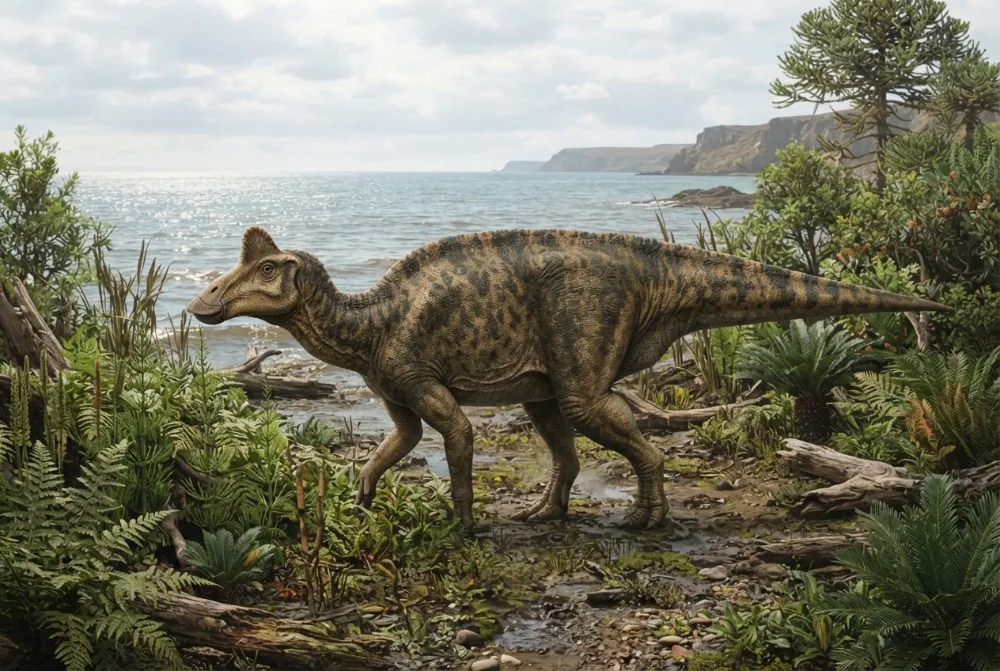
Ajnabia was a small duck-billed dinosaur that lived in Africa at the very end of the Cretaceous. It was a surprise to scientists because duck-billed dinosaurs were not known from Africa before. Ajnabia probably swam or rafted across the sea from Europe to reach its home.2
Noiz bizi izan zen?
Zein handia zen?
Zein luzea zen?
Zein altua zen?
kalkulua
Zein astuna zen?
 4 txakur bezain luze, sudurretik buztanera🍌bata bestearen atzean jarritako 19 banana bezain luze🍉50 angurria bezain astun🧸haur-eskolako 13 haur bezain astun🎒8 eskolaume bezain astun🏃100 metro 8,4 segundotan egin zitzakeen korrika (gizakirik azkarrenak 9,6 behar ditu)
Zein handia zen Ajnabia ZUREKIN alderatuta?
Zure nabigatzaileko kalkulu hutsak. Ez da ezer gordetzen ez inora bidaltzen.
Zein azkarra zen?


Datu dibertigarriak
Ajnabia is a lambeosaurine hadrosaur, a group of duck-billed dinosaurs that often had fancy head crests.2
It was one of the smallest duck-billed dinosaurs, only about 3.5 metres (11 feet) long.2
Ajnabia lived around 68 to 66 million years ago, just before the mass extinction that ended the age of dinosaurs.1
Its fossils were found in phosphate mines, which were once a shallow sea. The bones probably washed in from land.2
Ajnabia is related to European duck-billed dinosaurs, suggesting its ancestors crossed the sea from Europe to Africa.2
Only a few bones of Ajnabia have been found: part of the upper jaw, a piece of the lower jaw, and some teeth.1
Ajnabia: gehien egindako galderak
?What did Ajnabia eat?
It was a herbivore, eating plants. As a duck-billed dinosaur, it had many teeth for chewing tough vegetation.1
?Did Ajnabia have a crest?
It probably did. Ajnabia was a lambeosaurine hadrosaur, a group known for having fancy head crests, though its fossils don't include the skull top.1
?How did Ajnabia get to Africa?
Scientists think it swam or rafted across the sea from Europe, because Africa was isolated by water at the time.12
?When did Ajnabia live?
About 68 to 66 million years ago, in the very latest Cretaceous, just before the asteroid impact that ended the dinosaurs.1
?Is Ajnabia a dinosaur?
Yes, it is a dinosaur. Specifically, it is a duck-billed dinosaur (hadrosaur) from the group Lambeosaurinae.1
Dino adituentzat
- Izen zientifikoa
- Ajnabia
- Izendatzailea:
- Longrich et al. 20214
- Taldea
- Ahate-mokoak
- Familia / klada
- Hadrosauridae4
- Sailkapena
- Ornithischia > Ornithopoda > Iguanodontia > Hadrosauridae4
- Arroken adina
- 72 eta 66 milioi urte artean (Maastrichtian)4
- Arroka-formazioak
- Couche III4
- Herrialdeak
- Maroko4
- Fosil-erregistroak
- 1 The Paleobiology Database datu-basean4
- Aurkikuntza
- Ajnabia was named in 2021 by Longrich and colleagues. The fossils came from phosphate mines in Morocco and were described as a new species of duck-billed dinosaur.3
- Oraindik eztabaidagai
- Scientists are not sure exactly how Ajnabia got to Africa. It may have swum or rafted across the sea from Europe, but the details of this journey are still debated.2
Datuak nondik datozen
- Ajnabia (en.wikipedia.org)
- A new small duckbilled dinosaur (Hadrosauridae: Lambeosaurinae) from Morocco and dinosaur diversity in the late Maastrichtian of North Africa | Scientific Reports (nature.com)
- PBDB Taxon (paleobiodb.org)
- Ajnabia in The Paleobiology Database (CC BY 4.0): adina, tokiak, arroka-formazioak, sailkapena.
Orrialde honetako datu bakoitzak zenbaki bat du, bere iturrira eramaten zaituena. Zerbait gaizki badugu, barkatu, dino-zaleak gara, ez zientzia-aldizkari bat. Idatzi [email protected] helbidera eta konponduko dugu.
 Rex gose da! Dino Wiki aita baten proiektua da, dinosauroak maite dituen bere semearentzat, doakoa, iragarkirik eta jarraitzailerik gabe. Helduek mokadutxo bat eman diezaiokete Rexi, sarean jarraitzen laguntzeko.Eman jaten Rexi
 Parasaurolophus
 Edmontosaurus
 Saurolophus
 Hypacrosaurus
 Corythosaurus
 Kritosaurus
 Tyrannosaurus
 Triceratops
 Velociraptor
 Spinosaurus
 Ankylosaurus
 Pteranodon