 Zer dino zara? Galdetegia
 Dino borroka
 Dino lasterketa
 Dino minijokoak
 Pegatina-albuma
 Dino TOP zerrendak
 Harritu nazazu!
Alaskacephale
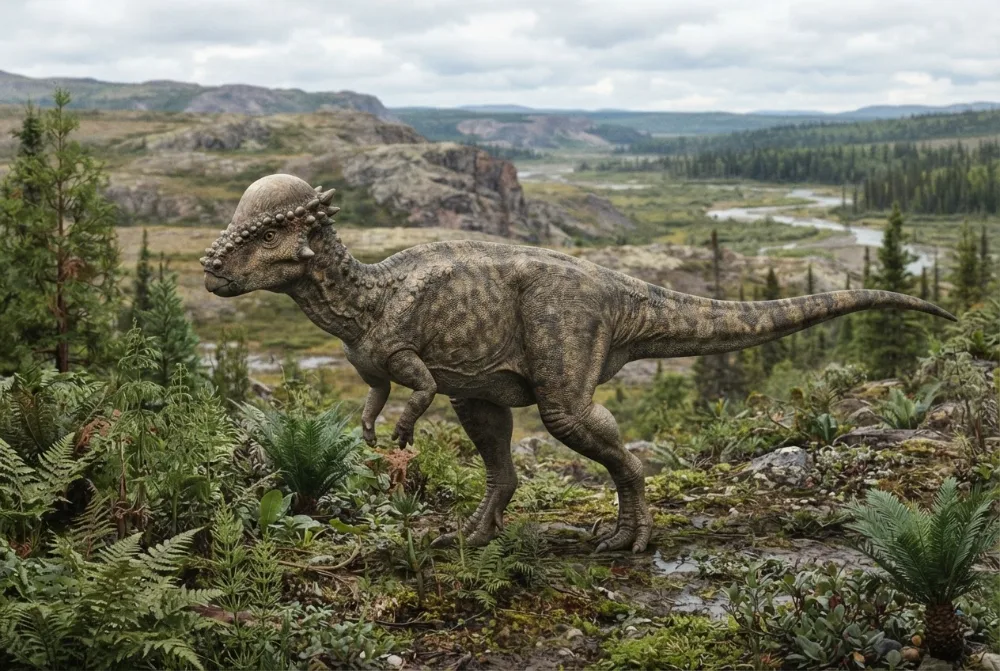
Alaskacephale was a small, dome-headed dinosaur that lived in the cold Arctic of ancient Alaska. It had a thick, bony skull with two rows of bumps along the back of its head. This plant-eater was one of the few dinosaurs that lived near the North Pole.1
Noiz bizi izan zen?
Zein handia zen?
Zein luzea zen?
Zein astuna zen?
 3 etxeko katu bezain luze, sudurretik buztanera🍌bata bestearen atzean jarritako 8 banana bezain luze🍌83 banana bezain astun🏃100 metro 11 segundotan egin zitzakeen korrika (gizakirik azkarrenak 9,6 behar ditu)
Zein handia zen Alaskacephale ZUREKIN alderatuta?
Zure nabigatzaileko kalkulu hutsak. Ez da ezer gordetzen ez inora bidaltzen.
Zein azkarra zen?


Datu dibertigarriak
Alaskacephale lived about 70 to 69 million years ago, during the Maastrichtian stage of the Late Cretaceous.1
Only one fossil of Alaskacephale has been found: a piece of skull bone called a squamosal.1
The skull had two rows of bony bumps that helped scientists tell it apart from other dome-headed dinosaurs.1
Alaskacephale lived in a cold Arctic environment with winter darkness for 120 days and temperatures as low as -2°C (28°F).1
It shared its home with other dinosaurs like the horned Pachyrhinosaurus, the duck-billed Edmontosaurus, and the tyrannosaur Nanuqsaurus.1
Alaskacephale was about half the size of its relative Pachycephalosaurus, making it one of the smaller pachycephalosaurs.1
Alaskacephale: gehien egindako galderak
?How big was Alaskacephale?
About 1.5 metres long and 10 kilograms, based on a similarly sized relative. It was one of the smaller pachycephalosaurs.1
?What did Alaskacephale eat?
It was a plant-eater, like all dome-headed dinosaurs.1
?When did Alaskacephale live?
It lived about 72 to 71 million years ago, during the Late Cretaceous (Maastrichtian stage).1
?Is Alaskacephale a dinosaur?
Yes, it is a dome-headed dinosaur (a pachycephalosaur).1
?Why did Alaskacephale have a thick skull?
The thick, bony dome on its skull might have been used for head-butting or for display, but scientists are not sure.1
?Did Alaskacephale have feathers?
Nobody knows for sure. No fossil feathers have been found with Alaskacephale, and it is not known if pachycephalosaurs had feathers.1
Dino adituentzat
- Izen zientifikoa
- Alaskacephale
- Izendatzailea:
- Sullivan 20062
- Taldea
- Kupula-buruak
- Familia / klada
- Pachycephalosauridae2
- Sailkapena
- Ornithischia > Pachycephalosauria2
- Arroken adina
- 72 eta 66 milioi urte artean (Maastrichtian)2
- Arroka-formazioak
- Prince Creek2
- Herrialdeak
- AEB2
- Fosil-erregistroak
- 1 The Paleobiology Database datu-basean2
- Aurkikuntza
- The only fossil was found in 1999 by a University of Alaska expedition on the Colville River. It was named Alaskacephale gangloffi in 2006 by paleontologist Robert Sullivan, honoring the earlier researcher Roland Gangloff.1
- Oraindik eztabaidagai
- Scientists are not sure exactly how big Alaskacephale was, because only a skull fragment has been found.1
Datuak nondik datozen
- Alaskacephale (en.wikipedia.org)
- Alaskacephale in The Paleobiology Database (CC BY 4.0): adina, tokiak, arroka-formazioak, sailkapena.
Orrialde honetako datu bakoitzak zenbaki bat du, bere iturrira eramaten zaituena. Zerbait gaizki badugu, barkatu, dino-zaleak gara, ez zientzia-aldizkari bat. Idatzi [email protected] helbidera eta konponduko dugu.
 Rex gose da! Dino Wiki aita baten proiektua da, dinosauroak maite dituen bere semearentzat, doakoa, iragarkirik eta jarraitzailerik gabe. Helduek mokadutxo bat eman diezaiokete Rexi, sarean jarraitzen laguntzeko.Eman jaten Rexi
 Pachycephalosaurus
 Stegoceras
 Prenocephale
 Sphaerotholus
 Foraminacephale
 Brontotholus
 Tyrannosaurus
 Triceratops
 Velociraptor
 Spinosaurus
 Ankylosaurus
 Parasaurolophus