 Zer dino zara? Galdetegia
 Dino borroka
 Dino lasterketa
 Dino minijokoak
 Pegatina-albuma
 Dino TOP zerrendak
 Harritu nazazu!
Noiz bizi izan zen?

Zein handia zen?
Zein luzea zen?
Zein altua zen?
kalkulua
Zein astuna zen?
 6 txakur bezain luze, sudurretik buztanera🍌bata bestearen atzean jarritako 33 banana bezain luze🍉140 angurria bezain astun🧸haur-eskolako 37 haur bezain astun🎒22 eskolaume bezain astun🏃100 metro 8,6 segundotan egin zitzakeen korrika (gizakirik azkarrenak 9,6 behar ditu)
Zein handia zen Alioramus ZUREKIN alderatuta?
Zure nabigatzaileko kalkulu hutsak. Ez da ezer gordetzen ez inora bidaltzen.
Zein azkarra zen?


Datu dibertigarriak
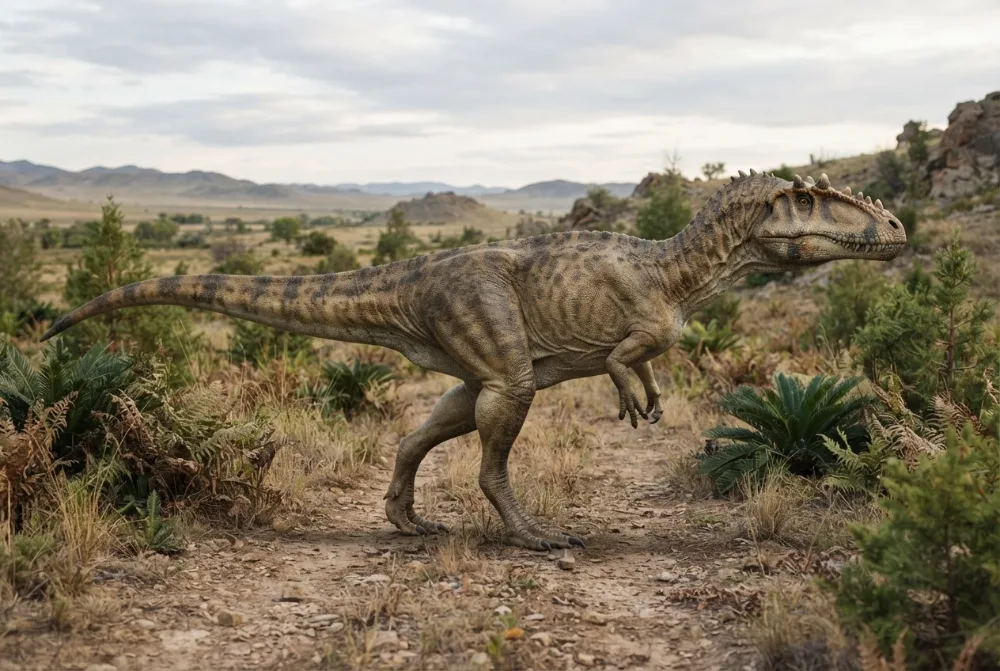
Alioramus had a long, low snout, unlike the deep, powerful skulls of most other tyrannosaurs.2
Its skull was decorated with eight separate horns, more than any other known tyrannosaur.2
One nearly complete skeleton belonged to a nine-year-old animal, but it was still smaller than other tyrannosaurs of the same age.2
Alioramus is closely related to the giant Tarbosaurus and Tyrannosaurus, even though it was much smaller and lighter.2
The name Alioramus means 'other branch', because scientists thought it was a different line of evolution.1
Alioramus: gehien egindako galderak
?How big was Alioramus?
Alioramus was about 5 to 6 metres (16 to 20 feet) long and weighed around 385 to 700 kilograms (849 to 1,500 pounds), depending on the species and estimate. It was significantly smaller than a T. rex.341
?What did Alioramus eat?
Alioramus was a carnivore that ate meat. It had sharp teeth and probably hunted small prey, since its skull was not built for bone-crushing like larger tyrannosaurs.34
?How fast could Alioramus run?
The sources do not give a specific speed for Alioramus. It probably relied on speed and agility to hunt, but no exact running speed is known.4
?Why did Alioramus have horns on its head?
Alioramus had a row of five bony crests along the top of its snout, which may have been used for display or to attract mates. These crests were more than 1 cm (0.39 in) tall.3
?Is Alioramus a dinosaur?
Yes, Alioramus is a dinosaur. It is a genus of tyrannosaurid theropod dinosaurs from the Late Cretaceous period.31
Dino adituentzat
- Izen zientifikoa
- Alioramus
- Izendatzailea:
- Kurzanov 19765
- Taldea
- Tiranosauroak
- Familia / klada
- Tyrannosauridae5
- Sailkapena
- Theropoda > Tyrannosauroidea > Tyrannosauridae5
- Arroken adina
- 72 eta 66 milioi urte artean (Maastrichtian)5
- Arroka-formazioak
- Beds of Nogon Tsav, Nemegt5
- Herrialdeak
- Mongolia, Txina5
- Fosil-erregistroak
- 3 The Paleobiology Database datu-basean5
- Aurkikuntza
- Alioramus was named by Soviet paleontologist Sergei Kurzanov in 1976, based on fossils from the Nogon Tsav locality in Mongolia.5
- Oraindik eztabaidagai
- Scientists still debate whether Alioramus is a juvenile of another tyrannosaur or a distinct, smaller adult species.2
Datuak nondik datozen
- Alioramus | Natural History Museum (nhm.ac.uk)
- pnas.org (pnas.org)
- Alioramus (en.wikipedia.org)
- Dinosaur - Alioramus altai - The Australian Museum (australian.museum)
- Alioramus in The Paleobiology Database (CC BY 4.0): adina, tokiak, arroka-formazioak, sailkapena.
Orrialde honetako datu bakoitzak zenbaki bat du, bere iturrira eramaten zaituena. Zerbait gaizki badugu, barkatu, dino-zaleak gara, ez zientzia-aldizkari bat. Idatzi [email protected] helbidera eta konponduko dugu.
 Rex gose da! Dino Wiki aita baten proiektua da, dinosauroak maite dituen bere semearentzat, doakoa, iragarkirik eta jarraitzailerik gabe. Helduek mokadutxo bat eman diezaiokete Rexi, sarean jarraitzen laguntzeko.Eman jaten Rexi
 Tyrannosaurus
 Tarbosaurus
 Albertosaurus
 Daspletosaurus
 Gorgosaurus
 Alectrosaurus
 Triceratops
 Velociraptor
 Spinosaurus
 Ankylosaurus
 Parasaurolophus
 Pteranodon