 Zer dino zara? Galdetegia
 Dino borroka
 Dino lasterketa
 Dino minijokoak
 Pegatina-albuma
 Dino TOP zerrendak
 Harritu nazazu!
Avimimus
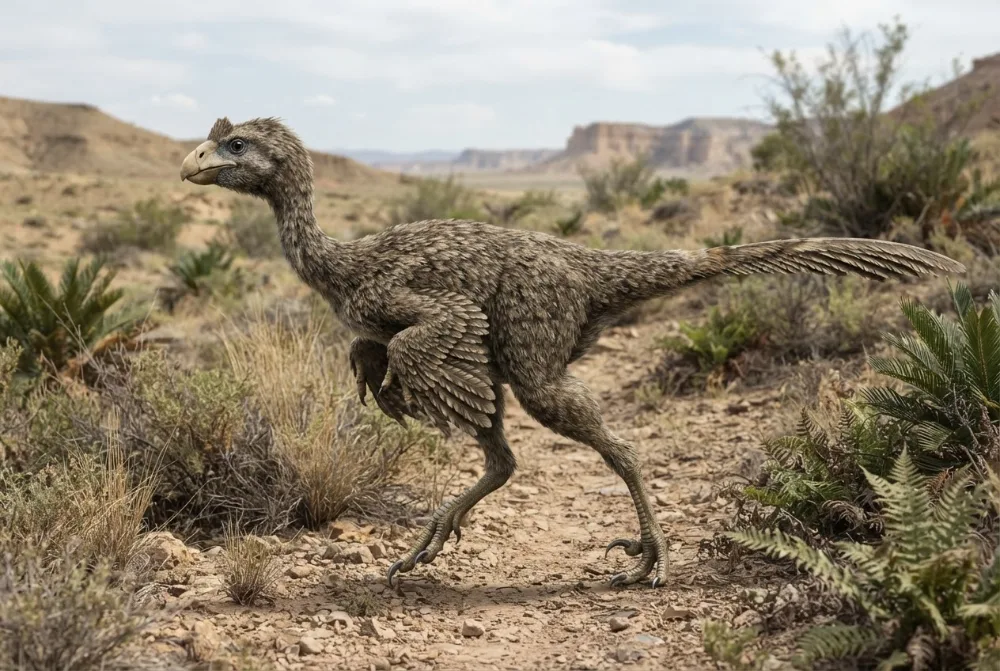
Avimimus was a small, fast-running dinosaur that looked a lot like a bird. It had a beak like a parrot and may have had feathers on its arms. Scientists think it lived in what is now Mongolia during the Late Cretaceous period.21
Noiz bizi izan zen?
Zein handia zen?
Zein luzea zen?
Zein altua zen?
kalkulua
Zein astuna zen?
 3 etxeko katu bezain luze, sudurretik buztanera🍌bata bestearen atzean jarritako 8 banana bezain luze🍌120 banana bezain astun🏃100 metro 9,5 segundotan egin zitzakeen korrika (gizakirik azkarrenak 9,6 behar ditu)
Zein handia zen Avimimus ZUREKIN alderatuta?
Zure nabigatzaileko kalkulu hutsak. Ez da ezer gordetzen ez inora bidaltzen.
Zein azkarra zen?


Datu dibertigarriak
Avimimus had a large brain and big eyes, which helped it see well and think fast.2
Its legs were very long and slender, making it a fast runner. Its shins were longer than its thighs, just like in many speedy animals today.2
The bones in its hand were fused together, just like in modern birds. This is one reason scientists think it was very bird-like.2
A fossil bonebed in Mongolia contained at least ten Avimimus individuals together. This suggests they lived in groups, maybe for safety or to find mates.2
Avimimus had a beak with no teeth, but some later fossils show tiny teeth in the front of the upper jaw. Scientists are still studying this.2
When Avimimus was first discovered, scientists thought it had no tail. Later finds proved it did have a tail, just like other dinosaurs.2
Avimimus: gehien egindako galderak
?Did Avimimus have feathers?
Yes, most scientists now agree Avimimus had feathers. Quill knobs on its arm bones suggest feathers were attached there.24
?What did Avimimus eat?
It probably ate both plants and small animals, making it an omnivore. Its beak had no teeth, though some fossils show tiny front teeth.21
?How fast could Avimimus run?
It was a very fast runner, with long legs and shins longer than its thighs. One source compares its speed to an ostrich, which can reach 70 km/h.24
?When did Avimimus live?
It lived during the Late Cretaceous period, about 80 to 75 million years ago.14
?Is Avimimus a bird?
No, Avimimus is a dinosaur, not a bird. It belonged to a group of bird-like dinosaurs called oviraptorosaurs.2
Mito-hauslea
Mitoa: Avimimus could fly.
Egia: Some scientists once thought Avimimus could fly because it had bumps on its arm bones that might have held feathers. But most now agree it could not fly and was a fast runner instead.2
Dino adituentzat
- Izen zientifikoa
- Avimimus
- Izendatzailea:
- Kurzanov 19815
- Taldea
- Dino lumadun bitxiak
- Familia / klada
- Oviraptorosauria5
- Sailkapena
- Theropoda > Oviraptorosauria5
- Arroken adina
- 84 eta 66 milioi urte artean (Campanian / Maastrichtian)5
- Arroka-formazioak
- Nemegt, Baruungoyot, Dinosaur Park5
- Herrialdeak
- Mongolia, Kanada5
- Fosil-erregistroak
- 8 The Paleobiology Database datu-basean5
- Aurkikuntza
- Avimimus was named by Russian paleontologist Sergei Kurzanov in 1981. He found the fossils in Mongolia and thought they came from the Djadokhta Formation, but later scientists think they actually came from the Nemegt Formation.25
- Oraindik eztabaidagai
- Scientists are not sure what Avimimus ate. It might have been an herbivore, an insectivore, or an omnivore. The beak and possible tiny teeth give clues, but no one knows for sure.2
Datuak nondik datozen
- Avimimus | Natural History Museum (nhm.ac.uk)
- Avimimus (en.wikipedia.org)
- Avimimus Kurzanov 1981 - Encyclopedia of Life (eol.org)
- Avimimus - ZoomDinosaurs.com (enchantedlearning.com)
- Avimimus in The Paleobiology Database (CC BY 4.0): adina, tokiak, arroka-formazioak, sailkapena.
Orrialde honetako datu bakoitzak zenbaki bat du, bere iturrira eramaten zaituena. Zerbait gaizki badugu, barkatu, dino-zaleak gara, ez zientzia-aldizkari bat. Idatzi [email protected] helbidera eta konponduko dugu.
 Rex gose da! Dino Wiki aita baten proiektua da, dinosauroak maite dituen bere semearentzat, doakoa, iragarkirik eta jarraitzailerik gabe. Helduek mokadutxo bat eman diezaiokete Rexi, sarean jarraitzen laguntzeko.Eman jaten Rexi
 Therizinosaurus
 Oviraptor
 Chirostenotes
 Citipes
 Leptorhynchos
 Caenagnathus
 Tyrannosaurus
 Triceratops
 Velociraptor
 Spinosaurus
 Ankylosaurus
 Parasaurolophus