 Zer dino zara? Galdetegia
 Dino borroka
 Dino lasterketa
 Dino minijokoak
 Pegatina-albuma
 Dino TOP zerrendak
 Harritu nazazu!
Noiz bizi izan zen?

Zein handia zen?
Zein luzea zen?
Zein altua zen?
Zein astuna zen?
 4 etxeko katu bezain luze, sudurretik buztanera🍌bata bestearen atzean jarritako 11 banana bezain luze🍉4 angurria bezain astun🏃100 metro 10 segundotan egin zitzakeen korrika (gizakirik azkarrenak 9,6 behar ditu)
Zein handia zen Byronosaurus ZUREKIN alderatuta?
Zure nabigatzaileko kalkulu hutsak. Ez da ezer gordetzen ez inora bidaltzen.
Zein azkarra zen?


Datu dibertigarriak
Byronosaurus had a large brain for its size, making it one of the smartest non-bird dinosaurs.1
Its eyes faced forward, so it could judge distances well, which helped it hunt.2
Two baby Byronosaurus skulls were found inside a nest of oviraptorid eggs, probably as leftovers from a predator.1
Unlike other troodontids, Byronosaurus had smooth teeth without serrations, like its close relative Xixiasaurus.1
The first Byronosaurus fossils were discovered in 1993 by an American Museum of Natural History expedition to the Gobi Desert.1
Byronosaurus lived during the Late Cretaceous, about 80 to 71 million years ago.1
Its bones were mixed with bones of other animals when found, and scientists had to carefully sort them out.2
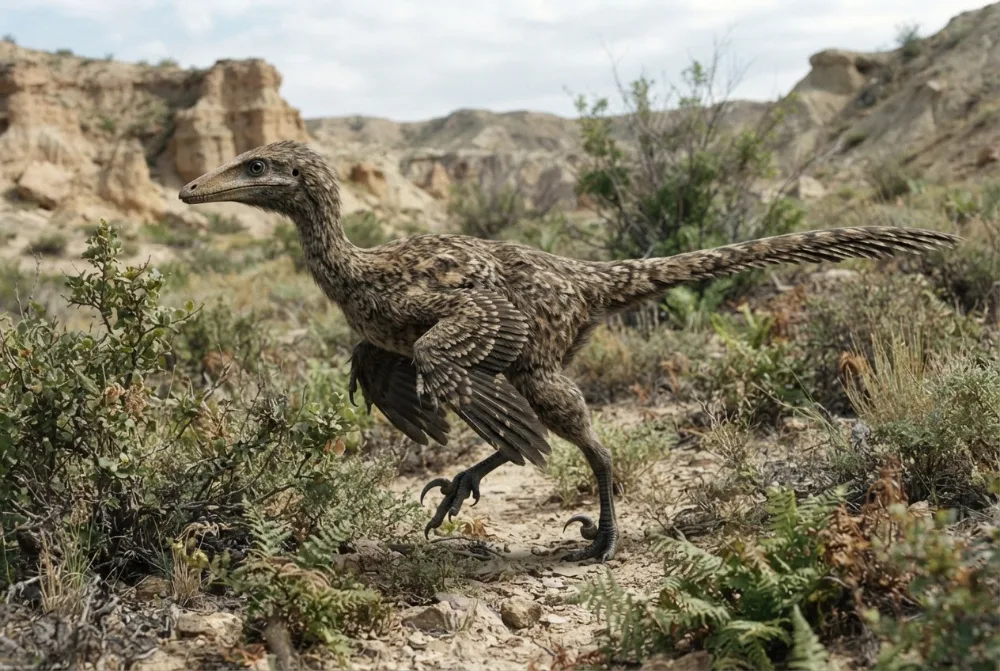
Byronosaurus: gehien egindako galderak
?How big was Byronosaurus?
Byronosaurus was a small dinosaur, about 1.5 to 2 metres (5 to 6.6 feet) long and 50 cm (20 inches) tall. It weighed only about 4 to 20 kg (9 to 44 pounds), about the size of a large bird.12
?What did Byronosaurus eat?
Scientists are not sure. Some think it ate meat, others think it may have eaten plants or both. Its smooth teeth without serrations suggest it may have had a different diet from other troodontids.1
?When did Byronosaurus live?
Byronosaurus lived during the Late Cretaceous Period, about 80 to 71 million years ago. Its fossils were found in Mongolia.12
?Was Byronosaurus a dinosaur?
Yes, Byronosaurus was a small theropod dinosaur, specifically a troodontid. It was not a bird, but it was closely related to birds.1
Mito-hauslea
Mitoa: Some people think all troodontids were meat-eaters with serrated teeth.
Egia: Byronosaurus had smooth teeth without serrations, so it may have been an omnivore or herbivore, not a pure carnivore.1
Dino adituentzat
- Izen zientifikoa
- Byronosaurus
- Izendatzailea:
- Norell et al. 20003
- Taldea
- Raptoreak
- Familia / klada
- Troodontidae3
- Sailkapena
- Theropoda > Troodontidae3
- Arroken adina
- 84 eta 72 milioi urte artean (Campanian)3
- Arroka-formazioak
- Djadokhta3
- Herrialdeak
- Mongolia3
- Fosil-erregistroak
- 3 The Paleobiology Database datu-basean3
- Aurkikuntza
- Byronosaurus was named in 2000 by Mark Norell, Peter Makovicky, and James Clark. The first skeleton was found in 1993 at Ukhaa Tolgod, Mongolia, and a second skull was found in 1996 at Bolor's Hill.1
- Oraindik eztabaidagai
- Scientists are not sure what Byronosaurus ate. Its smooth teeth suggest it might have been an omnivore or herbivore, but some experts think it was still a carnivore.1
Datuak nondik datozen
- Byronosaurus (en.wikipedia.org)
- Byronosaurus jaffei | AMNH (amnh.org)
- Byronosaurus in The Paleobiology Database (CC BY 4.0): adina, tokiak, arroka-formazioak, sailkapena.
Orrialde honetako datu bakoitzak zenbaki bat du, bere iturrira eramaten zaituena. Zerbait gaizki badugu, barkatu, dino-zaleak gara, ez zientzia-aldizkari bat. Idatzi [email protected] helbidera eta konponduko dugu.
 Rex gose da! Dino Wiki aita baten proiektua da, dinosauroak maite dituen bere semearentzat, doakoa, iragarkirik eta jarraitzailerik gabe. Helduek mokadutxo bat eman diezaiokete Rexi, sarean jarraitzen laguntzeko.Eman jaten Rexi
 Velociraptor
 Microraptor
 Deinonychus
 Asiamericana
 Richardoestesia
 Saurornitholestes
 Tyrannosaurus
 Triceratops
 Spinosaurus
 Ankylosaurus
 Parasaurolophus
 Pteranodon