 Zer dino zara? Galdetegia
 Dino borroka
 Dino lasterketa
 Dino minijokoak
 Pegatina-albuma
 Dino TOP zerrendak
 Harritu nazazu!
Calvarius
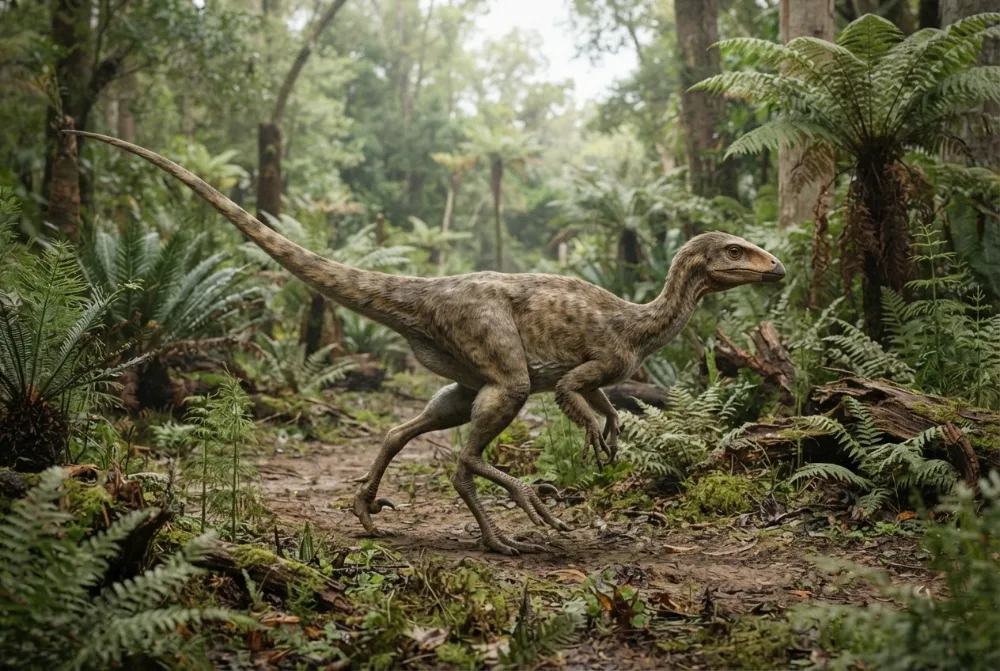
Calvarius was a small, speedy plant-eating dinosaur that lived near the very end of the Age of Dinosaurs. It was one of the last dinosaurs to walk on Earth before the big asteroid hit.2
Noiz bizi izan zen?
Zein handia zen?
Zein luzea zen?
Zein altua zen?
kalkulua
 4 etxeko katu bezain luze, sudurretik buztanera🍌bata bestearen atzean jarritako 11 banana bezain luze🏃100 metro 8,8 segundotan egin zitzakeen korrika (gizakirik azkarrenak 9,6 behar ditu)
Zein handia zen Calvarius ZUREKIN alderatuta?
Zure nabigatzaileko kalkulu hutsak. Ez da ezer gordetzen ez inora bidaltzen.
Zein azkarra zen?


Datu dibertigarriak
Calvarius is known from just one foot bone, a left metatarsal IV, which was about 15 centimeters long.2
It was probably a fast runner. Its long foot bone and light build suggest it could sprint quickly, unlike most other styracostern dinosaurs.1
Calvarius lived on a large island called Ibero-Armorica, which is now northern Spain and southern France. On islands, animals sometimes evolve to be smaller because food is limited.2
It was one of the last dinosaurs ever. Its fossils were found just 25 meters below the layer that marks the asteroid impact that killed the non-bird dinosaurs.1
The fossil was discovered in 2019 by paleontologists from the Institut Català de Paleontologia Miquel Crusafont and the Museu de la Conca Dellà.2
Calvarius is the smallest known styracostern dinosaur. Some of its relatives grew over 10 meters long, but Calvarius was less than 2 meters.2
Calvarius: gehien egindako galderak
?How big was Calvarius?
Calvarius was no more than 2 metres (6.6 feet) long, making it one of the smallest known styracostern dinosaurs.2
?What did Calvarius eat?
Calvarius was a plant-eater. It was an ornithopod, a group of herbivorous dinosaurs.2
?When did Calvarius live?
Calvarius lived about 66 million years ago, right at the end of the Cretaceous period. It was one of the last dinosaurs before the asteroid hit.2
Dino adituentzat
- Izen zientifikoa
- Calvarius
- Izendatzailea:
- Prieto-Márquez and Sellés 20233
- Taldea
- Landarejale mokodunak
- Familia / klada
- Styracosterna3
- Sailkapena
- Ornithischia > Ornithopoda > Iguanodontia3
- Arroken adina
- 72 eta 66 milioi urte artean (Maastrichtian)3
- Arroka-formazioak
- Talarn3
- Herrialdeak
- Espainia3
- Fosil-erregistroak
- 1 The Paleobiology Database datu-basean3
- Aurkikuntza
- The fossil was found in 2019 at the Masia de Ramón site in Spain by a team from the MCD and ICP. Albert Prieto-Márquez and Albert Sellés named it Calvarius rapidus in 2023.23
- Oraindik eztabaidagai
- Scientists are not sure exactly how big Calvarius was because only one foot bone has been found. They estimate it was less than 2 meters long, but it could have been different.2
Datuak nondik datozen
- Evolutionary convergence in a small cursorial styracosternan ornithopod dinosaur from western Europe (dinodata.de)
- Calvarius rapidus, the new dinosaur species that almost saw the asteroid falling (icp.cat)
- Calvarius in The Paleobiology Database (CC BY 4.0): adina, tokiak, arroka-formazioak, sailkapena.
Orrialde honetako datu bakoitzak zenbaki bat du, bere iturrira eramaten zaituena. Zerbait gaizki badugu, barkatu, dino-zaleak gara, ez zientzia-aldizkari bat. Idatzi [email protected] helbidera eta konponduko dugu.
 Rex gose da! Dino Wiki aita baten proiektua da, dinosauroak maite dituen bere semearentzat, doakoa, iragarkirik eta jarraitzailerik gabe. Helduek mokadutxo bat eman diezaiokete Rexi, sarean jarraitzen laguntzeko.Eman jaten Rexi
 Iguanodon
 Tenontosaurus
 Thescelosaurus
 Zalmoxes
 Camptosaurus
 Rhabdodon
 Tyrannosaurus
 Triceratops
 Velociraptor
 Spinosaurus
 Ankylosaurus
 Parasaurolophus