 Zer dino zara? Galdetegia
 Dino borroka
 Dino lasterketa
 Dino minijokoak
 Pegatina-albuma
 Dino TOP zerrendak
 Harritu nazazu!
Noiz bizi izan zen?

Zein handia zen?
Zein luzea zen?
Zein altua zen?
Zein astuna zen?

 ilaran aparkatutako 6 auto bezain luze🍌bata bestearen atzean jarritako 140 banana bezain luze🍉9800 angurria bezain astun🎒haurrez betetako 61 ikasgela oso bezain astun🐻❄️110 hartz zuri bezain astun🏢3. solairuko leiho batetik begiratzeko bezain altua🏃100 metro 40 segundotan egin zitzakeen korrika (gizakirik azkarrenak 9,6 behar ditu)
Zein handia zen Dreadnoughtus ZUREKIN alderatuta?
Zure nabigatzaileko kalkulu hutsak. Ez da ezer gordetzen ez inora bidaltzen.
Zein azkarra zen?


Datu dibertigarriak
Dreadnoughtus is known from more complete skeletons than any other gigantic titanosaur, with about 70% of the bones behind the skull preserved.13
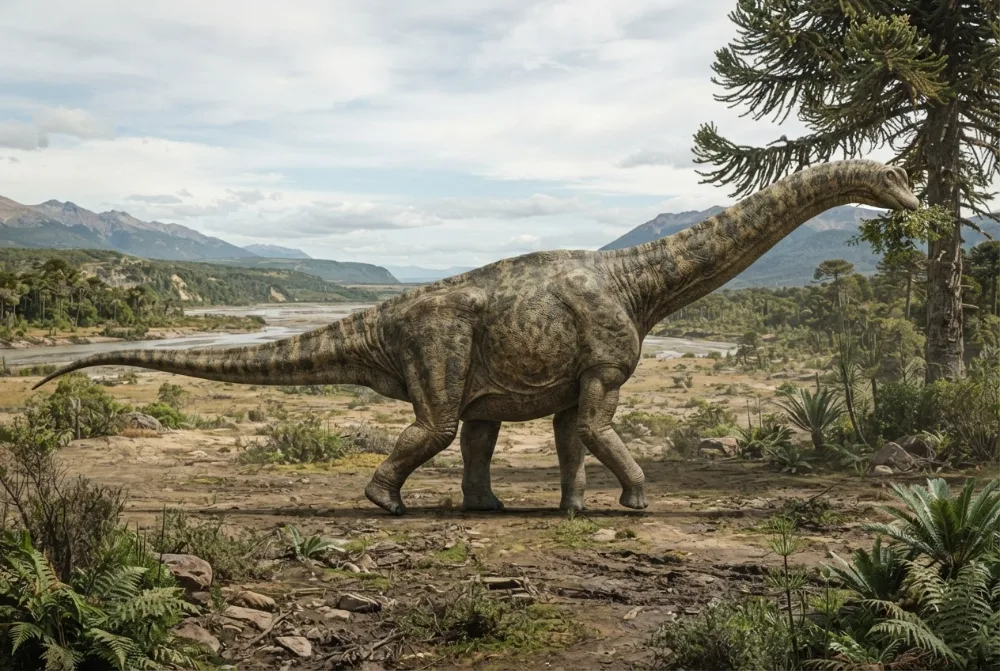
Its neck was super long, about 11.3 metres (37 feet), which is almost half of its total body length.1
The type specimen was still growing when it died, so adults might have been even bigger.1
Its bones were buried quickly in a flood, which is why they are so well preserved.1
Small theropod teeth found with the bones suggest scavengers, maybe megaraptorans, nibbled on the carcass.1
Dreadnoughtus lived about 76 to 70 million years ago, during the Late Cretaceous.1
Dreadnoughtus: gehien egindako galderak
?How big was Dreadnoughtus?
About 26 metres long and weighed around 48 to 49 metric tons, though some estimates range higher or lower.14
?What did Dreadnoughtus eat?
It was a plant-eater (herbivore). Its long neck helped it reach lots of different plants without moving much.51
?Was Dreadnoughtus bigger than T. rex?
Yes, Dreadnoughtus was much bigger. It was about 26 metres long and weighed up to 49 metric tons, while T. rex was about 12 metres long and weighed around 8 metric tons.15
?Did Dreadnoughtus have any predators?
Healthy adults were probably too big to be attacked, but small theropod teeth found with the bones suggest scavengers like megaraptorans nibbled on the carcass.15
?How fast could Dreadnoughtus run?
Nobody knows for sure, but because it was so huge and walked on four legs, it probably moved slowly, like a modern elephant.5
?Where was Dreadnoughtus found?
In Patagonia, Argentina, in the Cerro Fortaleza Formation of Santa Cruz Province.14
Mito-hauslea
Mitoa: Some people think Dreadnoughtus was the biggest dinosaur ever.
Egia: It was one of the largest known from fairly complete remains, but other titanosaurs like Argentinosaurus might have been heavier, though they are known from much less complete fossils.1
Dino adituentzat
- Izen zientifikoa
- Dreadnoughtus
- Izendatzailea:
- Lacovara et al. 20146
- Taldea
- Lepo-luzeak
- Familia / klada
- Eutitanosauria6
- Sailkapena
- Sauropodomorpha > Sauropoda > Titanosauria > Macronaria6
- Arroken adina
- 84 eta 72 milioi urte artean (Campanian)6
- Arroka-formazioak
- Cerro Fortaleza6
- Herrialdeak
- Argentina6
- Fosil-erregistroak
- 2 The Paleobiology Database datu-basean6
- Aurkikuntza
- Paleontologist Kenneth Lacovara discovered Dreadnoughtus in 2005 in the Cerro Fortaleza Formation in Argentina. It took four summers to dig out the huge bones, using mules and ropes to move them.1
- Oraindik eztabaidagai
- Scientists still debate exactly where Dreadnoughtus fits in the titanosaur family tree, because it has a mix of advanced and primitive features.1
Datuak nondik datozen
- Dreadnoughtus (en.wikipedia.org)
- PBDB Taxon (paleobiodb.org)
- A Gigantic, Exceptionally Complete Titanosaurian Sauropod Dinosaur from Southern Patagonia, Argentina (exa.ai)
- A Gigantic, Exceptionally Complete Titanosaurian Sauropod Dinosaur from Southern Patagonia, Argentina | Scientific Reports (nature.com)
- Dreadnoughtus (nhm.ac.uk)
- Dreadnoughtus in The Paleobiology Database (CC BY 4.0): adina, tokiak, arroka-formazioak, sailkapena.
Orrialde honetako datu bakoitzak zenbaki bat du, bere iturrira eramaten zaituena. Zerbait gaizki badugu, barkatu, dino-zaleak gara, ez zientzia-aldizkari bat. Idatzi [email protected] helbidera eta konponduko dugu.
 Rex gose da! Dino Wiki aita baten proiektua da, dinosauroak maite dituen bere semearentzat, doakoa, iragarkirik eta jarraitzailerik gabe. Helduek mokadutxo bat eman diezaiokete Rexi, sarean jarraitzen laguntzeko.Eman jaten Rexi
 Brachiosaurus
 Diplodocus
 Brontosaurus
 Argentinosaurus
 Camarasaurus
 Morosaurus
 Tyrannosaurus
 Triceratops
 Velociraptor
 Spinosaurus
 Ankylosaurus
 Parasaurolophus