 Zer dino zara? Galdetegia
 Dino borroka
 Dino lasterketa
 Dino minijokoak
 Pegatina-albuma
 Dino TOP zerrendak
 Harritu nazazu!
Efraasia
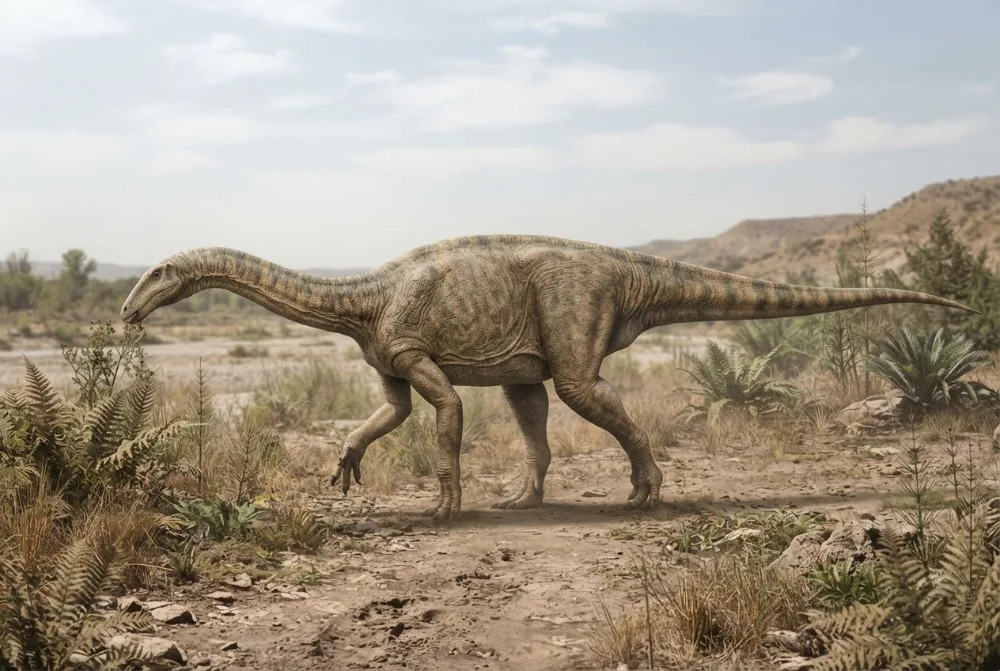
Efraasia was a long-necked plant-eater that lived in what is now Germany about 210 million years ago. It was a medium-sized dinosaur, about 6 to 7 metres long, and could walk on two or four legs. Its name honors the scientist Eberhard Fraas, who collected the first fossils.1
Noiz bizi izan zen?
Zein handia zen?
Zein luzea zen?
Zein altua zen?
kalkulua
 7 txakur bezain luze, sudurretik buztanera🍌bata bestearen atzean jarritako 39 banana bezain luze🏃100 metro 12 segundotan egin zitzakeen korrika (gizakirik azkarrenak 9,6 behar ditu)
Zein handia zen Efraasia ZUREKIN alderatuta?
Zure nabigatzaileko kalkulu hutsak. Ez da ezer gordetzen ez inora bidaltzen.
Zein azkarra zen?


Datu dibertigarriak
Efraasia was once thought to be a small dinosaur only 2 to 3 metres long, but scientists later realized those fossils were from juveniles. Adults grew to about 6.5 metres.1
Its fossils were first mistaken for three different dinosaur species: Teratosaurus minor, Sellosaurus fraasi, and Paleosaurus diagnosticus. In 2003, scientists combined them into one species: Efraasia minor.1
Efraasia had long fingers and a flexible thumb, which it may have used to grasp food. Its wrists were shaped so it could walk on all fours easily.1
The first Efraasia fossils were discovered by a stonemason named Albert Burrer in a quarry near Pfaffenhofen, Germany, between 1906 and 1914.1
Efraasia is a basal sauropodomorph, meaning it is an early relative of the giant long-necked sauropods like Brachiosaurus and Diplodocus.1
Some scientists think Efraasia was an obligate biped, meaning it could only walk on two legs, because its lower arm could not rotate to point its hands downward.1
Efraasia: gehien egindako galderak
?What did Efraasia eat?
Efraasia was a herbivore, meaning it ate plants. It thrived on the lush vegetation of its time.12
?How big was Efraasia?
Efraasia was a medium sized dinosaur, about 6 to 7 metres long. It weighed between 300 and 600 kilograms.12
Mito-hauslea
Mitoa: Efraasia was a meat-eating dinosaur.
Egia: Early researchers thought it was a predator, but in 1965 scientists proved it was a plant-eating sauropodomorph.1
Dino adituentzat
- Izen zientifikoa
- Efraasia
- Izendatzailea:
- Galton 19733
- Taldea
- Lepo-luzeak
- Familia / klada
- Sauropodomorpha3
- Sailkapena
- Sauropodomorpha3
- Arroken adina
- 227 eta 206 milioi urte artean (Norian)3
- Arroka-formazioak
- Löwenstein3
- Herrialdeak
- Alemania3
- Fosil-erregistroak
- 5 The Paleobiology Database datu-basean3
- Aurkikuntza
- The first fossils were found by Albert Burrer in a quarry near Pfaffenhofen, Germany, starting in 1906. They were later studied by Friedrich von Huene and Eberhard Fraas. The genus Efraasia was named by Peter Galton in 1973 in honor of Fraas.1
- Oraindik eztabaidagai
- Scientists still debate whether Efraasia walked on two legs or four. Some think its wrists allowed it to walk on all fours, while others argue it was an obligate biped.1
Datuak nondik datozen
- Efraasia (en.wikipedia.org)
- Efraasia | Exploring the Late Triassic Herbivorous Giant (thedinosaurs.org)
- Efraasia in The Paleobiology Database (CC BY 4.0): adina, tokiak, arroka-formazioak, sailkapena.
Orrialde honetako datu bakoitzak zenbaki bat du, bere iturrira eramaten zaituena. Zerbait gaizki badugu, barkatu, dino-zaleak gara, ez zientzia-aldizkari bat. Idatzi [email protected] helbidera eta konponduko dugu.
 Rex gose da! Dino Wiki aita baten proiektua da, dinosauroak maite dituen bere semearentzat, doakoa, iragarkirik eta jarraitzailerik gabe. Helduek mokadutxo bat eman diezaiokete Rexi, sarean jarraitzen laguntzeko.Eman jaten Rexi
 Brachiosaurus
 Diplodocus
 Brontosaurus
 Argentinosaurus
 Camarasaurus
 Morosaurus
 Nothosaurus
 Coelophysis
 Podokesaurus
 Simosaurus
 Eudimorphodon
 Herrerasaurus