 Zer dino zara? Galdetegia
 Dino borroka
 Dino lasterketa
 Dino minijokoak
 Pegatina-albuma
 Dino TOP zerrendak
 Harritu nazazu!
Eucoelophysis
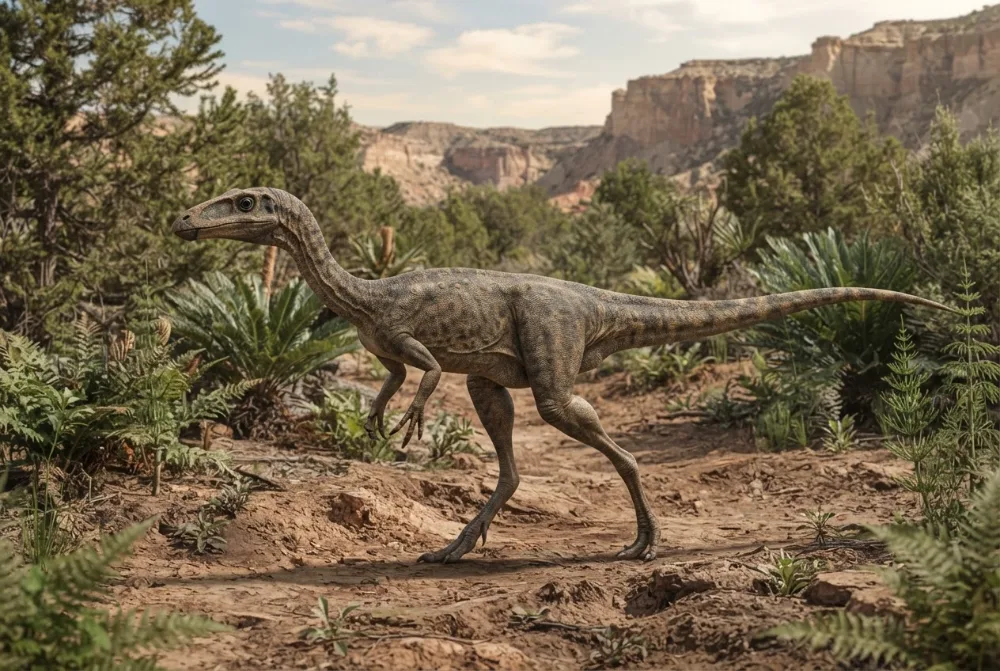
Eucoelophysis was a small, plant-eating dinosaur that lived about 212 million years ago in what is now New Mexico. It had a beak and walked on two legs, looking a bit like a long-legged lizard. Scientists once thought it was a meat-eater, but now they know it munched on plants.12
Noiz bizi izan zen?
Zein handia zen?
Zein luzea zen?
Zein altua zen?
kalkulua
 3 txakur bezain luze, sudurretik buztanera🍌bata bestearen atzean jarritako 17 banana bezain luze🏃100 metro 7,8 segundotan egin zitzakeen korrika (gizakirik azkarrenak 9,6 behar ditu)
Zein handia zen Eucoelophysis ZUREKIN alderatuta?
Zure nabigatzaileko kalkulu hutsak. Ez da ezer gordetzen ez inora bidaltzen.
Zein azkarra zen?


Datu dibertigarriak
Its fossils were first found in the 1880s by David Baldwin, but were mixed up with another dinosaur called Coelophysis.1
For a long time, scientists thought Eucoelophysis was a meat-eating dinosaur, but in 2007 a study showed it was actually a plant-eater related to Silesaurus.1
Eucoelophysis lived during the Late Triassic period, about 212 million years ago.1
The name Eucoelophysis means 'true hollow form' because it was thought to be the real Coelophysis at first.1
Only a few bones of Eucoelophysis have been found, including parts of the hip and hind legs.1
Eucoelophysis is now placed in a group called Silesauridae, which are close relatives of dinosaurs.1
Eucoelophysis: gehien egindako galderak
?Was Eucoelophysis a dinosaur?
No, it is not a dinosaur. Scientists now place it in a group called Silesauridae, which are close relatives of dinosaurs but not true dinosaurs.1
?How big was Eucoelophysis?
The exact size is not known from the few bones found, but it was a small animal, probably about the size of a modern turkey or a small dog.1
?What did Eucoelophysis eat?
It was a plant-eater. It had a beak and munched on plants, unlike the meat-eating dinosaurs it was once mistaken for.1
?When did Eucoelophysis live?
It lived during the Late Triassic period, about 212 million years ago, in what is now New Mexico.1
Dino adituentzat
- Izen zientifikoa
- Eucoelophysis
- Izendatzailea:
- Sullivan and Lucas 19992
- Taldea
- Landarejale mokodunak
- Familia / klada
- Silesauridae2
- Sailkapena
- Ornithischia2
- Arroken adina
- 227 eta 201 milioi urte artean (Norian / Rhaetian)2
- Arroka-formazioak
- Chinle2
- Herrialdeak
- AEB2
- Fosil-erregistroak
- 2 The Paleobiology Database datu-basean2
- Aurkikuntza
- Eucoelophysis was named in 1999 by Robert Sullivan and Spencer Lucas based on a skeleton found in New Mexico. The species name baldwini honors David Baldwin, who collected the first fossils in the 1880s.12
- Oraindik eztabaidagai
- Scientists are still debating whether some fossils from the Snyder Quarry and Hayden Quarry belong to Eucoelophysis or to other animals.1
Datuak nondik datozen
- Eucoelophysis (en.wikipedia.org)
- Eucoelophysis in The Paleobiology Database (CC BY 4.0): adina, tokiak, arroka-formazioak, sailkapena.
Orrialde honetako datu bakoitzak zenbaki bat du, bere iturrira eramaten zaituena. Zerbait gaizki badugu, barkatu, dino-zaleak gara, ez zientzia-aldizkari bat. Idatzi [email protected] helbidera eta konponduko dugu.
 Rex gose da! Dino Wiki aita baten proiektua da, dinosauroak maite dituen bere semearentzat, doakoa, iragarkirik eta jarraitzailerik gabe. Helduek mokadutxo bat eman diezaiokete Rexi, sarean jarraitzen laguntzeko.Eman jaten Rexi
 Iguanodon
 Tenontosaurus
 Thescelosaurus
 Zalmoxes
 Camptosaurus
 Rhabdodon
 Nothosaurus
 Massospondylus
 Plateosaurus
 Coelophysis
 Podokesaurus
 Simosaurus