 Zer dino zara? Galdetegia
 Dino borroka
 Dino lasterketa
 Dino minijokoak
 Pegatina-albuma
 Dino TOP zerrendak
 Harritu nazazu!
Fluvionectes
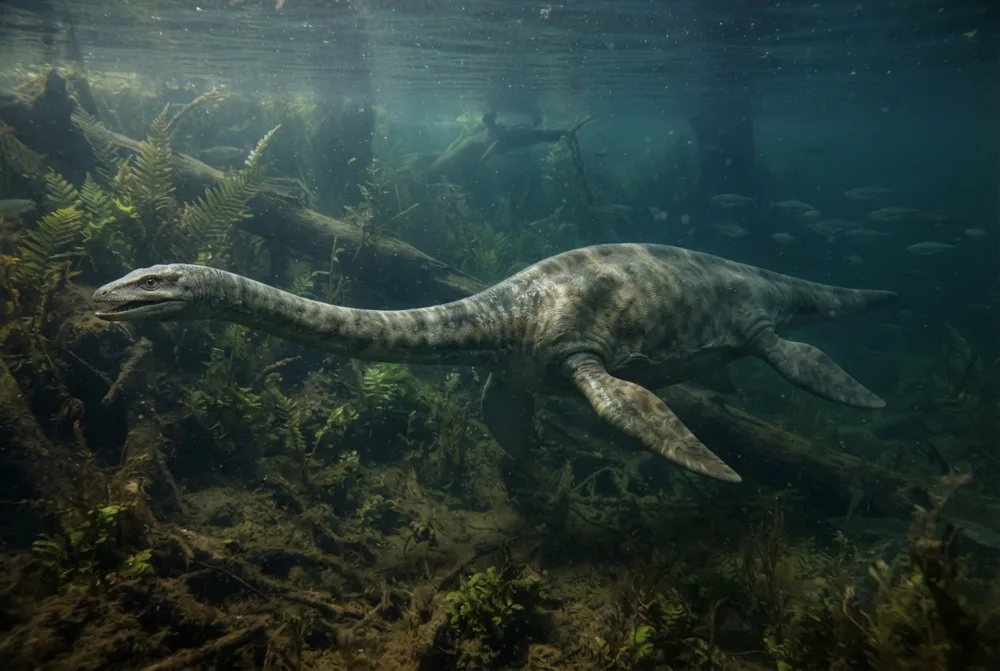
Fluvionectes was a long-necked marine reptile that swam in rivers and estuaries, not the open ocean. It was a type of plesiosaur called an elasmosaur, and it hunted fish and other prey in the water.1
Noiz bizi izan zen?
Zein handia zen?
Zein luzea zen?
Zein astuna zen?
 7 txakur bezain luze, sudurretik buztanera🍌bata bestearen atzean jarritako 39 banana bezain luze🍉78 angurria bezain astun🧸haur-eskolako 21 haur bezain astun🎒12 eskolaume bezain astun🏊igerileku handi baten luzera (50 m) 6,2 segundotan egin zezakeen igerian
Zein handia zen Fluvionectes ZUREKIN alderatuta?
Zure nabigatzaileko kalkulu hutsak. Ez da ezer gordetzen ez inora bidaltzen.
Zein azkarra zen?


Datu dibertigarriak
Fluvionectes is one of the few plesiosaurs found in non-marine rocks, meaning it lived in rivers and estuaries, not the open ocean.1
The holotype skeleton was found disarticulated, scattered over an area of about 2.5 square metres, with only two rib bones still connected.1
Fluvionectes had 22 dorsal vertebrae, which is a unique feature that helps scientists identify it as a new species.1
The name Fluvionectes comes from Latin and Greek words meaning 'river swimmer', because it lived in rivers.1
The species name sloanae honours Donna Sloan, who discovered the holotype and worked as a scientific illustrator at the Royal Tyrrell Museum.1
Fluvionectes was smaller than many other elasmosaurids that lived in the ocean, which might be because it lived in rivers.1
Fluvionectes: gehien egindako galderak
?How big was Fluvionectes?
About 5 to 5.2 metres (16 to 17 ft) long for the holotype, and the largest known specimen may have reached 7 metres (23 ft).23
?What did Fluvionectes eat?
It hunted fish and other vertebrates in the water, using its slender tooth and powerful flippers to catch prey.4
?Where did Fluvionectes live?
It lived in rivers and estuaries (brackish water) in what is now Alberta, Canada, not in the open ocean like most other elasmosaurs.23
?Is Fluvionectes a dinosaur?
No, it is a plesiosaur, a type of marine reptile that lived in the water during the time of dinosaurs.2
Mito-hauslea
Mitoa: Some people think all plesiosaurs lived only in the ocean.
Egia: Fluvionectes shows that some plesiosaurs lived in rivers and estuaries, not just the open sea.1
Dino adituentzat
- Izen zientifikoa
- Fluvionectes
- Izendatzailea:
- Campbell et al. 20215
- Taldea
- Plesiosauroak
- Familia / klada
- Elasmosauridae5
- Sailkapena
- Plesiosauria > Elasmosauridae > Sauropterygia5
- Arroken adina
- 84 eta 72 milioi urte artean (Campanian)5
- Arroka-formazioak
- Dinosaur Park5
- Herrialdeak
- Kanada5
- Fosil-erregistroak
- 6 The Paleobiology Database datu-basean5
- Aurkikuntza
- The holotype was discovered by Donna Sloan in the Dinosaur Park Formation in Alberta, Canada. It was named by Campbell and colleagues in 2021.1
- Oraindik eztabaidagai
- Scientists are still debating why Fluvionectes was smaller than ocean-living elasmosaurids, and whether it spent its whole life in rivers or moved between fresh and salt water.1
Datuak nondik datozen
- PeerJ A new elasmosaurid (Sauropterygia: Plesiosauria) from the non-marine to paralic Dinosaur Park Formation of southern Alberta, Canada (peerj.com)
- Fluvionectes (en.wikipedia.org)
- A new elasmosaurid (Sauropterygia: Plesiosauria) from the non-marine to paralic Dinosaur Park Formation of southern Alberta, Canada (pmc.ncbi.nlm.nih.gov)
- New Late Cretaceous Marine Reptile publication by M. Ryan and J. Campbell | Department of Earth Sciences (earthsci.carleton.ca)
- Fluvionectes in The Paleobiology Database (CC BY 4.0): adina, tokiak, arroka-formazioak, sailkapena.
Orrialde honetako datu bakoitzak zenbaki bat du, bere iturrira eramaten zaituena. Zerbait gaizki badugu, barkatu, dino-zaleak gara, ez zientzia-aldizkari bat. Idatzi [email protected] helbidera eta konponduko dugu.
 Rex gose da! Dino Wiki aita baten proiektua da, dinosauroak maite dituen bere semearentzat, doakoa, iragarkirik eta jarraitzailerik gabe. Helduek mokadutxo bat eman diezaiokete Rexi, sarean jarraitzen laguntzeko.Eman jaten Rexi
 Elasmosaurus
 Pliosaurus
 Plesiosaurus
 Cimoliasaurus
 Colymbosaurus
 Trinacromerum
 Tyrannosaurus
 Triceratops
 Velociraptor
 Spinosaurus
 Ankylosaurus
 Parasaurolophus