 Zer dino zara? Galdetegia
 Dino borroka
 Dino lasterketa
 Dino minijokoak
 Pegatina-albuma
 Dino TOP zerrendak
 Harritu nazazu!
Igai
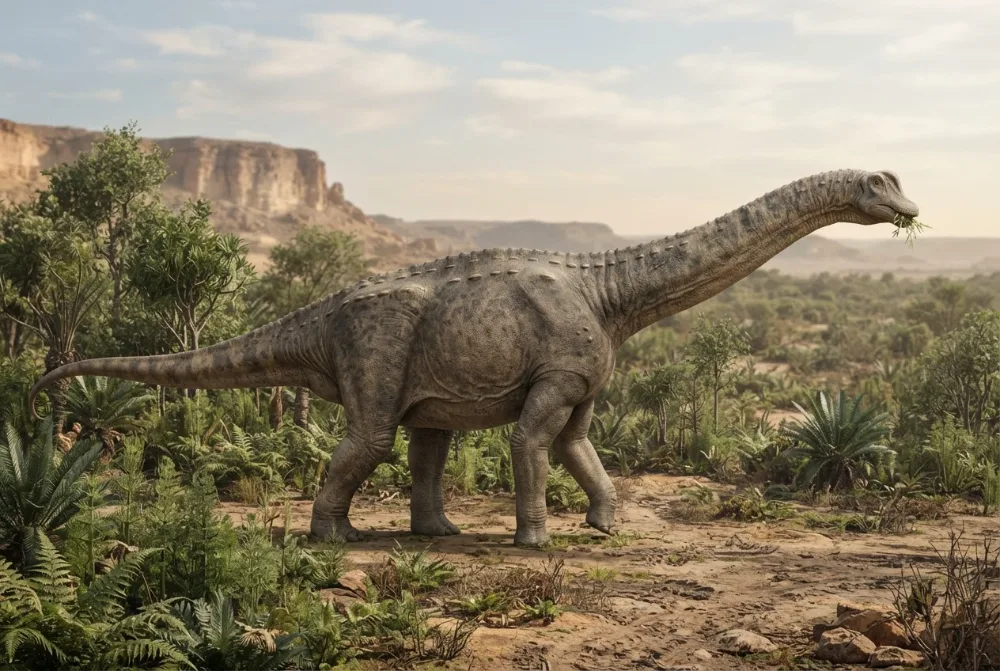
Igai was a giant, long-necked plant-eater that stomped through what is now Egypt about 74 million years ago. It was a titanosaur, a group of sauropods known for their huge bodies and small heads. Even though it was big, it was actually one of the smaller titanosaurs!12
Noiz bizi izan zen?
Zein handia zen?
Zein luzea zen?
Zein altua zen?
kalkulua
 ilaran aparkatutako 3 auto bezain luze🍌bata bestearen atzean jarritako 83 banana bezain luze🏃100 metro 22 segundotan egin zitzakeen korrika (gizakirik azkarrenak 9,6 behar ditu)
Zein handia zen Igai ZUREKIN alderatuta?
Zure nabigatzaileko kalkulu hutsak. Ez da ezer gordetzen ez inora bidaltzen.
Zein azkarra zen?


Datu dibertigarriak
Igai had air sacs inside its backbone bones, making them light and spongy, which helped it grow so large.2
Its fifth metacarpal (a bone in the hand) had two unique bumps on the inner side that no other titanosaur has.2
Igai was more slender than many other titanosaurs, with leg bones that were relatively thin and graceful.2
The first and second metatarsals (foot bones) had deep grooves on their upper surfaces, a feature not seen in other titanosaurs.2
Igai lived about 74 million years ago, during the Campanian stage of the Late Cretaceous.2
Igai was probably bigger than its close relative Mansourasaurus, which was about 8 to 10 metres long.2
Igai: gehien egindako galderak
Mito-hauslea
Mitoa: Igai was a giant, slow-moving beast like other sauropods.
Egia: Igai was actually relatively small and slender for a titanosaur, and its limb bones suggest it was quite agile for its size.2
Dino adituentzat
- Izen zientifikoa
- Igai
- Izendatzailea:
- Gorscak et al. 20234
- Taldea
- Lepo-luzeak
- Familia / klada
- Saltasauridae4
- Sailkapena
- Sauropodomorpha > Sauropoda > Titanosauria > Macronaria4
- Arroken adina
- 84 eta 72 milioi urte artean (Campanian)4
- Arroka-formazioak
- Quseir4
- Herrialdeak
- Egipto4
- Fosil-erregistroak
- 1 The Paleobiology Database datu-basean4
- Aurkikuntza
- Fossils of Igai were first found in 1977 by German scientists in the Kharga Oasis, Egypt. It was named and described in 2023 by Gorscak and colleagues.23
- Oraindik eztabaidagai
- Scientists are still debating whether Igai was fully grown when it died, because some bones suggest it might not have been completely mature.1
Datuak nondik datozen
- tandfonline.com (tandfonline.com)
- Igai (en.wikipedia.org)
- PBDB Taxon (paleobiodb.org)
- Igai in The Paleobiology Database (CC BY 4.0): adina, tokiak, arroka-formazioak, sailkapena.
Orrialde honetako datu bakoitzak zenbaki bat du, bere iturrira eramaten zaituena. Zerbait gaizki badugu, barkatu, dino-zaleak gara, ez zientzia-aldizkari bat. Idatzi [email protected] helbidera eta konponduko dugu.
 Rex gose da! Dino Wiki aita baten proiektua da, dinosauroak maite dituen bere semearentzat, doakoa, iragarkirik eta jarraitzailerik gabe. Helduek mokadutxo bat eman diezaiokete Rexi, sarean jarraitzen laguntzeko.Eman jaten Rexi
 Brachiosaurus
 Diplodocus
 Brontosaurus
 Argentinosaurus
 Camarasaurus
 Morosaurus
 Tyrannosaurus
 Triceratops
 Velociraptor
 Spinosaurus
 Ankylosaurus
 Parasaurolophus