 Zer dino zara? Galdetegia
 Dino borroka
 Dino lasterketa
 Dino minijokoak
 Pegatina-albuma
 Dino TOP zerrendak
 Harritu nazazu!
Kaikaifilu
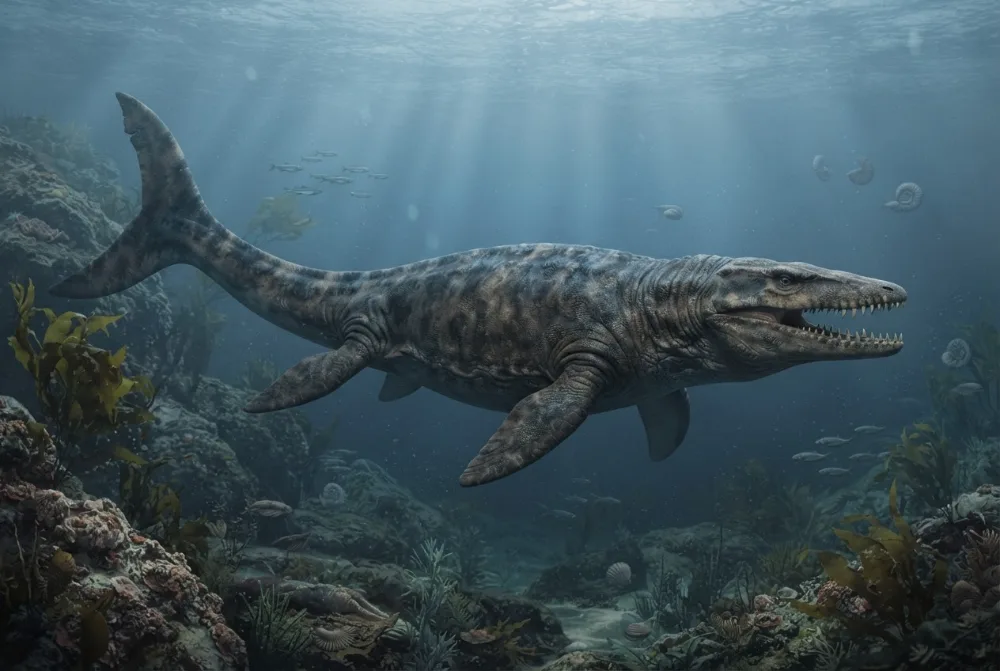
Kaikaifilu was a giant marine lizard that swam in the cold seas near Antarctica 66 million years ago. It was one of the biggest mosasaurs in the Southern Hemisphere, with a skull as long as a tall child!1
Noiz bizi izan zen?
Zein handia zen?
Zein luzea zen?
 ilaran aparkatutako 2 auto bezain luze🍌bata bestearen atzean jarritako 56 banana bezain luze🏊igerileku handi baten luzera (50 m) 5,5 segundotan egin zezakeen igerian
Zein handia zen Kaikaifilu ZUREKIN alderatuta?
Zure nabigatzaileko kalkulu hutsak. Ez da ezer gordetzen ez inora bidaltzen.
Zein azkarra zen?


Datu dibertigarriak
Kaikaifilu had different types of teeth in its mouth, which is rare for mosasaurs. This is called heterodont dentition.1
Its skull was about 1.1 to 1.2 metres long, almost twice as long as the skull of another Antarctic mosasaur called Taniwhasaurus antarcticus.1
Kaikaifilu lived in waters that could be as cold as 6 °C, and sometimes the sea surface temperature dropped below freezing.1
It lived right at the end of the Age of Dinosaurs, during the Cretaceous-Paleogene extinction event, and was one of the last mosasaurs to exist.1
The only known fossil of Kaikaifilu is a partial skull and a humerus (upper arm bone), found in 2011 by a Chilean expedition.2
Scientists think Kaikaifilu might belong to the Tylosaurinae group, but some features make this uncertain.1
Kaikaifilu: gehien egindako galderak
?How big was Kaikaifilu?
About 10 metres long, making it the largest mosasaur known from the Southern Hemisphere.13
?What did Kaikaifilu eat?
It was an apex predator that ate fish, plesiosaurs, other mosasaurs, and filter-feeding marine reptiles.13
?When did Kaikaifilu live?
It lived about 66 million years ago, right at the end of the Age of Dinosaurs, during the Cretaceous-Paleogene extinction event.13
?Where was Kaikaifilu found?
Its fossil was found on Seymour Island in Antarctica, by a Chilean expedition in 2011.1
?Why did Kaikaifilu have different teeth?
It had different types of teeth (heterodont dentition), which is rare for mosasaurs and helped it eat a variety of prey.1
Dino adituentzat
- Izen zientifikoa
- Kaikaifilu
- Izendatzailea:
- Otero et al. 20174
- Taldea
- Mosasauroak
- Familia / klada
- Mosasauridae4
- Sailkapena
- Mosasauroidea4
- Arroken adina
- 72 eta 66 milioi urte artean (Maastrichtian)4
- Arroka-formazioak
- Lopez de Bertodano4
- Herrialdeak
- Antartika4
- Fosil-erregistroak
- 1 The Paleobiology Database datu-basean4
- Aurkikuntza
- Kaikaifilu was named in 2017 by Rodrigo Otero and colleagues, based on a fossil found in January 2011 on Seymour Island, Antarctica, by a Chilean expedition.42
- Oraindik eztabaidagai
- Scientists are not sure if Kaikaifilu truly belongs to the Tylosaurinae group, because some of its features are different from other tylosaurines.1
Datuak nondik datozen
- Kaikaifilu (en.wikipedia.org)
- Kaikaifilu hervei gen. et sp. nov., a new large mosasaur (Squamata, Mosasauridae) from the upper Maastrichtian of Antarctica (sciencedirect.com)
- A giant predatory lizard swam in Antarctic seas near the end of the dinosaur age | ScienceDaily (sciencedaily.com)
- Kaikaifilu in The Paleobiology Database (CC BY 4.0): adina, tokiak, arroka-formazioak, sailkapena.
Orrialde honetako datu bakoitzak zenbaki bat du, bere iturrira eramaten zaituena. Zerbait gaizki badugu, barkatu, dino-zaleak gara, ez zientzia-aldizkari bat. Idatzi [email protected] helbidera eta konponduko dugu.
 Rex gose da! Dino Wiki aita baten proiektua da, dinosauroak maite dituen bere semearentzat, doakoa, iragarkirik eta jarraitzailerik gabe. Helduek mokadutxo bat eman diezaiokete Rexi, sarean jarraitzen laguntzeko.Eman jaten Rexi
 Mosasaurus
 Prognathodon
 Tylosaurus
 Platecarpus
 Clidastes
 Globidens
 Tyrannosaurus
 Triceratops
 Velociraptor
 Spinosaurus
 Ankylosaurus
 Parasaurolophus