 Zer dino zara? Galdetegia
 Dino borroka
 Dino lasterketa
 Dino minijokoak
 Pegatina-albuma
 Dino TOP zerrendak
 Harritu nazazu!
Kentrosaurus
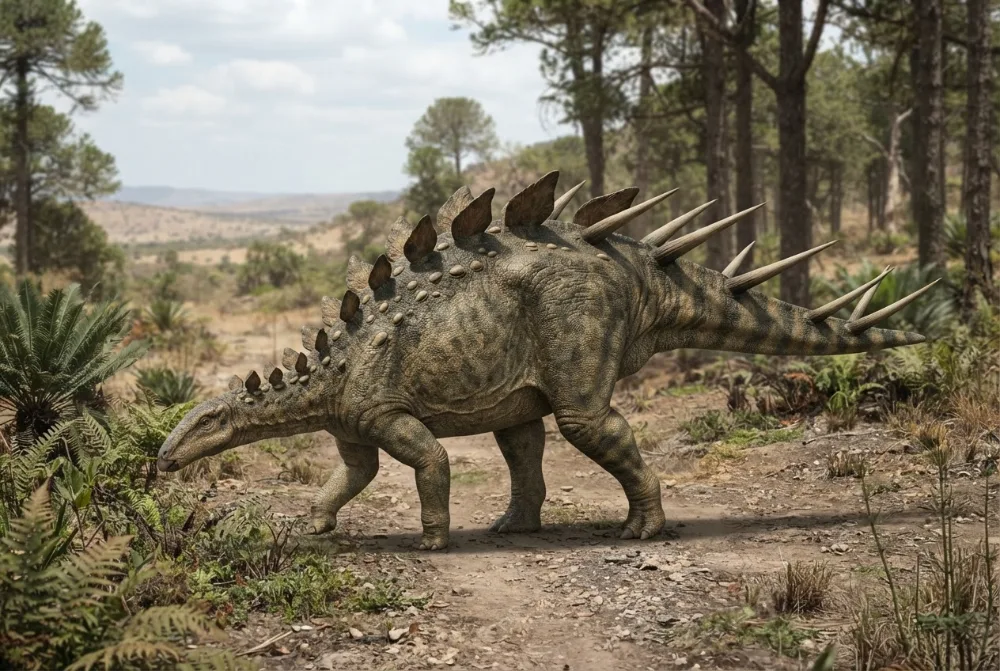
Kentrosaurus was a plated dinosaur that lived in what is now Tanzania, Africa, about 152 million years ago. It had a row of small plates on its neck and back that turned into long, sharp spikes on its tail. It used those tail spikes to fight off hungry meat-eaters!1
Noiz bizi izan zen?
Zein handia zen?
Zein luzea zen?
Zein altua zen?
Zein astuna zen?

 5 txakur bezain luze, sudurretik buztanera🍌bata bestearen atzean jarritako 28 banana bezain luze80 txakur bezain astun🍉320 angurria bezain astun🧸haur-eskolako 84 haur bezain astun🎒50 eskolaume bezain astun🐻❄️4 hartz zuri bezain astun🏃100 metro 18 segundotan egin zitzakeen korrika (gizakirik azkarrenak 9,6 behar ditu)
Zein handia zen Kentrosaurus ZUREKIN alderatuta?
Zure nabigatzaileko kalkulu hutsak. Ez da ezer gordetzen ez inora bidaltzen.
Zein azkarra zen?


Datu dibertigarriak
Kentrosaurus had a long spike on each shoulder, in addition to the spikes on its tail.1
The name Kentrosaurus was almost changed because it sounded like Centrosaurus, a horned dinosaur. But the spelling is different, so Kentrosaurus stayed.1
Scientists think there were two types of Kentrosaurus, one with stouter thigh bones and one with slimmer ones. This might mean males and females looked different.1
Over 1200 bones of Kentrosaurus were found in Tanzania by German expeditions between 1909 and 1912.1
Kentrosaurus lived alongside giant long-necked sauropods like Giraffatitan and Tornieria.1
The plates on its neck and back were probably covered in horn, like a cow's horn.1
Kentrosaurus: gehien egindako galderak
?How big was Kentrosaurus?
Kentrosaurus was about 4 to 5 metres (13 to 16 feet) long and weighed roughly 700 to 1,600 kilograms (1,500 to 3,500 pounds). Some specimens suggest even larger individuals existed.13
?What did Kentrosaurus eat?
Kentrosaurus was a herbivore, meaning it ate plants. It used its toothless beak to bite off leaves and other plant material, which it swallowed in large chunks without much chewing.14
?Did Kentrosaurus have spikes?
Yes, Kentrosaurus had a double row of spikes along its back, from its mid-section to the tip of its tail, plus a long spike on each shoulder. These spikes were likely used for defense.14
?Could Kentrosaurus swim?
There is no direct evidence that Kentrosaurus could swim. It was a land-dwelling dinosaur that walked on four legs, and its body was not specially adapted for swimming.1
?Was Kentrosaurus bigger than a T. rex?
No, Kentrosaurus was much smaller than Tyrannosaurus rex. Kentrosaurus was about 4 to 5 metres long, while T. rex could be over 12 metres long; they lived in different times and places.1
?Did Kentrosaurus have feathers?
No, Kentrosaurus did not have feathers. It had bony plates and spikes covered in horn, and its skin was likely scaly, like other stegosaurs.1
?When did Kentrosaurus live?
Kentrosaurus lived during the Late Jurassic period, about 152 million years ago, in what is now Tanzania, Africa.1
?Why did Kentrosaurus have plates?
The plates on Kentrosaurus's neck and back might have been for temperature regulation, since they contained blood vessels, or for protection and display. No one knows for sure.4
Mito-hauslea
Mitoa: Some people think Kentrosaurus had all its spikes and plates in a single row down its back.
Egia: Scientists think Kentrosaurus had two rows of plates and spikes, one on each side of its back.1
Dino adituentzat
- Izen zientifikoa
- Kentrosaurus
- Izendatzailea:
- Hennig 19155
- Taldea
- Dino plakadunak
- Familia / klada
- Stegosauridae5
- Sailkapena
- Ornithischia > Stegosauria > Thyreophora5
- Arroken adina
- 162 eta 143 milioi urte artean (Oxfordian / Tithonian)5
- Arroka-formazioak
- Tendaguru5
- Herrialdeak
- Tanzania5
- Fosil-erregistroak
- 27 The Paleobiology Database datu-basean5
- Honela ere ezaguna
- Doryphorosaurus, Kentrurosaurus (orain animalia bertzat hartzen diren izen zaharragoak)5
- Aurkikuntza
- German paleontologist Edwin Hennig named Kentrosaurus in 1915. The first fossils were found by the German Tendaguru Expedition in 1909.15
- Oraindik eztabaidagai
- Scientists are not sure exactly where each plate and spike was placed on the body, because most were found scattered.1
Datuak nondik datozen
- Kentrosaurus (en.wikipedia.org)
- Kentrosaurus | Natural History Museum (nhm.ac.uk)
- Kentrosaurus | dinosaur genus | Britannica (britannica.com)
- Kentrosaurus - Dinosaur - Enchanted Learning Software (enchantedlearning.com)
- Kentrosaurus in The Paleobiology Database (CC BY 4.0): adina, tokiak, arroka-formazioak, sailkapena.
Orrialde honetako datu bakoitzak zenbaki bat du, bere iturrira eramaten zaituena. Zerbait gaizki badugu, barkatu, dino-zaleak gara, ez zientzia-aldizkari bat. Idatzi [email protected] helbidera eta konponduko dugu.
 Rex gose da! Dino Wiki aita baten proiektua da, dinosauroak maite dituen bere semearentzat, doakoa, iragarkirik eta jarraitzailerik gabe. Helduek mokadutxo bat eman diezaiokete Rexi, sarean jarraitzen laguntzeko.Eman jaten Rexi
 Stegosaurus
 Diracodon
 Hypsirophus
 Dacentrurus
 Miragaia
 Hesperosaurus
 Brachiosaurus
 Diplodocus
 Allosaurus
 Brontosaurus
 Compsognathus
 Camarasaurus