 Zer dino zara? Galdetegia
 Dino borroka
 Dino lasterketa
 Dino minijokoak
 Pegatina-albuma
 Dino TOP zerrendak
 Harritu nazazu!
Libonectes
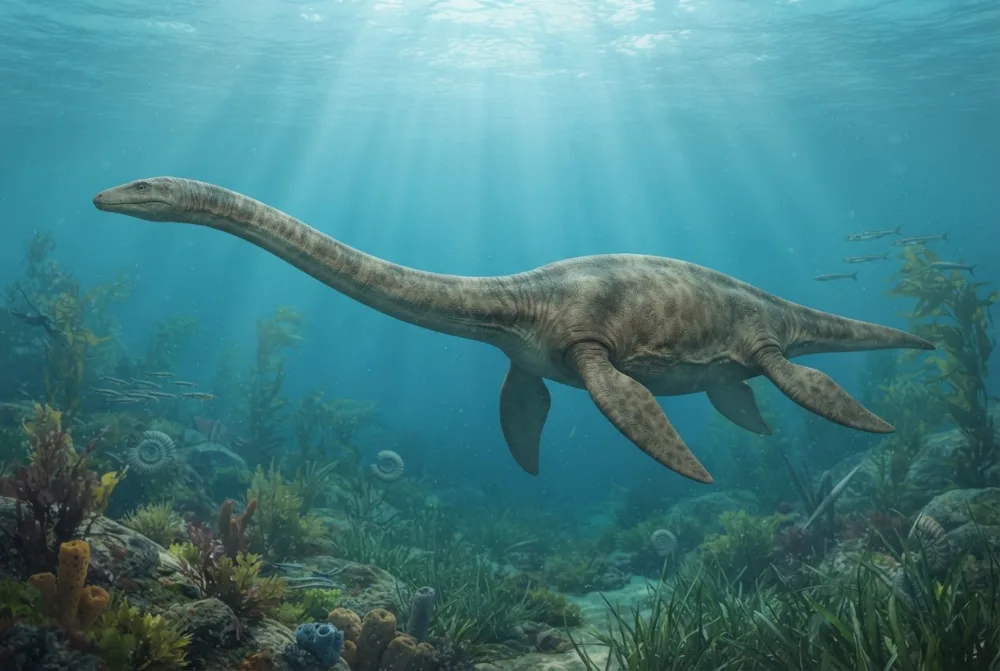
Libonectes was a long-necked marine reptile that swam in warm seas during the time of the dinosaurs. It used its strong flippers to paddle through the water and may have swallowed fish and ammonites whole. Fossils show it had a skull that is one of the best preserved of any elasmosaurid plesiosaur.1
Noiz bizi izan zen?
Zein handia zen?
Zein luzea zen?
 7 txakur bezain luze, sudurretik buztanera🍌bata bestearen atzean jarritako 40 banana bezain luze🏊igerileku handi baten luzera (50 m) 7,2 segundotan egin zezakeen igerian
Zein handia zen Libonectes ZUREKIN alderatuta?
Zure nabigatzaileko kalkulu hutsak. Ez da ezer gordetzen ez inora bidaltzen.
Zein azkarra zen?


Datu dibertigarriak
Libonectes had a neck that was 5.06 metres (16.6 feet) long, more than two-thirds of its total body length.1
The first fossils were found by a farmer named T.W. Tidwell in the late 1930s in Texas.1
Its skull is the best preserved skull of any elasmosaurid plesiosaur ever found.1
Libonectes lived about 93 million years ago, during the Late Cretaceous period.3
It was originally named Elasmosaurus morgani in 1949, but was given its own genus, Libonectes, in 1997.1
Gastroliths (stomach stones) have been found inside Libonectes fossils, which may have helped it digest food or control its buoyancy in the water.1
Libonectes probably swam slowly and used its large size to trap prey.1
Libonectes: gehien egindako galderak
?How big was Libonectes?
Libonectes was a medium-sized plesiosaur, about 7.2 metres (24 feet) long. Its neck alone was 5.06 metres (16.6 feet) long.1
?What did Libonectes eat?
Libonectes probably ate small fish and ammonites. It may have swallowed prey whole and used stomach stones to help digest food.1
Mito-hauslea
Mitoa: Some people think plesiosaurs like Libonectes could lift their heads and necks high out of the water like a swan.
Egia: Scientists now believe their necks were not flexible enough to lift high above the water. They probably held their necks more horizontally while swimming.1
Dino adituentzat
- Izen zientifikoa
- Libonectes
- Izendatzailea:
- Carpenter 19973
- Taldea
- Plesiosauroak
- Familia / klada
- Elasmosauridae3
- Sailkapena
- Plesiosauria > Elasmosauridae > Sauropterygia3
- Arroken adina
- 100 eta 90 milioi urte artean (Cenomanian / Turonian)3
- Arroka-formazioak
- Britton, Akrabou3
- Herrialdeak
- AEB, Maroko3
- Fosil-erregistroak
- 2 The Paleobiology Database datu-basean3
- Aurkikuntza
- The first Libonectes fossils were found by tenant farmer T.W. Tidwell in the late 1930s in Texas. Charles Gill Morgan prepared the fossils, and the species was named Elasmosaurus morgani by Welles in 1949. It was reclassified as its own genus Libonectes by Carpenter in 1997.1
- Oraindik eztabaidagai
- Scientists are not sure whether Libonectes was a pure carnivore or an omnivore, because gastroliths could indicate plant eating or just buoyancy control.1
Datuak nondik datozen
- Libonectes (en.wikipedia.org)
- Libonectes morgani, an elasmosaur with transatlantic dispersal (sachspal.de)
- Libonectes in The Paleobiology Database (CC BY 4.0): adina, tokiak, arroka-formazioak, sailkapena.
Orrialde honetako datu bakoitzak zenbaki bat du, bere iturrira eramaten zaituena. Zerbait gaizki badugu, barkatu, dino-zaleak gara, ez zientzia-aldizkari bat. Idatzi [email protected] helbidera eta konponduko dugu.
 Rex gose da! Dino Wiki aita baten proiektua da, dinosauroak maite dituen bere semearentzat, doakoa, iragarkirik eta jarraitzailerik gabe. Helduek mokadutxo bat eman diezaiokete Rexi, sarean jarraitzen laguntzeko.Eman jaten Rexi
 Elasmosaurus
 Pliosaurus
 Plesiosaurus
 Cimoliasaurus
 Colymbosaurus
 Trinacromerum
 Tyrannosaurus
 Triceratops
 Velociraptor
 Spinosaurus
 Ankylosaurus
 Parasaurolophus