 Zer dino zara? Galdetegia
 Dino borroka
 Dino lasterketa
 Dino minijokoak
 Pegatina-albuma
 Dino TOP zerrendak
 Harritu nazazu!
Noiz bizi izan zen?

Zein handia zen?
Zein luzea zen?
Zein altua zen?
kalkulua
Zein astuna zen?
 5 txakur bezain luze, sudurretik buztanera🍌bata bestearen atzean jarritako 28 banana bezain luze🍉190 angurria bezain astun🧸haur-eskolako 51 haur bezain astun🎒30 eskolaume bezain astun🐻❄️2 hartz zuri bezain astun🏃100 metro 12 segundotan egin zitzakeen korrika (gizakirik azkarrenak 9,6 behar ditu)
Zein handia zen Magyarosaurus ZUREKIN alderatuta?
Zure nabigatzaileko kalkulu hutsak. Ez da ezer gordetzen ez inora bidaltzen.
Zein azkarra zen?


Datu dibertigarriak
Magyarosaurus is a famous example of island dwarfism, where animals become smaller when living on islands with limited resources.2
It lived during the Late Cretaceous period, about 71 to 66 million years ago.1
The first fossils were described by Baron Franz Nopcsa in 1915, who named it Titanosaurus dacus.2
Magyarosaurus was a titanosaur, a group of sauropods that includes some of the largest dinosaurs ever.1
Scientists have found bones from many individuals, including skull pieces, which is rare for sauropods.2
In 2024, a study suggested that there were actually four different titanosaur species living in the same area, including the giant Uriash kadici.2
Magyarosaurus: gehien egindako galderak
?How big was Magyarosaurus?
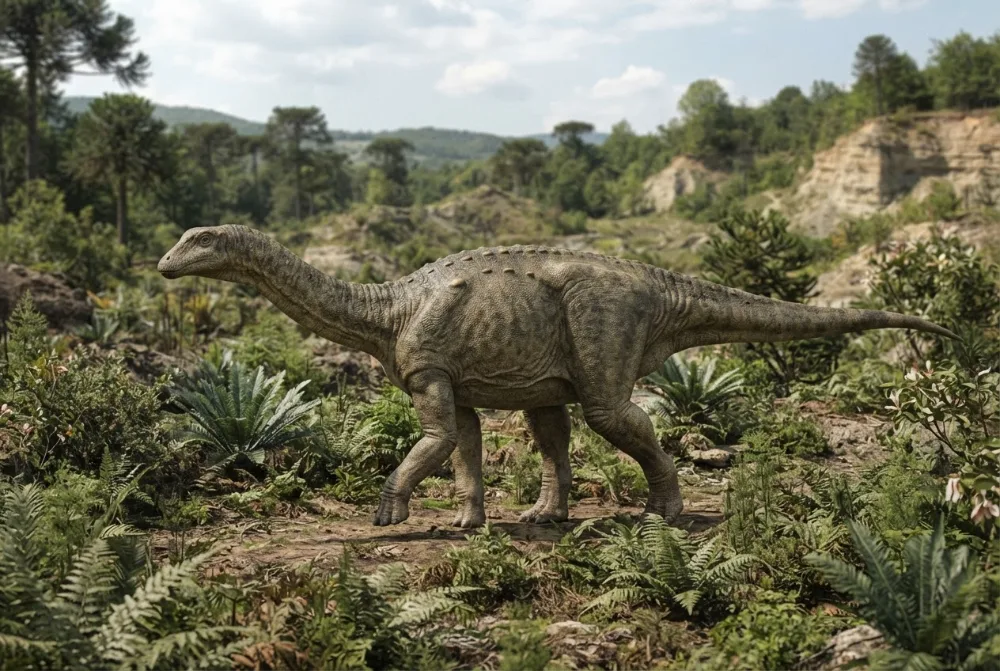
Magyarosaurus was one of the smallest adult sauropods, measuring about 6 metres (20 feet) long and weighing up to 972 kilograms (2,143 pounds).3
?Why was Magyarosaurus so small?
It was a dwarf dinosaur because it lived on an island with limited food, a process called island dwarfism. Scientists confirmed this by studying its bone growth.34
?Did Magyarosaurus have feathers?
No, Magyarosaurus was a sauropod and did not have feathers. It had scaly skin and some bony armour plates called osteoderms.3
?What did Magyarosaurus eat?
Magyarosaurus was a plant-eater, like all sauropods. It ate ferns, cycads and other vegetation that grew on its island home.3
?When did Magyarosaurus live?
Magyarosaurus lived during the Late Cretaceous Period, about 71 to 66 million years ago.3
?Was Magyarosaurus a dinosaur?
Yes, Magyarosaurus was a dinosaur. It was a sauropod, a long-necked plant-eating dinosaur.3
?Could Magyarosaurus swim?
Nobody knows for sure, but like most sauropods it probably lived on land and was not a strong swimmer. It lived on an island, so it may have waded in shallow water.3
?How fast could Magyarosaurus run?
Scientists do not know its exact speed, but as a small sauropod it was likely slower than a modern horse. Its leg bones suggest it was not built for fast running.3
Mito-hauslea
Mitoa: Magyarosaurus was a baby or juvenile of a larger sauropod.
Egia: Studies of its bones show that Magyarosaurus was a fully grown adult, not a baby. It was a true dwarf species.2
Dino adituentzat
- Izen zientifikoa
- Magyarosaurus
- Izendatzailea:
- Huene 19325
- Taldea
- Lepo-luzeak
- Familia / klada
- Eutitanosauria5
- Sailkapena
- Sauropodomorpha > Sauropoda > Titanosauria > Macronaria5
- Arroken adina
- 72 eta 66 milioi urte artean (Maastrichtian)5
- Arroka-formazioak
- Sebeş, Densuș-Ciula, Pui Beds5
- Herrialdeak
- Errumania5
- Fosil-erregistroak
- 11 The Paleobiology Database datu-basean5
- Aurkikuntza
- Baron Franz Nopcsa first described the fossils in 1915, calling it Titanosaurus dacus. In 1932, Friedrich von Huene gave it its own genus, Magyarosaurus.2
- Oraindik eztabaidagai
- Scientists still debate whether all the small titanosaur fossils from Romania belong to Magyarosaurus or to several different species.2
Datuak nondik datozen
- Magyarosaurus (nhm.ac.uk)
- Full article: Revision of Romanian sauropod dinosaurs reveals high titanosaur diversity and body-size disparity on the latest Cretaceous Haţeg Island, with implications for titanosaurian biogeography (tandfonline.com)
- Magyarosaurus (en.wikipedia.org)
- Small body size and extreme cortical bone remodeling indicate phyletic dwarfism in Magyarosaurus dacus (Sauropoda: Titanosauria) (pubmed.ncbi.nlm.nih.gov)
- Magyarosaurus in The Paleobiology Database (CC BY 4.0): adina, tokiak, arroka-formazioak, sailkapena.
Orrialde honetako datu bakoitzak zenbaki bat du, bere iturrira eramaten zaituena. Zerbait gaizki badugu, barkatu, dino-zaleak gara, ez zientzia-aldizkari bat. Idatzi [email protected] helbidera eta konponduko dugu.
 Rex gose da! Dino Wiki aita baten proiektua da, dinosauroak maite dituen bere semearentzat, doakoa, iragarkirik eta jarraitzailerik gabe. Helduek mokadutxo bat eman diezaiokete Rexi, sarean jarraitzen laguntzeko.Eman jaten Rexi
 Brachiosaurus
 Diplodocus
 Brontosaurus
 Argentinosaurus
 Camarasaurus
 Morosaurus
 Tyrannosaurus
 Triceratops
 Velociraptor
 Spinosaurus
 Ankylosaurus
 Parasaurolophus