 Zer dino zara? Galdetegia
 Dino borroka
 Dino lasterketa
 Dino minijokoak
 Pegatina-albuma
 Dino TOP zerrendak
 Harritu nazazu!
Olorotitan
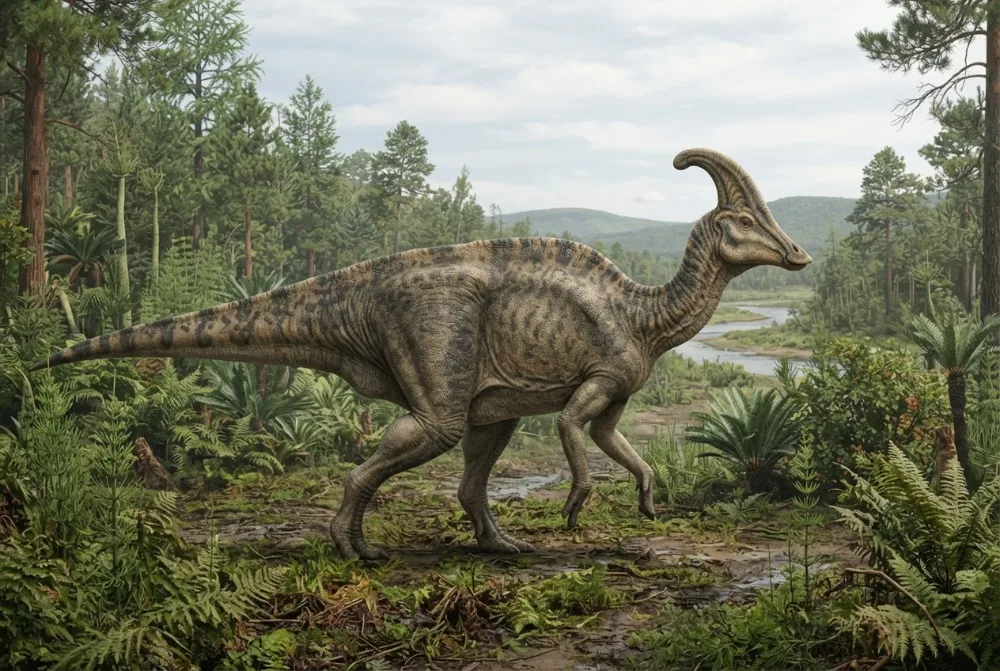
Olorotitan was a duck-billed dinosaur with a tall, hollow crest on its head. It lived in what is now Russia near the end of the age of dinosaurs. This plant-eater had a long neck and a strong beak for chewing tough plants.1
Noiz bizi izan zen?
Zein handia zen?
Zein luzea zen?
Zein altua zen?
Zein astuna zen?

 8 txakur bezain luze, sudurretik buztanera🍌bata bestearen atzean jarritako 44 banana bezain luze170 txakur bezain astun🍉680 angurria bezain astun🎒haurrez betetako 4 ikasgela oso bezain astun🐻❄️8 hartz zuri bezain astun🏃100 metro 15 segundotan egin zitzakeen korrika (gizakirik azkarrenak 9,6 behar ditu)
Zein handia zen Olorotitan ZUREKIN alderatuta?
Zure nabigatzaileko kalkulu hutsak. Ez da ezer gordetzen ez inora bidaltzen.
Zein azkarra zen?


Datu dibertigarriak
Olorotitan had a very long neck for a duck-billed dinosaur, with 18 neck bones. That is why its name means 'titanic swan'.12
Its hollow head crest was tall and helmet-shaped, made from expanded skull bones that held the nasal passages.12
The skeleton of Olorotitan is the most complete lambeosaurine (a type of duck-billed dinosaur) ever found outside North America.12
Olorotitan lived about 72 to 66 million years ago, during the Maastrichtian age of the Late Cretaceous.3
It was one of the last non-bird dinosaurs to go extinct, dying out in the great extinction event 66 million years ago.1
The tail of Olorotitan had extra connections between the bones in its upper part, which may have made that section stiff.2
Olorotitan is closely related to the North American dinosaurs Corythosaurus and Hypacrosaurus.2
Olorotitan: gehien egindako galderak
?How big was Olorotitan?
Olorotitan grew up to 8 metres (26 feet) long, up to 3.5 metres (11 feet) tall, and weighed between 2.6 and 3.4 metric tons.1
?What did Olorotitan eat?
Olorotitan was a plant-eater. It used its strong beak and hundreds of constantly replaced teeth to grind tough plants.1
?When did Olorotitan live?
Olorotitan lived about 72 to 66 million years ago, during the Maastrichtian age of the Late Cretaceous. It was one of the last non-bird dinosaurs to go extinct.1
?Where was Olorotitan found?
Olorotitan fossils were found in the Amur region of eastern Russia, near the Amur River. The first nearly complete skeleton was discovered between 1999 and 2001.1
?Why did Olorotitan have a crest?
The tall, hollow crest on its head was made from skull bones that held the nasal passages. It probably helped Olorotitan identify others of its kind by sight and sound.1
?Is Olorotitan a dinosaur?
Yes, Olorotitan is a dinosaur. It is a type of duck-billed dinosaur called a lambeosaurine hadrosaurid.1
Dino adituentzat
- Izen zientifikoa
- Olorotitan
- Izendatzailea:
- Godefroit et al. 20033
- Taldea
- Ahate-mokoak
- Familia / klada
- Hadrosauridae3
- Sailkapena
- Ornithischia > Ornithopoda > Iguanodontia > Hadrosauridae3
- Arroken adina
- 72 eta 66 milioi urte artean (Maastrichtian)3
- Arroka-formazioak
- Udurchukan3
- Herrialdeak
- Errusia3
- Fosil-erregistroak
- 1 The Paleobiology Database datu-basean3
- Aurkikuntza
- Olorotitan was named by Pascal Godefroit and colleagues in 2003. The nearly complete skeleton was dug up between 1999 and 2001 in the Udurchukan Formation at Kundur, Russia.12
- Oraindik eztabaidagai
- Scientists are not sure if the extra connections between the tail bones were a normal feature or a sign of disease.2
Datuak nondik datozen
- Olorotitan (en.wikipedia.org)
- doi:10.1016/S1631-0683(03)00017-4 (sciencepress.mnhn.fr)
- Olorotitan in The Paleobiology Database (CC BY 4.0): adina, tokiak, arroka-formazioak, sailkapena.
Orrialde honetako datu bakoitzak zenbaki bat du, bere iturrira eramaten zaituena. Zerbait gaizki badugu, barkatu, dino-zaleak gara, ez zientzia-aldizkari bat. Idatzi [email protected] helbidera eta konponduko dugu.
 Rex gose da! Dino Wiki aita baten proiektua da, dinosauroak maite dituen bere semearentzat, doakoa, iragarkirik eta jarraitzailerik gabe. Helduek mokadutxo bat eman diezaiokete Rexi, sarean jarraitzen laguntzeko.Eman jaten Rexi
 Parasaurolophus
 Edmontosaurus
 Saurolophus
 Hypacrosaurus
 Corythosaurus
 Kritosaurus
 Tyrannosaurus
 Triceratops
 Velociraptor
 Spinosaurus
 Ankylosaurus
 Pteranodon