 Zer dino zara? Galdetegia
 Dino borroka
 Dino lasterketa
 Dino minijokoak
 Pegatina-albuma
 Dino TOP zerrendak
 Harritu nazazu!
Pararcus
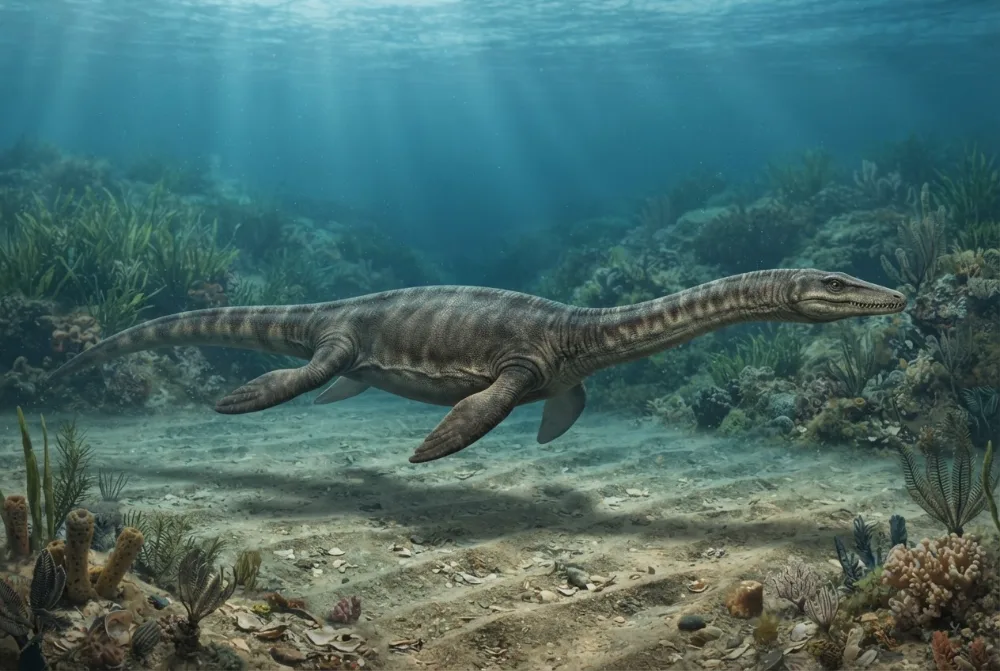
Pararcus was a marine reptile that lived in the shallow seas of the Netherlands about 245 million years ago. It had a flat body and strong, paddle-like limbs for swimming. Unlike many other placodonts, it did not have a heavy shell on its back.12
Noiz bizi izan zen?
Zein handia zen?
Zein luzea zen?
 2,5 etxeko katu bezain luze, sudurretik buztanera🍌bata bestearen atzean jarritako 8 banana bezain luze🏊igerileku handi baten luzera (50 m) 16 segundotan egin zezakeen igerian
Zein handia zen Pararcus ZUREKIN alderatuta?
Zure nabigatzaileko kalkulu hutsak. Ez da ezer gordetzen ez inora bidaltzen.
Zein azkarra zen?


Datu dibertigarriak
Pararcus had a special backbone where the neural arches (the parts that protect the spinal cord) were not fused together, even in adults. This is called paedomorphosis and is common in animals that live in the sea.1
Its hip bones (pubis and ischium) were flat and plate-like, which helped it swim efficiently.1
The only known fossil of Pararcus was found by a fossil collector named Gerben Diepenbroek, and the species is named after him.1
Pararcus lived during the Middle Triassic period, about 247 to 241 million years ago, when the Netherlands was covered by a shallow sea.2
Unlike some other placodonts that had heavy armour plates, Pararcus only had a few small, unfused armour plates scattered in its skin.1
The vertebrae of Pararcus were deeply hollowed out on both ends (amphicoelous) and still had a notochord, a flexible rod that runs through the spine.1
Dino adituentzat
- Izen zientifikoa
- Pararcus
- Izendatzailea:
- Klein and Scheyer 20142
- Taldea
- Itsas narrastiak
- Familia / klada
- Placodontia2
- Sailkapena
- Placodontia > Sauropterygia2
- Arroken adina
- 247 eta 241 milioi urte artean ()2
- Arroka-formazioak
- Vossenveld2
- Herrialdeak
- Herbehereak2
- Fosil-erregistroak
- 1 The Paleobiology Database datu-basean2
- Aurkikuntza
- Pararcus was named in 2014 by Nicole Klein and Torsten Scheyer. The only fossil was found by Gerben Diepenbroek in a quarry near Winterswijk, the Netherlands.21
- Oraindik eztabaidagai
- Scientists are not sure exactly how Pararcus swam. Its flexible backbone and flat hip bones suggest it might have moved differently from other placodonts.1
Datuak nondik datozen
- Klein_20120147.indd (zora.uzh.ch)
- Pararcus in The Paleobiology Database (CC BY 4.0): adina, tokiak, arroka-formazioak, sailkapena.
Orrialde honetako datu bakoitzak zenbaki bat du, bere iturrira eramaten zaituena. Zerbait gaizki badugu, barkatu, dino-zaleak gara, ez zientzia-aldizkari bat. Idatzi [email protected] helbidera eta konponduko dugu.
 Rex gose da! Dino Wiki aita baten proiektua da, dinosauroak maite dituen bere semearentzat, doakoa, iragarkirik eta jarraitzailerik gabe. Helduek mokadutxo bat eman diezaiokete Rexi, sarean jarraitzen laguntzeko.Eman jaten Rexi
 Nothosaurus
 Placodus
 Lariosaurus
 Cyamodus
 Cymatosaurus
 Proneusticosaurus
 Chonespondylus
 Cymbospondylus
 Phalarodon
 Mixosaurus
 Chaohusaurus
 Chensaurus