 Zer dino zara? Galdetegia
 Dino borroka
 Dino lasterketa
 Dino minijokoak
 Pegatina-albuma
 Dino TOP zerrendak
 Harritu nazazu!
Pterodactylus
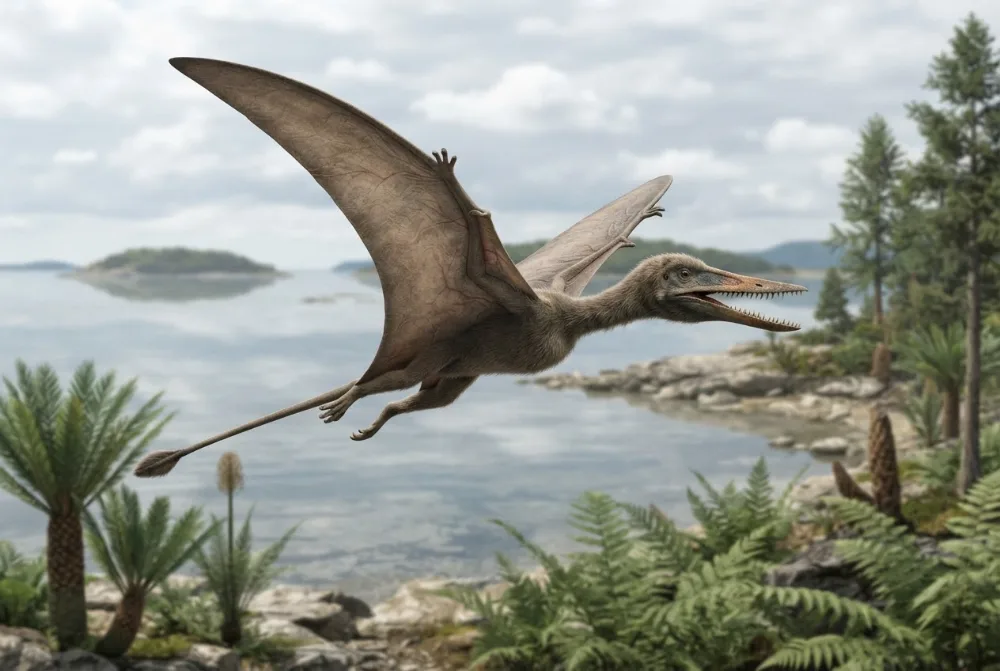
Pterodactylus was one of the first flying reptiles ever discovered. It lived during the Late Jurassic period, about 150 million years ago, and had wings made of skin and muscle that stretched from its long fourth finger to its back legs. It was a small pterosaur that probably ate insects and other small animals.12
Noiz bizi izan zen?
Zein handia zen?
Zein luzea zen?
Zein astuna zen?
 2 etxeko katu bezain luze, sudurretik buztanera🍌bata bestearen atzean jarritako 6 banana bezain luzeetxeko katu bat bezain astun, gutxi gorabehera🍌17 banana bezain astun⚽futbol zelai oso bat zeharkatu zezakeen hegan 9 segundotan
Zein handia zen Pterodactylus ZUREKIN alderatuta?
Zure nabigatzaileko kalkulu hutsak. Ez da ezer gordetzen ez inora bidaltzen.
Zein azkarra zen?


Datu dibertigarriak
Pterodactylus was the first pterosaur ever named and identified as a flying reptile, in 1809 by French scientist Georges Cuvier.1
Its fossils are often found in the Solnhofen limestone of Germany, which preserved soft body parts like jellyfish and feathers.12
Pterodactylus lived alongside other pterosaurs such as Rhamphorhynchus and Anurognathus, as well as the early bird Archaeopteryx.1
Unlike birds, pterosaurs like Pterodactylus were reptiles and their wings were made of skin and muscle, not feathers.2
Pterodactylus had a relatively high bite force for its size, which helped it crush the shells of invertebrates.1
The name Pterodactylus means 'winged finger' because its wing was supported by one very long finger.1
Pterodactylus: gehien egindako galderak
?How big was Pterodactylus?
Pterodactylus was a small pterosaur with an estimated adult wingspan of about 1.04 metres (3.4 feet).1
?What did Pterodactylus eat?
Pterodactylus was a generalist carnivore that probably ate invertebrates and small vertebrates. It had a relatively high bite force that helped it crush the shells of invertebrates.1
?When did Pterodactylus live?
Pterodactylus lived during the Late Jurassic period, about 150.8 to 148.5 million years ago.1
?Where were Pterodactylus fossils found?
Most Pterodactylus fossils have been found in the Solnhofen limestone of Bavaria, Germany. A few fragmentary remains have also been tentatively identified from elsewhere in Europe and Africa.1
?Was Pterodactylus a dinosaur?
No, Pterodactylus was not a dinosaur. It was a pterosaur, a type of flying reptile that lived at the same time as dinosaurs.12
?How did Pterodactylus fly?
Pterodactylus had wings made of skin and muscle that stretched from its very long fourth finger to its hind legs. The wings were supported by fibres inside and ridges on the outside.1
?Why is it called Pterodactylus?
The name Pterodactylus means 'winged finger' because its wing was supported by one very long finger.1
?Who discovered Pterodactylus?
The first Pterodactylus fossil was described by Italian scientist Cosimo Alessandro Collini in 1784. It was later named Pterodactylus by French scientist Georges Cuvier in 1809.1
?Did Pterodactylus have teeth?
Yes, Pterodactylus had teeth. The shape, size and arrangement of its teeth show it was a carnivore that ate small animals.1
?What animals lived with Pterodactylus?
Pterodactylus lived alongside other small pterosaurs like Rhamphorhynchus and Anurognathus, as well as the early bird Archaeopteryx and small dinosaurs like Compsognathus.1
Mito-hauslea
Mitoa: Many people think all pterosaurs are called pterodactyls and that they are dinosaurs.
Egia: Pterodactylus is just one genus of pterosaur, and pterosaurs are flying reptiles, not dinosaurs.2
Dino adituentzat
- Izen zientifikoa
- Pterodactylus
- Izendatzailea:
- Cuvier 18094
- Taldea
- Narrasti hegalariak
- Familia / klada
- Monofenestrata4
- Sailkapena
- Pterosauria4
- Arroken adina
- 201 eta 133 milioi urte artean (Hettangian / Valanginian)4
- Arroka-formazioak
- Solnhofener Plattenkalk, Solnhofen, Tendaguru4
- Herrialdeak
- Alemania, Tanzania, Frantzia, Portugal, Erresuma Batua4
- Fosil-erregistroak
- 15 The Paleobiology Database datu-basean4
- Honela ere ezaguna
- Diopecephalus, Macrotrachelus, Pterotherium (orain animalia bertzat hartzen diren izen zaharragoak)4
- Aurkikuntza
- The first known pterosaur fossil was discovered in the Solnhofen limestone of Germany in 1784. It was later named Pterodactylus by Georges Cuvier in 1809, making it the first pterosaur ever scientifically described.12
- Oraindik eztabaidagai
- Scientists still debate exactly how many species of Pterodactylus existed, with some suggesting that many fossils belong to just one species, Pterodactylus antiquus.1
Datuak nondik datozen
- Pterodactylus (en.wikipedia.org)
- Pterosaurs: The truth about these ‘flying dinosaurs’ | Natural History Museum (nhm.ac.uk)
- Pterodactyl: The Misunderstood Pterosaur | Strange Animals (strangeanimals.info)
- Pterodactylus in The Paleobiology Database (CC BY 4.0): adina, tokiak, arroka-formazioak, sailkapena.
Orrialde honetako datu bakoitzak zenbaki bat du, bere iturrira eramaten zaituena. Zerbait gaizki badugu, barkatu, dino-zaleak gara, ez zientzia-aldizkari bat. Idatzi [email protected] helbidera eta konponduko dugu.
 Rex gose da! Dino Wiki aita baten proiektua da, dinosauroak maite dituen bere semearentzat, doakoa, iragarkirik eta jarraitzailerik gabe. Helduek mokadutxo bat eman diezaiokete Rexi, sarean jarraitzen laguntzeko.Eman jaten Rexi
 Pteranodon
 Quetzalcoatlus
 Dorygnathus
 Rhamphorhynchus
 Anhanguera
 Eudimorphodon
 Ichthyosaurus
 Khudiakovia
 Ophthalmosaurus
 Peloneustes
 Gongbusaurus
 Shunosaurus