 Zer dino zara? Galdetegia
 Dino borroka
 Dino lasterketa
 Dino minijokoak
 Pegatina-albuma
 Dino TOP zerrendak
 Harritu nazazu!
Saurornithoides
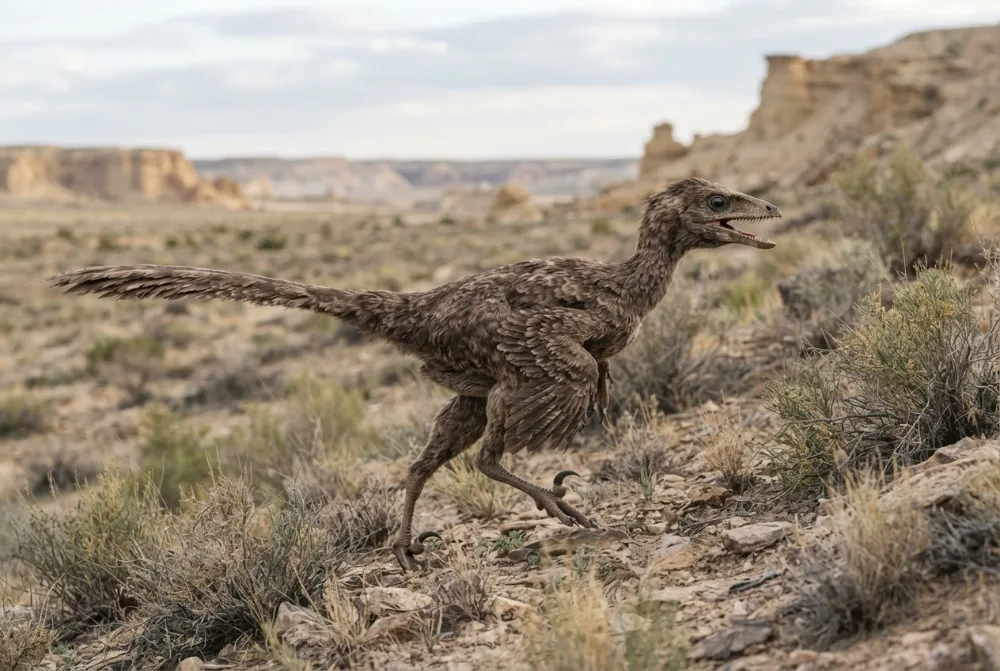
Saurornithoides was a small, fast, bird-like dinosaur that lived in the Late Cretaceous period. It had big eyes for seeing in the dark and a sharp claw on each foot to catch its prey. This smart hunter probably scoured the Gobi Desert for small mammals and reptiles.1
Noiz bizi izan zen?
Zein handia zen?
Zein luzea zen?
Zein altua zen?
kalkulua
 5 etxeko katu bezain luze, sudurretik buztanera🍌bata bestearen atzean jarritako 13 banana bezain luze🏃100 metro 8,2 segundotan egin zitzakeen korrika (gizakirik azkarrenak 9,6 behar ditu)
Zein handia zen Saurornithoides ZUREKIN alderatuta?
Zure nabigatzaileko kalkulu hutsak. Ez da ezer gordetzen ez inora bidaltzen.
Zein azkarra zen?


Datu dibertigarriak
Saurornithoides had a large brain for its size, making it one of the smartest non-bird dinosaurs.1
Its eyes were huge and gave it excellent stereoscopic vision, which helped it judge distances when hunting at night.1
The first Saurornithoides fossil was found on July 9, 1923, by a Chinese employee of an American Museum of Natural History expedition named Chih.1
A baby Saurornithoides had very strong leg bones, suggesting that troodontid babies could walk soon after hatching and needed little parental care.1
It had a retractable sickle claw on the second toe of each foot, like its cousin Troodon.1
The name was originally going to be 'Ornithoides' (bird-like), but Henry Fairfield Osborn changed it to Saurornithoides when he formally described it in 1924.1
Saurornithoides: gehien egindako galderak
?How big was Saurornithoides?
About 2 metres (6.6 feet) long. That is roughly the length of a large sofa.3
?What does the name Saurornithoides mean?
It means 'bird-like lizard' in Greek, because its skull looked like a bird's.3
?Was Saurornithoides related to Velociraptor?
Yes, it resembled Velociraptor. Both are theropod dinosaurs.1
?Where was Saurornithoides found?
In Mongolia, in the Gobi Desert. Its fossils come from the Djadochta Formation.1
?When did Saurornithoides live?
It lived during the Late Cretaceous period, about 85 to 80 million years ago.3
?How many species of Saurornithoides were there?
Only one valid species is known: Saurornithoides mongoliensis. Other named species have been moved to different dinosaurs or are no longer considered valid.1
Dino adituentzat
- Izen zientifikoa
- Saurornithoides
- Izendatzailea:
- Osborn 19244
- Taldea
- Raptoreak
- Familia / klada
- Troodontidae4
- Sailkapena
- Theropoda > Theropoda > Troodontidae > Compsognathidae4
- Arroken adina
- 100 eta 66 milioi urte artean (Cenomanian / Maastrichtian)4
- Arroka-formazioak
- Djadokhta, Hell Creek, Bayan Mandahu4
- Herrialdeak
- Mongolia, AEB, Txina, Uzbekistan4
- Fosil-erregistroak
- 8 The Paleobiology Database datu-basean4
- Aurkikuntza
- Saurornithoides was named by Henry Fairfield Osborn in 1924 based on a skull and other bones found in Mongolia by a Chinese collector named Chih in 1923.1
- Oraindik eztabaidagai
- Scientists are not sure whether Saurornithoides is more closely related to North American troodontids like Troodon or to other Asian troodontids.2
Datuak nondik datozen
- Saurornithoides (en.wikipedia.org)
- A review of the Mongolian Cretaceous dinosaur Saurornithoides (Troodontidae, Theropoda). (American Museum novitates, no. 3654) (digitallibrary.amnh.org)
- Saurornithoides | Natural History Museum (nhm.ac.uk)
- Saurornithoides in The Paleobiology Database (CC BY 4.0): adina, tokiak, arroka-formazioak, sailkapena.
Orrialde honetako datu bakoitzak zenbaki bat du, bere iturrira eramaten zaituena. Zerbait gaizki badugu, barkatu, dino-zaleak gara, ez zientzia-aldizkari bat. Idatzi [email protected] helbidera eta konponduko dugu.
 Rex gose da! Dino Wiki aita baten proiektua da, dinosauroak maite dituen bere semearentzat, doakoa, iragarkirik eta jarraitzailerik gabe. Helduek mokadutxo bat eman diezaiokete Rexi, sarean jarraitzen laguntzeko.Eman jaten Rexi
 Velociraptor
 Microraptor
 Deinonychus
 Asiamericana
 Richardoestesia
 Saurornitholestes
 Tyrannosaurus
 Triceratops
 Spinosaurus
 Ankylosaurus
 Parasaurolophus
 Pteranodon