 Zer dino zara? Galdetegia
 Dino borroka
 Dino lasterketa
 Dino minijokoak
 Pegatina-albuma
 Dino TOP zerrendak
 Harritu nazazu!
Seitaad
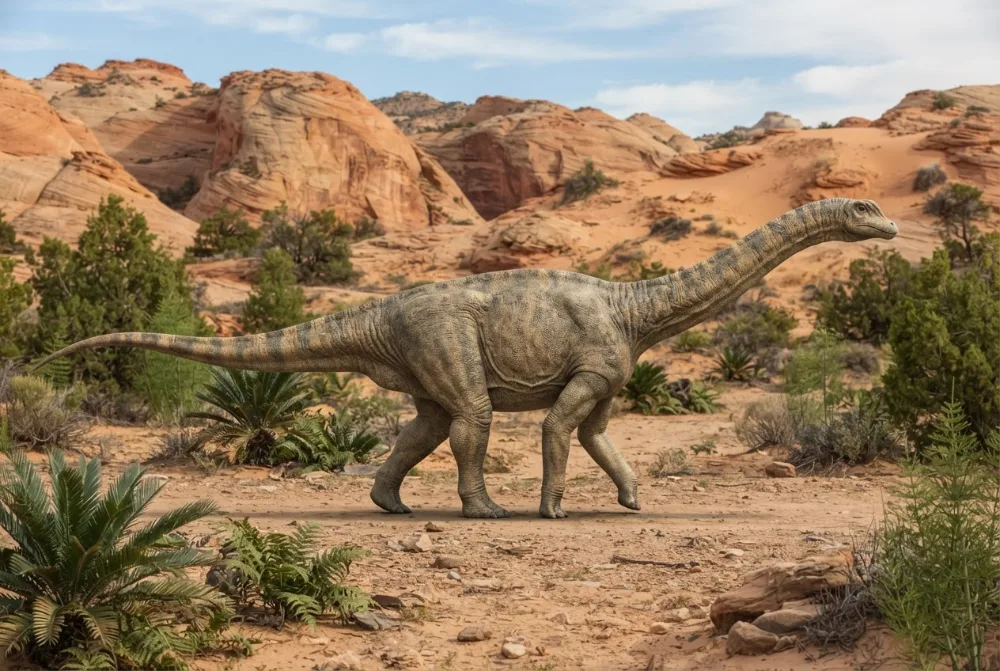
Seitaad was an early long-necked dinosaur that lived about 190 million years ago. It was a plant-eater that walked on two legs and could also use all fours. This dinosaur is one of the most complete fossils ever found in the Navajo Sandstone of Utah.31
Noiz bizi izan zen?
Zein handia zen?
Zein luzea zen?
Zein altua zen?
Zein astuna zen?
 4 txakur bezain luze, sudurretik buztanera🍌bata bestearen atzean jarritako 25 banana bezain luze🍉18 angurria bezain astun🧸haur-eskolako 5 haur bezain astun🎒3 eskolaume bezain astun🏃100 metro 8,8 segundotan egin zitzakeen korrika (gizakirik azkarrenak 9,6 behar ditu)
Zein handia zen Seitaad ZUREKIN alderatuta?
Zure nabigatzaileko kalkulu hutsak. Ez da ezer gordetzen ez inora bidaltzen.
Zein azkarra zen?


Datu dibertigarriak
Seitaad's name comes from a Navajo legend about a sand monster that buried its victims in dunes.1
The only known fossil of Seitaad was found at the base of a collapsed sand dune, which may have buried the animal after it died.1
Seitaad is one of the few early sauropodomorph dinosaurs known from North America.1
The species name ruessi honors Everett Ruess, a young artist and explorer who disappeared in southern Utah in 1934.1
Seitaad had a plate-like bone on its shoulder blade that helped support its arm.1
This dinosaur lived during the Early Jurassic period, when the climate was warm and deserts covered much of the area.1
Seitaad: gehien egindako galderak
?How big was Seitaad?
About 3 to 4.5 metres long and 1 metre tall at the hips. It weighed around 70 to 90 kilograms, about the size of a large human.2
?What did Seitaad eat?
Seitaad ate plants. It had leaf-shaped teeth and a small head, just like its later giant relatives the sauropods.2
?Could Seitaad walk on two legs?
Yes, Seitaad could walk on two legs or on all fours. It had a long neck and tail, and a large curved claw on its thumb.2
?When did Seitaad live?
Seitaad lived during the Early Jurassic Period, about 183 to 190 million years ago. That is millions of years before the famous giant sauropods like Diplodocus.2
Dino adituentzat
- Izen zientifikoa
- Seitaad
- Izendatzailea:
- Sertich and Loewen 20103
- Taldea
- Lepo-luzeak
- Familia / klada
- Sauropodiformes3
- Sailkapena
- Sauropodomorpha3
- Arroken adina
- 193 eta 175 milioi urte artean (Pliensbachian / Toarcian)3
- Arroka-formazioak
- Navajo Sandstone3
- Herrialdeak
- AEB3
- Fosil-erregistroak
- 1 The Paleobiology Database datu-basean3
- Aurkikuntza
- Seitaad was named by scientists Joseph Sertich and Michael Loewen in 2010. The partial skeleton was found in the Navajo Sandstone of southern Utah, near a cliff dwelling called Eagle's Nest.31
- Oraindik eztabaidagai
- Scientists are not sure exactly how Seitaad is related to other early sauropodomorphs, because its fossils do not give a clear family tree.1
Datuak nondik datozen
- pone.0009789 1..17 (journals.plos.org)
- New Dinosaur from Utah’s Red Rocks – UNews Archive (archive.unews.utah.edu)
- Seitaad in The Paleobiology Database (CC BY 4.0): adina, tokiak, arroka-formazioak, sailkapena.
Orrialde honetako datu bakoitzak zenbaki bat du, bere iturrira eramaten zaituena. Zerbait gaizki badugu, barkatu, dino-zaleak gara, ez zientzia-aldizkari bat. Idatzi [email protected] helbidera eta konponduko dugu.
 Rex gose da! Dino Wiki aita baten proiektua da, dinosauroak maite dituen bere semearentzat, doakoa, iragarkirik eta jarraitzailerik gabe. Helduek mokadutxo bat eman diezaiokete Rexi, sarean jarraitzen laguntzeko.Eman jaten Rexi
 Brachiosaurus
 Diplodocus
 Brontosaurus
 Argentinosaurus
 Camarasaurus
 Morosaurus
 Dilophosaurus
 Stenopterygius
 Dorygnathus
 Scutellosaurus
 Sinosaurus
 Temnodontosaurus