 Zer dino zara? Galdetegia
 Dino borroka
 Dino lasterketa
 Dino minijokoak
 Pegatina-albuma
 Dino TOP zerrendak
 Harritu nazazu!
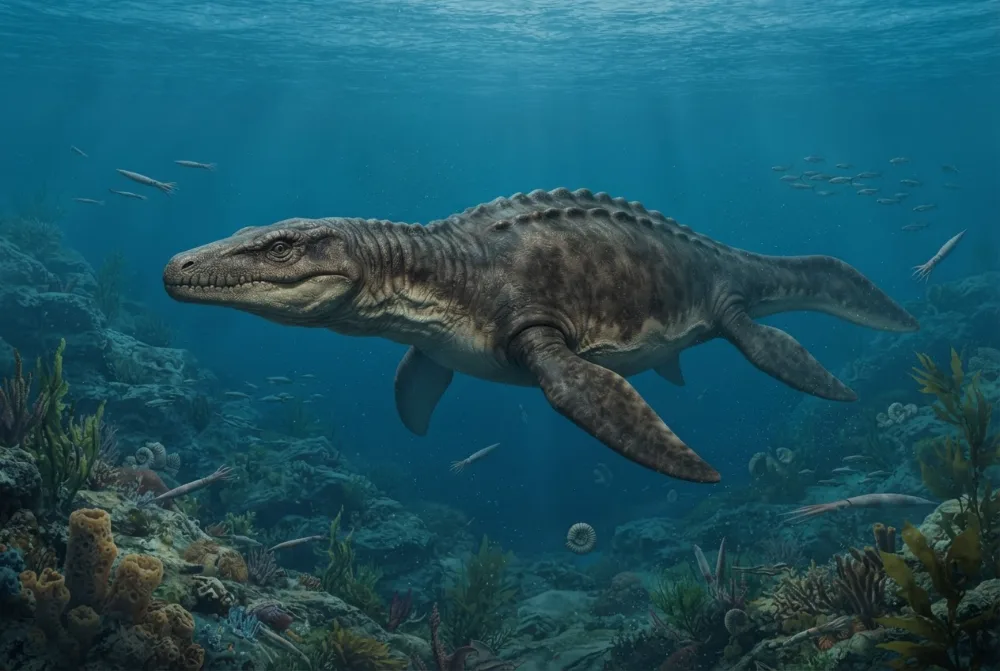
Simolestes
Simolestes was a pliosaur, a kind of short-necked plesiosaur that lived in the Jurassic seas. It had a short, high, and wide skull built to handle twisting forces when hunting. It probably ate squid-like animals and ammonites.1
Noiz bizi izan zen?
Zein handia zen?
Zein luzea zen?
 5 txakur bezain luze, sudurretik buztanera🍌bata bestearen atzean jarritako 26 banana bezain luze🏊igerileku handi baten luzera (50 m) 6,4 segundotan egin zezakeen igerian
Zein handia zen Simolestes ZUREKIN alderatuta?
Zure nabigatzaileko kalkulu hutsak. Ez da ezer gordetzen ez inora bidaltzen.
Zein azkarra zen?


Datu dibertigarriak
Simolestes had salt-secreting glands, which helped it drink seawater and keep its salt balance.1
The type specimen of Simolestes vorax is an almost complete but crushed skeleton found in the Oxford Clay of England.1
Simolestes lived from the Middle to Late Jurassic, about 171 to 145 million years ago.1
Scientists think Simolestes might have hunted in deeper waters or at night, because its prey (cephalopods) move up at night to feed.1
The species Simolestes keileni from France was moved to a new genus called Lorrainosaurus in 2023.1
Simolestes: gehien egindako galderak
?How big was Simolestes?
The largest Simolestes vorax specimens reached about 4.6 metres (15 feet) long, based on a head to body ratio similar to Liopleurodon.1
?What did Simolestes eat?
Simolestes probably ate squid-like animals, belemnites, and ammonites. Its exact feeding habits are unclear, but it likely hunted in deeper waters or at night.1
?Was Simolestes a dinosaur?
No, Simolestes was a pliosaur, a type of short-necked plesiosaur, which is a marine reptile, not a dinosaur.1
?When did Simolestes live?
Simolestes lived during the Middle to Late Jurassic, about 171 to 145 million years ago.1
Dino adituentzat
- Izen zientifikoa
- Simolestes
- Izendatzailea:
- Andrews 19092
- Taldea
- Plesiosauroak
- Familia / klada
- Pliosauridae2
- Sailkapena
- Plesiosauria > Pliosauridae > Sauropterygia2
- Arroken adina
- 169 eta 143 milioi urte artean (Bajocian / Tithonian)2
- Arroka-formazioak
- Umia, Oxford Clay, Marnes de Gravelotte (=La Gravclotte Marls)2
- Herrialdeak
- India, Erresuma Batua, Frantzia2
- Fosil-erregistroak
- 5 The Paleobiology Database datu-basean2
- Aurkikuntza
- Simolestes was named by C. W. Andrews in 1909 based on a skeleton from the Oxford Clay of Peterborough, England.12
- Oraindik eztabaidagai
- Scientists are unsure about the exact feeding habits of Simolestes, though the current consensus is that it ate cephalopods.1
Datuak nondik datozen
- Simolestes (en.wikipedia.org)
- Simolestes in The Paleobiology Database (CC BY 4.0): adina, tokiak, arroka-formazioak, sailkapena.
Orrialde honetako datu bakoitzak zenbaki bat du, bere iturrira eramaten zaituena. Zerbait gaizki badugu, barkatu, dino-zaleak gara, ez zientzia-aldizkari bat. Idatzi [email protected] helbidera eta konponduko dugu.
 Rex gose da! Dino Wiki aita baten proiektua da, dinosauroak maite dituen bere semearentzat, doakoa, iragarkirik eta jarraitzailerik gabe. Helduek mokadutxo bat eman diezaiokete Rexi, sarean jarraitzen laguntzeko.Eman jaten Rexi
 Elasmosaurus
 Pliosaurus
 Plesiosaurus
 Cimoliasaurus
 Colymbosaurus
 Trinacromerum
 Brachiosaurus
 Diplodocus
 Allosaurus
 Brontosaurus
 Compsognathus
 Camarasaurus