 Zer dino zara? Galdetegia
 Dino borroka
 Dino lasterketa
 Dino minijokoak
 Pegatina-albuma
 Dino TOP zerrendak
 Harritu nazazu!
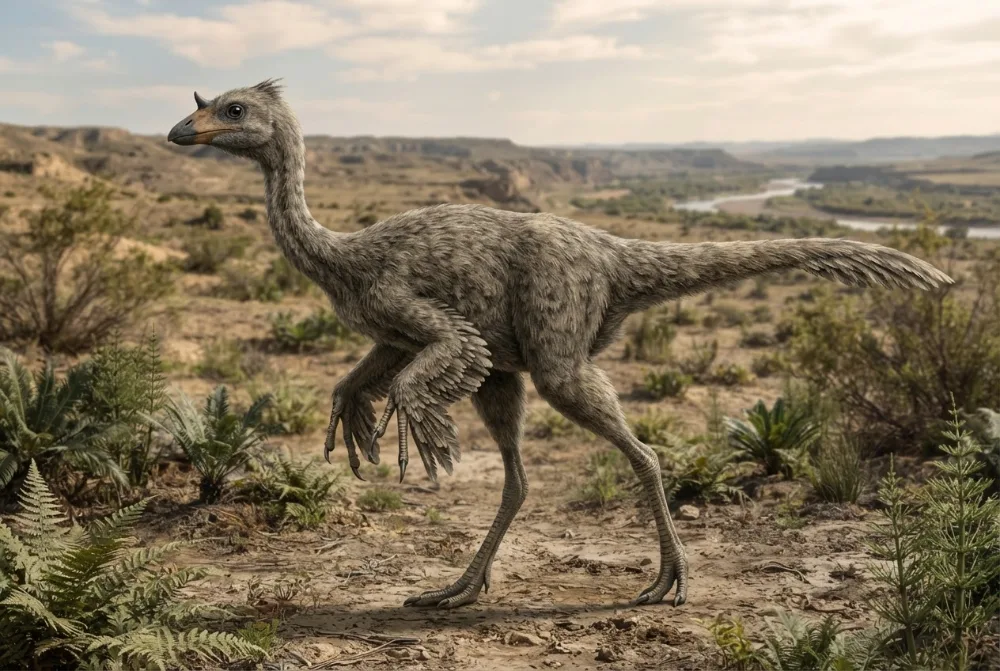
Sinornithomimus
Sinornithomimus was a small, fast dinosaur that looked a bit like an ostrich. It lived in what is now China during the Late Cretaceous Period, about 92 to 90 million years ago. Scientists found many skeletons together, showing that these dinosaurs probably lived in herds.12
Noiz bizi izan zen?
Zein handia zen?
Zein luzea zen?
Zein altua zen?
kalkulua
Zein astuna zen?
 2,5 txakur bezain luze, sudurretik buztanera🍌bata bestearen atzean jarritako 14 banana bezain luze🍉18 angurria bezain astun🧸haur-eskolako 5 haur bezain astun🎒3 eskolaume bezain astun🏃100 metro 5,5 segundotan egin zitzakeen korrika (gizakirik azkarrenak 9,6 behar ditu)
Zein handia zen Sinornithomimus ZUREKIN alderatuta?
Zure nabigatzaileko kalkulu hutsak. Ez da ezer gordetzen ez inora bidaltzen.
Zein azkarra zen?


Datu dibertigarriak
At least fourteen skeletons of Sinornithomimus were found together in one spot, and most of them were young dinosaurs. This suggests they lived in groups, maybe to protect each other from predators.21
Sinornithomimus had gastroliths, or stomach stones, that helped it grind up tough plants. This is rare among bird-like dinosaurs and shows it was a plant-eater.1
The first fossils of Sinornithomimus were discovered in 1997 by Chinese paleontologist Dong Zhiming during the Mongol Highland International Dinosaur Project.1
Sinornithomimus was about 2.5 meters (8.2 feet) long and weighed around 91 kilograms (201 pounds). That is about as heavy as a large adult human.1
Adult Sinornithomimus had longer lower legs compared to their upper legs than juveniles did. This means they could run faster as they grew up.21
A second herd of thirteen young Sinornithomimus was found in 2001. They probably died together after getting stuck in the mud of a drying waterhole.1
Sinornithomimus: gehien egindako galderak
?What did Sinornithomimus eat?
It ate plants. Scientists found gastroliths (stomach stones) in its fossils that helped grind up tough plant food.1
?How fast could Sinornithomimus run?
Nobody knows exactly, but it was a fast runner. Adults had longer lower legs than juveniles, which made them even faster.1
Dino adituentzat
- Izen zientifikoa
- Sinornithomimus
- Izendatzailea:
- Kobayashi and Lü 20035
- Taldea
- Ostruka-dinoak
- Familia / klada
- Ornithomimidae5
- Sailkapena
- Theropoda > Ornithomimosauria5
- Arroken adina
- 94 eta 90 milioi urte artean (Turonian)5
- Arroka-formazioak
- Ulansuhai5
- Herrialdeak
- Txina5
- Fosil-erregistroak
- 1 The Paleobiology Database datu-basean5
- Aurkikuntza
- Sinornithomimus was named and described by Yoshitsugu Kobayashi and Lü Junchang in 2003. The name means 'Chinese bird mimic' and honors Dong Zhiming, who found the first fossils in 1997.12
- Oraindik eztabaidagai
- Scientists are not sure whether the herds of Sinornithomimus were family groups with adults protecting young, or if the young lived separately from adults while the adults were busy nesting.1
Datuak nondik datozen
- Sinornithomimus (en.wikipedia.org)
- A new ornithomimid dinosaur with gregarious habits from the Late Cretaceous of China - Acta Palaeontologica Polonica (app.pan.pl)
- PBDB Taxon (paleobiodb.org)
- Young dinosaurs roamed together, died together | University of Chicago News (news.uchicago.edu)
- Sinornithomimus in The Paleobiology Database (CC BY 4.0): adina, tokiak, arroka-formazioak, sailkapena.
Orrialde honetako datu bakoitzak zenbaki bat du, bere iturrira eramaten zaituena. Zerbait gaizki badugu, barkatu, dino-zaleak gara, ez zientzia-aldizkari bat. Idatzi [email protected] helbidera eta konponduko dugu.
 Rex gose da! Dino Wiki aita baten proiektua da, dinosauroak maite dituen bere semearentzat, doakoa, iragarkirik eta jarraitzailerik gabe. Helduek mokadutxo bat eman diezaiokete Rexi, sarean jarraitzen laguntzeko.Eman jaten Rexi
 Gallimimus
 Ornithomimus
 Struthiomimus
 Deinocheirus
 Dromiceiomimus
 Archaeornithomimus
 Tyrannosaurus
 Triceratops
 Velociraptor
 Spinosaurus
 Ankylosaurus
 Parasaurolophus