 Zer dino zara? Galdetegia
 Dino borroka
 Dino lasterketa
 Dino minijokoak
 Pegatina-albuma
 Dino TOP zerrendak
 Harritu nazazu!
Noiz bizi izan zen?

Zein handia zen?
Zein luzea zen?
Zein altua zen?
kalkulua
Zein astuna zen?
 5 txakur bezain luze, sudurretik buztanera🍌bata bestearen atzean jarritako 26 banana bezain luze🍉60 angurria bezain astun🧸haur-eskolako 16 haur bezain astun🎒9 eskolaume bezain astun🏃100 metro 8,8 segundotan egin zitzakeen korrika (gizakirik azkarrenak 9,6 behar ditu)
Zein handia zen Talenkauen ZUREKIN alderatuta?
Zure nabigatzaileko kalkulu hutsak. Ez da ezer gordetzen ez inora bidaltzen.
Zein azkarra zen?


Datu dibertigarriak
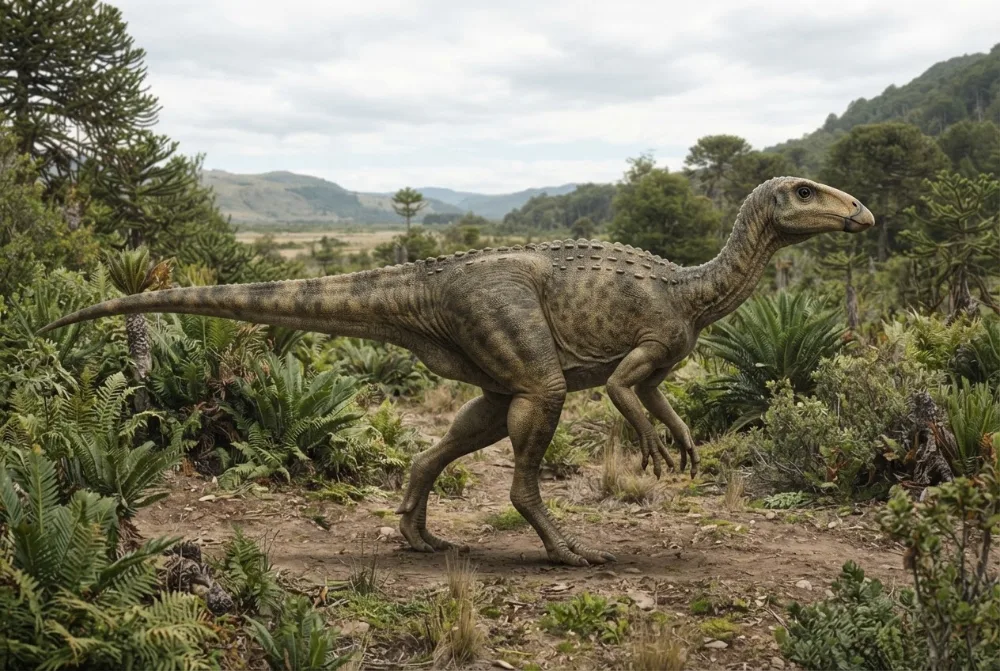
Talenkauen had smooth, oval plates along its ribcage. These plates were very thin, only about 3 millimeters thick, and may have helped with breathing, like similar structures in birds.1
Unlike many other plant-eating dinosaurs, Talenkauen still had teeth in the front of its beak and a first toe. More advanced relatives lost these features.1
A tiny baby Talenkauen was found with an adult. The baby had already hatched and eaten food, because its teeth showed wear. This is one of the few baby ornithopod fossils found in the southern hemisphere.1
Talenkauen lived alongside giant dinosaurs like Dreadnoughtus and Puertasaurus, which were huge long-necked plant-eaters, and the predator Orkoraptor.1
The plates on Talenkauen's ribs were too thin and small to be useful for defense, so scientists think they had another job, like helping the dinosaur breathe.1
Talenkauen: gehien egindako galderak
?How big was Talenkauen?
About 4 meters (13 feet) long, maybe up to 4.7 meters (15 feet) and 300 kilograms (660 pounds).1
?What did Talenkauen eat?
It ate plants, using its beak and teeth to chew leaves and other vegetation.1
?Did Talenkauen have feathers?
No one knows for sure. No fossils of feathers have been found with Talenkauen, and it is not closely related to feathered dinosaurs.1
?When did Talenkauen live?
It lived during the Late Cretaceous period, about 72 to 66 million years ago.1
Mito-hauslea
Mitoa: Some people think Talenkauen's rib plates were armor for protection.
Egia: Scientists think the plates were more like uncinate processes, which help with breathing, not armor.1
Dino adituentzat
- Izen zientifikoa
- Talenkauen
- Izendatzailea:
- Novas et al. 20042
- Taldea
- Landarejale mokodunak
- Familia / klada
- Elasmaria2
- Sailkapena
- Ornithischia > Ornithopoda > Iguanodontia2
- Arroken adina
- 84 eta 72 milioi urte artean (Campanian)2
- Arroka-formazioak
- Cerro Fortaleza2
- Herrialdeak
- Argentina2
- Fosil-erregistroak
- 2 The Paleobiology Database datu-basean2
- Aurkikuntza
- Talenkauen was found in February 2000 on Los Hornos Hill near Viedma Lake in Argentina. It was named and described by Fernando Novas and colleagues in 2004.1
- Oraindik eztabaidagai
- Scientists debate whether the rib plates of Talenkauen are related to the uncinate processes of birds and other animals, or if they are a different feature.1
Datuak nondik datozen
- Talenkauen (en.wikipedia.org)
- Talenkauen in The Paleobiology Database (CC BY 4.0): adina, tokiak, arroka-formazioak, sailkapena.
Orrialde honetako datu bakoitzak zenbaki bat du, bere iturrira eramaten zaituena. Zerbait gaizki badugu, barkatu, dino-zaleak gara, ez zientzia-aldizkari bat. Idatzi [email protected] helbidera eta konponduko dugu.
 Rex gose da! Dino Wiki aita baten proiektua da, dinosauroak maite dituen bere semearentzat, doakoa, iragarkirik eta jarraitzailerik gabe. Helduek mokadutxo bat eman diezaiokete Rexi, sarean jarraitzen laguntzeko.Eman jaten Rexi
 Iguanodon
 Tenontosaurus
 Thescelosaurus
 Zalmoxes
 Camptosaurus
 Rhabdodon
 Tyrannosaurus
 Triceratops
 Velociraptor
 Spinosaurus
 Ankylosaurus
 Parasaurolophus