 Zer dino zara? Galdetegia
 Dino borroka
 Dino lasterketa
 Dino minijokoak
 Pegatina-albuma
 Dino TOP zerrendak
 Harritu nazazu!
Transylvanosaurus
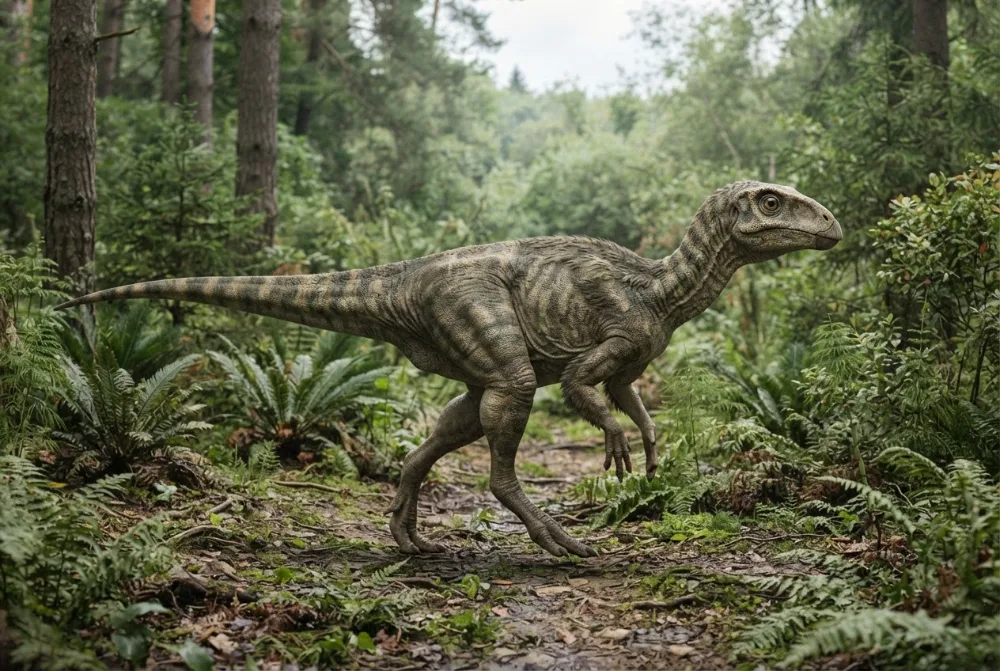
Transylvanosaurus was a plant-eating dinosaur that lived on an island in what is now Romania. It had a wide, flat head and walked on two legs, munching on tough plants with its beak. It was about the size of a large dog, but don't worry, it wouldn't hurt you!14
Noiz bizi izan zen?
Zein azkarra zen?


Datu dibertigarriak
Transylvanosaurus had an unusually wide and flat skull, which is why its species name means 'flat head'.1
It lived on an island called Hațeg Island, where many dinosaurs were smaller than their mainland relatives, a phenomenon called insular dwarfism.1
The only known fossil is a partial skull, including the braincase and the bones of the top of the head.1
Scientists think it was closely related to Rhabdodon, a dinosaur from southern France, which suggests these dinosaurs could cross shallow seas.2
It lived during the Maastrichtian age, about 72 to 66 million years ago, right before the dinosaurs went extinct.4
Transylvanosaurus: gehien egindako galderak
?How big was Transylvanosaurus?
It was about the size of a large dog or a man, roughly 2 metres long. This small size is due to insular dwarfism, because it lived on an island with limited food.3
?What did Transylvanosaurus eat?
It was a herbivore, meaning it ate plants. It used its beak to munch on tough plants that grew on its island home.3
?Could Transylvanosaurus swim?
Scientists think it might have been able to swim, because its closest relatives lived in France and it may have crossed shallow seas to reach its island. Most reptiles can swim from birth.3
Mito-hauslea
Mitoa: Some people think Transylvanosaurus was a meat-eater because of its scary name.
Egia: Actually, it was a plant-eater, using its beak to crop plants, as shown by its teeth and skull shape.4
Dino adituentzat
- Izen zientifikoa
- Transylvanosaurus
- Izendatzailea:
- Augustin et al. 20224
- Taldea
- Landarejale mokodunak
- Familia / klada
- Rhabdodontomorpha4
- Sailkapena
- Ornithischia > Ornithopoda > Iguanodontia4
- Arroken adina
- 72 eta 66 milioi urte artean (Maastrichtian)4
- Arroka-formazioak
- Pui Beds4
- Herrialdeak
- Errumania4
- Fosil-erregistroak
- 1 The Paleobiology Database datu-basean4
- Aurkikuntza
- The fossil was found in 2007 in the Bărbat River Valley in Romania, and it was named in 2022 by Augustin and colleagues.1
- Oraindik eztabaidagai
- Scientists are still debating exactly how Transylvanosaurus is related to other rhabdodontid dinosaurs, and whether it could swim between islands.2
Datuak nondik datozen
- Transylvanosaurus (en.wikipedia.org)
- A New Ornithopod Dinosaur, Transylvanosaurus platycephalus gen. et sp. nov. (Dinosauria: Ornithischia), from the Upper Cretaceous of the Haţeg Basin, Romania (bioone.org)
- Dinosaur with strange head lived on an island of miniature creatures - BBC Newsround (bbc.co.uk)
- Transylvanosaurus in The Paleobiology Database (CC BY 4.0): adina, tokiak, arroka-formazioak, sailkapena.
Orrialde honetako datu bakoitzak zenbaki bat du, bere iturrira eramaten zaituena. Zerbait gaizki badugu, barkatu, dino-zaleak gara, ez zientzia-aldizkari bat. Idatzi [email protected] helbidera eta konponduko dugu.
 Rex gose da! Dino Wiki aita baten proiektua da, dinosauroak maite dituen bere semearentzat, doakoa, iragarkirik eta jarraitzailerik gabe. Helduek mokadutxo bat eman diezaiokete Rexi, sarean jarraitzen laguntzeko.Eman jaten Rexi
 Iguanodon
 Tenontosaurus
 Thescelosaurus
 Zalmoxes
 Camptosaurus
 Rhabdodon
 Tyrannosaurus
 Triceratops
 Velociraptor
 Spinosaurus
 Ankylosaurus
 Parasaurolophus