 Zer dino zara? Galdetegia
 Dino borroka
 Dino lasterketa
 Dino minijokoak
 Pegatina-albuma
 Dino TOP zerrendak
 Harritu nazazu!
Trinisaura
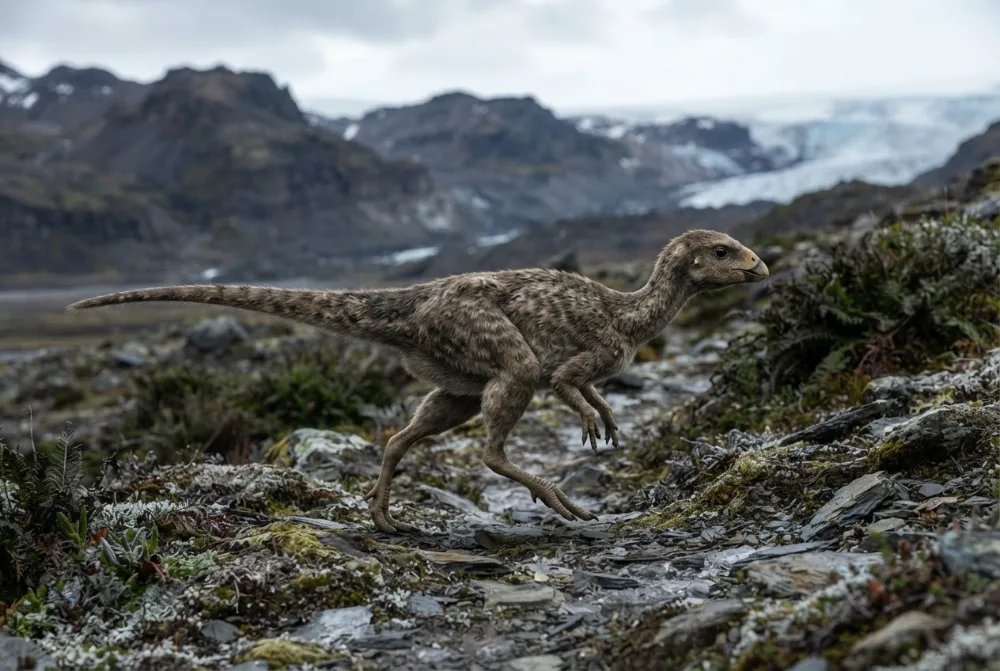
Trinisaura was a small, speedy plant-eater that lived in Antarctica about 73 million years ago. It had a long tail for balance and a little beak for nibbling plants. It was one of the few dinosaurs that lived on the frozen continent!1
Noiz bizi izan zen?
Zein handia zen?
Zein luzea zen?
 3 etxeko katu bezain luze, sudurretik buztanera🍌bata bestearen atzean jarritako 8 banana bezain luze🏃100 metro 8,8 segundotan egin zitzakeen korrika (gizakirik azkarrenak 9,6 behar ditu)
Zein handia zen Trinisaura ZUREKIN alderatuta?
Zure nabigatzaileko kalkulu hutsak. Ez da ezer gordetzen ez inora bidaltzen.
Zein azkarra zen?


Datu dibertigarriak
Trinisaura is one of the few dinosaurs known from Antarctica, and it was much smaller than its relative Morrosaurus, which was about 4 metres (13 feet) long.1
The only known skeleton is from a young, not fully grown individual, so scientists think adults might have been a bit bigger.1
Its fossils were found in rocks from the Snow Hill Island Formation, which were laid down in a shallow sea environment.12
Trinisaura had a spike-like process on its shoulder blade and a strongly bowed upper arm bone, which are unique features among ornithopods.2
It was lightly built with long hindlimbs and short forelimbs, so it probably ran on two legs.1
Trinisaura belongs to a group called Elasmaria, which includes other small, agile herbivores from South America and Antarctica.1
Trinisaura: gehien egindako galderak
?How big was Trinisaura?
About 1.5 metres (4.9 feet) long, which is similar in size to a small pony. That's much smaller than its relative Morrosaurus, which was around 4 metres (13 feet) long.13
?What did Trinisaura eat?
It was a herbivore, meaning it ate plants. It had a small beak for nibbling vegetation and teeth to help chew.1
?Could Trinisaura run fast?
Yes, it was very lightly built with long legs and a long tail for balance, so it was a capable runner. Scientists think it could run faster than many other plant-eating dinosaurs.1
?Where did Trinisaura live?
It lived in Antarctica, on what is now James Ross Island, about 73 million years ago. Back then Antarctica was warmer and covered in forests.1
Mito-hauslea
Mitoa: Some people think dinosaurs never lived in Antarctica.
Egia: Trinisaura and other dinosaurs like Antarctopelta show that dinosaurs did live in Antarctica during the Cretaceous, when the climate was warmer.1
Dino adituentzat
- Izen zientifikoa
- Trinisaura
- Izendatzailea:
- Coria et al. 20134
- Taldea
- Landarejale mokodunak
- Familia / klada
- Elasmaria4
- Sailkapena
- Ornithischia > Ornithopoda > Iguanodontia4
- Arroken adina
- 84 eta 72 milioi urte artean (Campanian)4
- Arroka-formazioak
- Snow Hill Island4
- Herrialdeak
- Antartika4
- Fosil-erregistroak
- 1 The Paleobiology Database datu-basean4
- Aurkikuntza
- The fossils were collected in 2008 by paleontologists Juan Moly and Rodolfo Coria during an Antarctic expedition. They were described and named in 2013 by Coria and colleagues.1
- Oraindik eztabaidagai
- Scientists are not sure exactly how Trinisaura is related to other ornithopods. Some studies place it in Elasmaria, while others suggest it belongs to a different group called Rhabdodontoidea.1
Datuak nondik datozen
- Trinisaura (en.wikipedia.org)
- api.naturalis.fcnym.unlp.edu.ar (api.naturalis.fcnym.unlp.edu.ar)
- A new ornithopod (Dinosauria; Ornithischia) from Antarctica (ri.conicet.gov.ar)
- Trinisaura in The Paleobiology Database (CC BY 4.0): adina, tokiak, arroka-formazioak, sailkapena.
Orrialde honetako datu bakoitzak zenbaki bat du, bere iturrira eramaten zaituena. Zerbait gaizki badugu, barkatu, dino-zaleak gara, ez zientzia-aldizkari bat. Idatzi [email protected] helbidera eta konponduko dugu.
 Rex gose da! Dino Wiki aita baten proiektua da, dinosauroak maite dituen bere semearentzat, doakoa, iragarkirik eta jarraitzailerik gabe. Helduek mokadutxo bat eman diezaiokete Rexi, sarean jarraitzen laguntzeko.Eman jaten Rexi
 Iguanodon
 Tenontosaurus
 Thescelosaurus
 Zalmoxes
 Camptosaurus
 Rhabdodon
 Tyrannosaurus
 Triceratops
 Velociraptor
 Spinosaurus
 Ankylosaurus
 Parasaurolophus