 Que dino es ti? O test
 Batalla de dinos
 Carreira de dinos
 Minixogos de dinos
 Álbum de cromos
 Listas TOP de dinos
 Sorpréndeme!
Cando viviu?

Como era de grande?
Canto medía de longo?
Canto medía de alto?
Canto pesaba?
 tan longo coma 3 cans do fociño á cola🍌tan longo coma 18 plátanos postos un tras outro🍉tan pesado coma 13 sandías🧸tan pesado coma 3 nenos de infantil🎒tan pesado coma 2 nenos de primaria🏃podería correr 100 metros en 7,2 segundos (o humano máis rápido necesita 9,6)
Como era de grande Richardoestesia comparado CONTIGO?
Só son contas no teu navegador. Non se garda nin se envía nada.
Que velocidade alcanzaba?


Datos curiosos
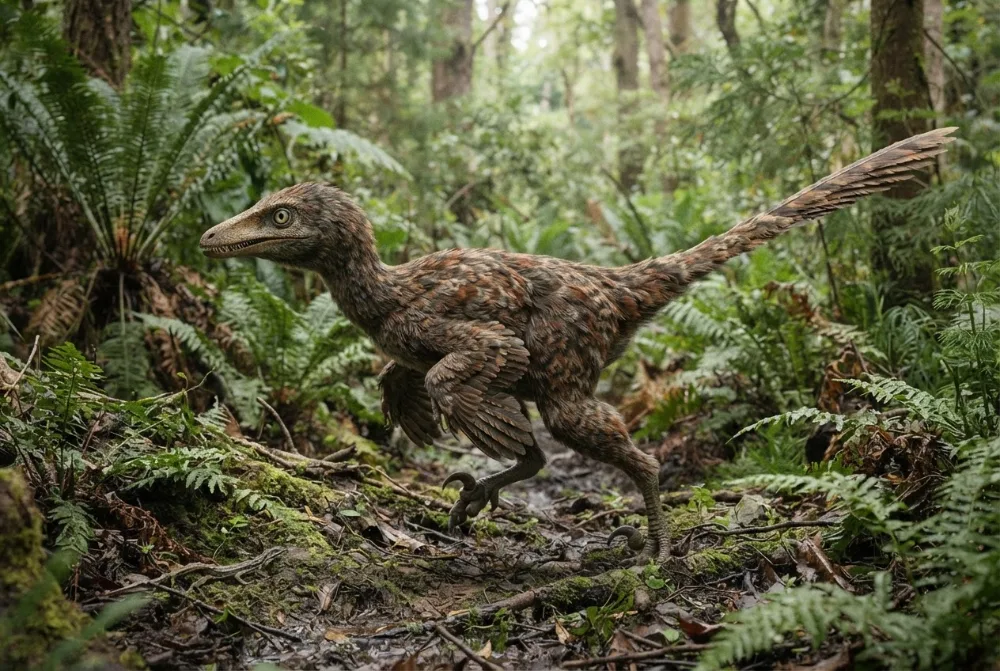
Richardoestesia is known only from its teeth, not from whole skeletons. Scientists call it a 'form taxon' because they group similar-looking teeth together.1
The teeth of Richardoestesia are very long and slender compared to other meat-eating dinosaurs. They look like thin blades.1
If all the teeth assigned to Richardoestesia really belong to the same kind of dinosaur, it would have lived for over 80 million years, from the Late Jurassic to the end of the Cretaceous.1
Richardoestesia teeth have been found all over the world, including North America, Europe, and Asia. That would make it one of the most widespread dinosaurs ever.1
The name Richardoestesia honors paleontologist Richard Estes, who studied small fossils and dinosaur teeth.1
Some scientists think Richardoestesia might have been a dromaeosaur (a raptor) or a troodontid, but nobody knows for sure because no body fossils have been found.5
As preguntas máis frecuentes sobre Richardoestesia
?What did Richardoestesia eat?
Richardoestesia was a meat-eating dinosaur, and some studies think it may have eaten fish because its teeth are often found in marine sites. Its long, slender teeth were good for catching small animals like lizards and mammals.14
?How big was Richardoestesia?
Nobody knows for sure because only its teeth have been found. One estimate from a tooth in Wyoming suggests it weighed about 100 kilograms (220 pounds), but scientists are not certain.4
?When did Richardoestesia live?
Richardoestesia lived during the Late Cretaceous, about 76.5 to 75 million years ago, based on teeth from the Dinosaur Park Formation. Some similar teeth are much older, from the Late Jurassic, but those may belong to different dinosaurs.1
?Was Richardoestesia a dinosaur?
Yes, Richardoestesia was a theropod dinosaur, a meat-eater related to raptors and other bird-like dinosaurs. It is known only from its teeth, not from a full skeleton.1
?Why is Richardoestesia known only from teeth?
Scientists have only found Richardoestesia's teeth, not its body fossils. That is why it is called a 'form taxon', because they group similar-looking teeth together without knowing the whole animal.1
?Could Richardoestesia swim?
Some scientists think Richardoestesia might have eaten fish because its teeth are often found in marine rocks, but nobody knows if it could swim. It was probably a land dinosaur that sometimes hunted near water.1
Cazamitos
Mito: Richardoestesia is a well-known dinosaur with a complete skeleton.
Verdade: Richardoestesia is only known from isolated teeth. No complete skeleton has ever been found, so scientists are not sure what it looked like.1
Para expertos en dinos
- Nome científico
- Richardoestesia
- Bautizado por
- Currie et al. 19905
- Grupo
- Raptores
- Familia / clado
- Dromaeosauridae5
- Clasificación
- Theropoda > Dromaeosauridae5
- Idade das rochas
- de 155 a 66 millóns de anos (Kimmeridgian / Maastrichtian)5
- Formacións rochosas
- Hell Creek, Milk River, Dinosaur Park5
- Países
- EUA, Canadá, España, Usbequistán, Romanía, México5
- Rexistros fósiles
- 239 na Paleobiology Database5
- Descubrimento
- The first Richardoestesia fossils were jaws found in 1917 by Charles Hazelius Sternberg and his sons in Dinosaur Provincial Park, Alberta, Canada. The name was given in 1990 by paleontologist Philip Currie and colleagues.1
- Aínda en debate
- Scientists are not sure if all the teeth called Richardoestesia really belong to the same dinosaur. Many may come from different species that have not been named yet.1
De onde veñen os datos
- Richardoestesia (en.wikipedia.org)
- Richardoestesia (elmirador.edu.co)
- Richardoestesia gilmorei | Dinosaur Database by DinoAnimals.com (dinoanimals.com)
- University of Colorado Museum of Natural History: Harvester Ants: Richardoestesia Tooth (cumuseum-archive.colorado.edu)
- Richardoestesia in The Paleobiology Database (CC BY 4.0): idade, lugares, formacións rochosas, clasificación.
Cada dato desta páxina ten un número que leva á súa fonte. Se nos equivocamos nalgo, sentímolo, somos fans dos dinos, non unha revista científica. Escríbenos a [email protected] e arranxámolo.
 Rex ten fame! Dino Wiki é o proxecto dun pai para o seu fillo, que adora os dinosauros, gratis, sen anuncios e sen rastrexadores. Os adultos poden darlle un petisco a Rex para mantelo en liña.Dálle de comer a Rex
 Velociraptor
 Microraptor
 Deinonychus
 Asiamericana
 Saurornitholestes
 Troodon
 Stegosaurus
 Iguanodon
 Archaeopteryx
 Giganotosaurus
 Baryonyx
 Paronychodon