 Que dino es ti? O test
 Batalla de dinos
 Carreira de dinos
 Minixogos de dinos
 Álbum de cromos
 Listas TOP de dinos
 Sorpréndeme!
Cando viviu?

Como era de grande?
Canto medía de longo?
Canto medía de alto?
Canto pesaba?
 tan longo coma 3 cans do fociño á cola🍌tan longo coma 17 plátanos postos un tras outro
 tan pesado coma 12 gatos domésticos🍉tan pesado coma 10 sandías🧸tan pesado coma 2,5 nenos de infantil🎒tan pesado coma 1,5 nenos de primaria🏃podería correr 100 metros en 7,5 segundos (o humano máis rápido necesita 9,6)
Como era de grande Teihivenator comparado CONTIGO?
Só son contas no teu navegador. Non se garda nin se envía nada.
Que velocidade alcanzaba?


Datos curiosos
Teihivenator was named in 2017, making it one of the newest dinosaurs to get a scientific name.1
Its fossils were first discovered in the 1860s and were originally called 'Laelaps macropus'.1
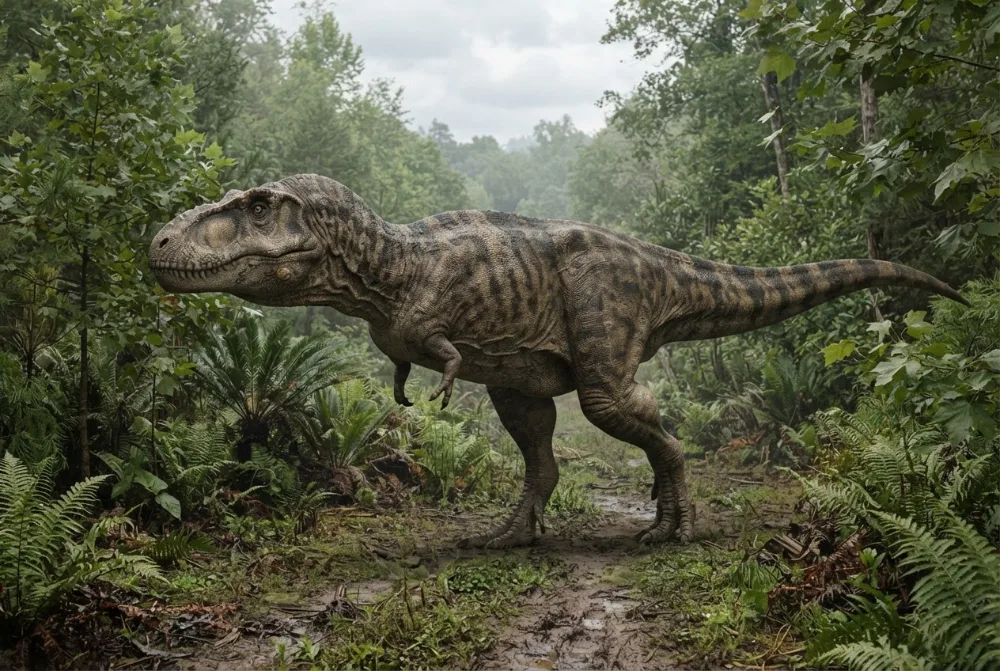
Only a few leg bones and toe bones have been found, so scientists are still learning about this dinosaur.1
Teihivenator lived during the Maastrichtian age, about 72 to 66 million years ago.1
It belonged to a group called Tyrannosauroidea, which includes T. rex and its smaller cousins.1
The fossils were found in the Navesink Formation, which was once a shallow sea environment.1
As preguntas máis frecuentes sobre Teihivenator
?What does the name Teihivenator mean?
It means 'strong hunter' from the Arapaho word 'Teihiihan' and the Greek word 'venator'.2
?How big was Teihivenator?
Only a few leg bones have been found, so its exact size is unknown, but it was much smaller than T. rex.3
?When did Teihivenator live?
It lived during the Maastrichtian age, about 72 to 66 million years ago.3
?Where was Teihivenator found?
Its fossils were found in the Navesink Formation in New Jersey, USA, which was once a shallow sea.3
?Is Teihivenator a dinosaur?
Yes, it is a theropod dinosaur and a relative of T. rex.3
?What did Teihivenator eat?
It was a carnivore, meaning it ate meat.3
?Why is Teihivenator's name new?
It was named in 2017 because its fossils were originally called 'Laelaps macropus' but that name was already used for a mite.2
?Could Teihivenator grasp its prey?
Its toe bones suggest it had strong grasping feet, similar to modern predatory birds, but scientists are not certain.2
Para expertos en dinos
- Nome científico
- Teihivenator
- Bautizado por
- Yun 20173
- Grupo
- Tiranosauros
- Familia / clado
- Tyrannosauroidea3
- Clasificación
- Theropoda > Tyrannosauroidea3
- Idade das rochas
- de 72 a 66 millóns de anos (Maastrichtian)3
- Formacións rochosas
- Navesink3
- Países
- EUA3
- Rexistros fósiles
- 1 na Paleobiology Database3
- Descubrimento
- The first fossils were found in the 1860s by Edward Drinker Cope, who named them Laelaps macropus. In 2017, paleontologist Chan-gyu Yun gave them the new name Teihivenator.1
- Aínda en debate
- Scientists are not sure if Teihivenator is a valid species or if the few bones belong to a different dinosaur. Some experts think it might be a 'nomen dubium' (doubtful name).1
De onde veñen os datos
- PBDB Taxon (paleobiodb.org)
- 1Vertebrate Paleontological Institute of Incheon, Incheon 21974, Republic of Korea 2Biological Sciences, Inha University, Incheon 22212, Republic of Korea (dinodata.de)
- Teihivenator in The Paleobiology Database (CC BY 4.0): idade, lugares, formacións rochosas, clasificación.
Cada dato desta páxina ten un número que leva á súa fonte. Se nos equivocamos nalgo, sentímolo, somos fans dos dinos, non unha revista científica. Escríbenos a [email protected] e arranxámolo.
 Rex ten fame! Dino Wiki é o proxecto dun pai para o seu fillo, que adora os dinosauros, gratis, sen anuncios e sen rastrexadores. Os adultos poden darlle un petisco a Rex para mantelo en liña.Dálle de comer a Rex
 Tyrannosaurus
 Tarbosaurus
 Albertosaurus
 Daspletosaurus
 Gorgosaurus
 Alectrosaurus
 Triceratops
 Velociraptor
 Spinosaurus
 Ankylosaurus
 Parasaurolophus
 Pteranodon