 חידון: איזה דינוזאור מסתתר בך?
 קרב דינוזאורים
 מרוץ דינוזאורים
 מיני־משחקים של דינוזאורים
 אלבום מדבקות
 רשימות הטופ של הדינוזאורים
 להפתיע אותי!
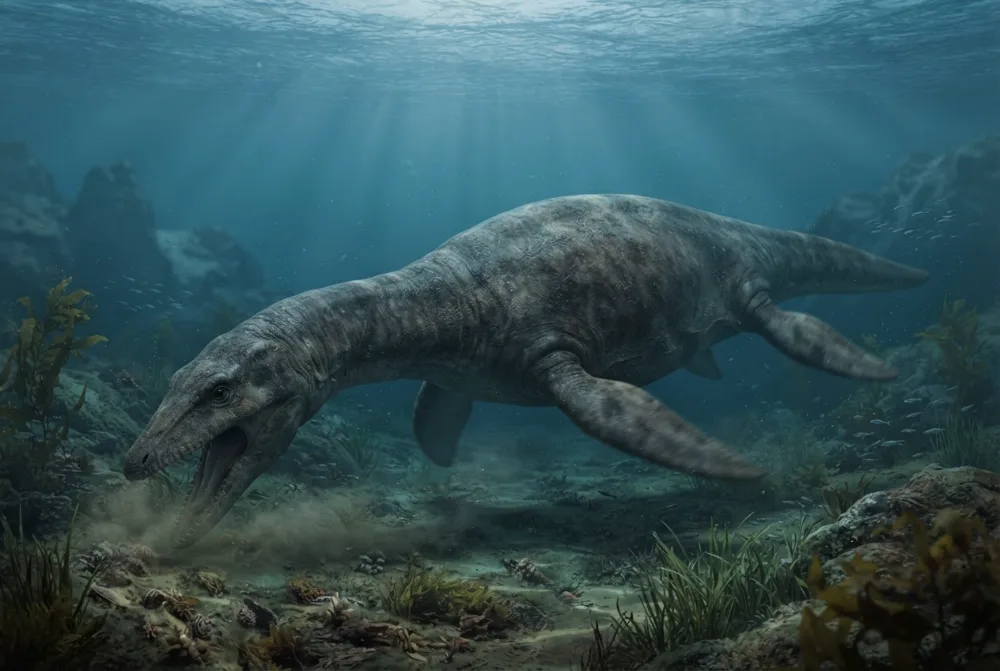
Aristonectes
Aristonectes was a huge marine reptile that swam in the seas near Antarctica and South America at the end of the Age of Dinosaurs. It had a big head, a short neck, and a body shaped a bit like a whale. It used its wide mouth to suck up food from the seafloor, just like a gray whale does today.1
מתי הוא חי?
כמה גדול הוא היה?
כמה ארוך הוא היה?
כמה כבד הוא היה?

 ארוך כמו 2.5 מכוניות חונות בשורה🍌ארוך כמו 66 בננות בשורהכבד כמו 9 מכוניות🍉כבד כמו 2700 אבטיחים🎒כבד כמו 17 כיתות שלמות של ילדים🐻❄️כבד כמו 30 דובי קוטב🏊יכול לשחות לאורך בריכה גדולה (50 מ׳) ב־8.6 שניות
כמה גדול היה Aristonectes לעומתך?
רק חשבון בדפדפן שלך. שום דבר לא נשמר ולא נשלח לשום מקום.
כמה מהר הוא היה?


עובדות כיפיות
Aristonectes is one of the biggest and heaviest plesiosaurs ever found. One Antarctic specimen may have weighed as much as 13.5 metric tons (about 15 tons), as heavy as a large school bus.1
Unlike most plesiosaurs, which had very long necks, Aristonectes had a short neck and a big, bulky skull. Scientists put it in a special group called Aristonectinae because of this.1
Aristonectes probably migrated between Patagonia and Antarctica, just like many whales do today. Its fossils are found in both places.1
The first fossils of Aristonectes were discovered in Argentina in 1941, but scientists had a hard time studying them because the bones were not well prepared. It took decades to figure out what kind of plesiosaur it was.1
Aristonectes had a mouth that could open very wide, letting it gulp a huge amount of water and food at once. It fed by mixing prey with sediment from the seafloor, a method called benthic suction feeding.1
Like other plesiosaurs, Aristonectes probably swallowed stones called gastroliths. These may have helped grind up food in its stomach or helped control its buoyancy in the water.1
השאלות הנפוצות ביותר על Aristonectes
?How big was Aristonectes?
Aristonectes was huge, measuring more than 10 metres (33 feet) long. One Antarctic specimen may have reached 11 to 11.9 metres (36 to 39 feet) and weighed 10.7 to 13.5 metric tons (11.8 to 14.9 short tons).12
?What did Aristonectes eat?
Aristonectes likely ate crustaceans and small fish, based on its small teeth. It fed by sucking up prey and sediment from the seafloor, like a gray whale.13
?Was Aristonectes a dinosaur?
No, Aristonectes was a plesiosaur, a marine reptile that lived alongside the dinosaurs. It was not a dinosaur.1
?Where did Aristonectes live?
Aristonectes lived in the seas near Patagonia and Antarctica during the Late Cretaceous. Its fossils have been found in Chile, Argentina, and Antarctica.1
?Could Aristonectes swim?
Yes, Aristonectes was a strong swimmer, using its large paddle-like limbs to move through the water. Its name means 'best swimmer'.1
למומחי דינוזאורים
- שם מדעי
- Aristonectes
- קיבל את שמו מ
- Cabrera 19414
- קבוצה
- פלזיוזאורים
- משפחה / ענף
- Elasmosauridae4
- סיווג
- Plesiosauria > Elasmosauridae > Sauropterygia4
- גיל הסלעים
- 84 עד 66 מיליון שנה (Campanian / Maastrichtian)4
- תצורות סלע
- Quiriquina, López de Bertodano, Lopez de Bertodano4
- מדינות
- צ׳ילה, אנטארקטיקה, ארגנטינה4
- ממצאי מאובנים
- 12 ב־The Paleobiology Database4
- ידוע גם בשם
- Turneria (שמות ישנים יותר נחשבים היום לאותה חיה)4
- גילוי
- Aristonectes was named by Argentine paleontologist Ángel Cabrera in 1941, based on fossils found in Chubut, Argentina. The first species named was Aristonectes parvidens.14
- עדיין שנוי במחלוקת
- Scientists are still debating exactly how Aristonectes is related to other plesiosaurs. For a long time it was thought to be a cryptoclidid, but now most agree it is an elasmosaurid.1
מאיפה מגיעות העובדות
- Aristonectes (en.wikipedia.org)
- A giant elasmosaurid (Sauropterygia; Plesiosauria) from Antarctica: New information on elasmosaurid body size diversity and aristonectine evolutionary scenarios (sciencedirect.com)
- Fossil 'sea monster' found in Antarctica was the heaviest of its kind | National Geographic (nationalgeographic.com)
- Aristonectes in The Paleobiology Database (CC BY 4.0): גיל, מקומות, תצורות סלע, סיווג.
לכל עובדה בעמוד הזה יש מספר שמוביל למקור שלה. אם טעינו במשהו, סליחה, אנחנו חובבי דינוזאורים, לא כתב עת מדעי. אפשר לכתוב לנו ל־[email protected] ואנחנו נתקן.
 רקס רעב! Dino Wiki הוא פרויקט של אבא בשביל הבן שלו שמת על דינוזאורים, בחינם, בלי פרסומות ובלי מעקב. מבוגרים יכולים להאכיל את רקס בחטיף כדי לעזור לו להישאר באוויר.להאכיל את רקס
 Elasmosaurus
 Pliosaurus
 Plesiosaurus
 Cimoliasaurus
 Colymbosaurus
 Trinacromerum
 Tyrannosaurus
 Triceratops
 Velociraptor
 Spinosaurus
 Ankylosaurus
 Parasaurolophus