 חידון: איזה דינוזאור מסתתר בך?
 קרב דינוזאורים
 מרוץ דינוזאורים
 מיני־משחקים של דינוזאורים
 אלבום מדבקות
 רשימות הטופ של הדינוזאורים
 להפתיע אותי!
Caelestiventus
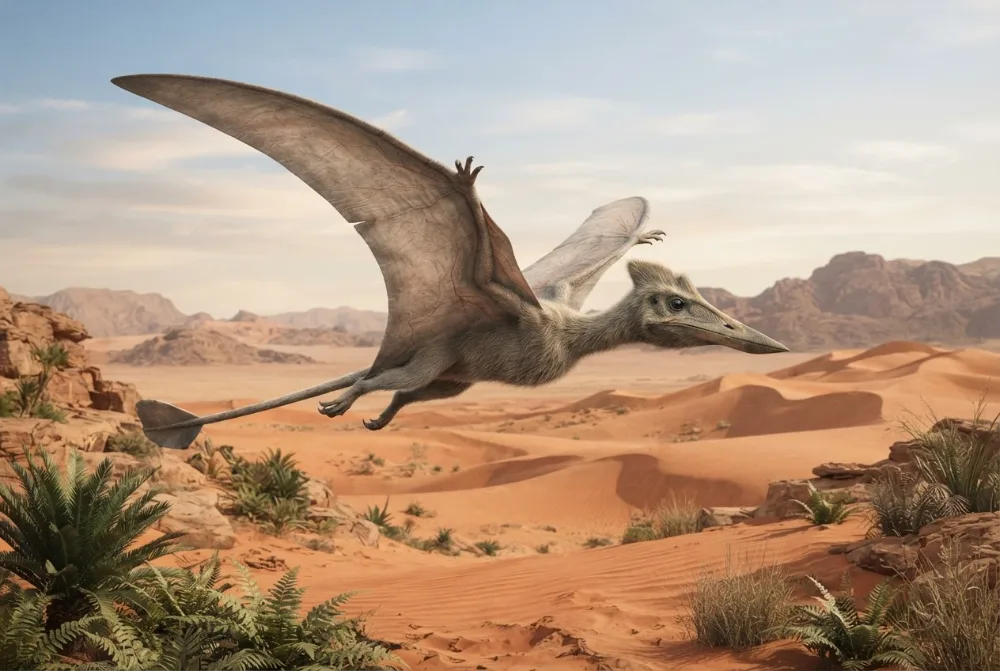
Caelestiventus was a flying reptile that lived in a hot desert during the Late Triassic, about 205 million years ago. It was one of the biggest pterosaurs of its time, with a wingspan over 1.5 meters (5 feet). Unlike most early pterosaurs, which are found in marine rocks, this one lived among sand dunes.21
מתי הוא חי?
כמה גדול הוא היה?
כמה רחבות היו הכנפיים שלו?
 ארוך כמו 3 חתולי בית מהאף עד הזנב⚽יכול לעוף לאורך מגרש כדורגל שלם ב־7.3 שניות
כמה גדול היה Caelestiventus לעומתך?
רק חשבון בדפדפן שלך. שום דבר לא נשמר ולא נשלח לשום מקום.
כמה מהר הוא היה?


עובדות כיפיות
Caelestiventus is the only known desert-dwelling non-pterodactyloid pterosaur, and it is 65 million years older than any other desert pterosaur.21
Its skull was 17.8 centimeters (7 inches) long, and most of the skull bones were preserved in three dimensions, not squashed flat like most Triassic pterosaur fossils.1
The lower jaw of Caelestiventus was hollow and air-filled, with large openings that may have helped reduce weight for flight.1
It had three different kinds of teeth: long fang-like spikes at the front, large leaf-shaped blades, and tiny blades further back.1
The only known fossil includes most of the skull and the last finger bone of the wing, which supported the wingtip.1
Caelestiventus is closely related to Dimorphodon, a pterosaur from the Early Jurassic of Britain.21
The quarry where it was found also contained bones of crocodile-like reptiles, lizards, and small meat-eating dinosaurs.1
השאלות הנפוצות ביותר על Caelestiventus
?Was Caelestiventus a dinosaur?
No, Caelestiventus was a pterosaur, a flying reptile, not a dinosaur.13
?How big was Caelestiventus?
It had a wingspan of at least 1.5 meters (4.9 feet) and a skull 17.8 centimeters (7 inches) long. It was one of the largest Triassic pterosaurs, and the only known specimen was not fully grown.1
?What did Caelestiventus eat?
Scientists are not sure, but its three kinds of teeth (fang-like spikes, leaf-shaped blades, and tiny blades) suggest it ate different foods, possibly insects or small animals.1
?Did Caelestiventus have feathers?
No, it did not have feathers. Like most pterosaurs, it was covered in small hair-like structures called pycnofibers.3
?When did Caelestiventus live?
It lived during the Late Triassic Period, about 205 million years ago.1
?Where was Caelestiventus found?
It was discovered in the Saints & Sinners Quarry in northeastern Utah, USA, in fossilized sand dunes.1
למומחי דינוזאורים
- שם מדעי
- Caelestiventus
- קיבל את שמו מ
- Britt et al. 20184
- קבוצה
- זוחלים מעופפים
- משפחה / ענף
- Dimorphodontidae4
- סיווג
- Pterosauria4
- גיל הסלעים
- 237 עד 175 מיליון שנה (Carnian / Toarcian)4
- תצורות סלע
- Nugget Sandstone4
- מדינות
- ארה״ב4
- ממצאי מאובנים
- 1 ב־The Paleobiology Database4
- גילוי
- The fossil was discovered in 2007 by Dan Chure and George Engelmann in the Nugget Sandstone of Utah. It was named in 2018 by Britt and colleagues, honoring Robin Hansen, a geologist who helped with the excavation.14
- עדיין שנוי במחלוקת
- Scientists are not sure if the hollow spaces in its skull and jaw were used for storing food, for making sounds, or for display.1
מאיפה מגיעות העובדות
- Caelestiventus (en.wikipedia.org)
- Caelestiventus hanseni gen. et sp. nov. extends the desert-dwelling pterosaur record back 65 million years | Nature Ecology & Evolution (nature.com)
- Caelestiventus hanseni - BYU Geology (geology.byu.edu)
- Caelestiventus in The Paleobiology Database (CC BY 4.0): גיל, מקומות, תצורות סלע, סיווג.
לכל עובדה בעמוד הזה יש מספר שמוביל למקור שלה. אם טעינו במשהו, סליחה, אנחנו חובבי דינוזאורים, לא כתב עת מדעי. אפשר לכתוב לנו ל־[email protected] ואנחנו נתקן.
 רקס רעב! Dino Wiki הוא פרויקט של אבא בשביל הבן שלו שמת על דינוזאורים, בחינם, בלי פרסומות ובלי מעקב. מבוגרים יכולים להאכיל את רקס בחטיף כדי לעזור לו להישאר באוויר.להאכיל את רקס
 Pteranodon
 Quetzalcoatlus
 Dorygnathus
 Rhamphorhynchus
 Anhanguera
 Pterodactylus
 Nothosaurus
 Massospondylus
 Plateosaurus
 Coelophysis
 Podokesaurus
 Simosaurus