 חידון: איזה דינוזאור מסתתר בך?
 קרב דינוזאורים
 מרוץ דינוזאורים
 מיני־משחקים של דינוזאורים
 אלבום מדבקות
 רשימות הטופ של הדינוזאורים
 להפתיע אותי!
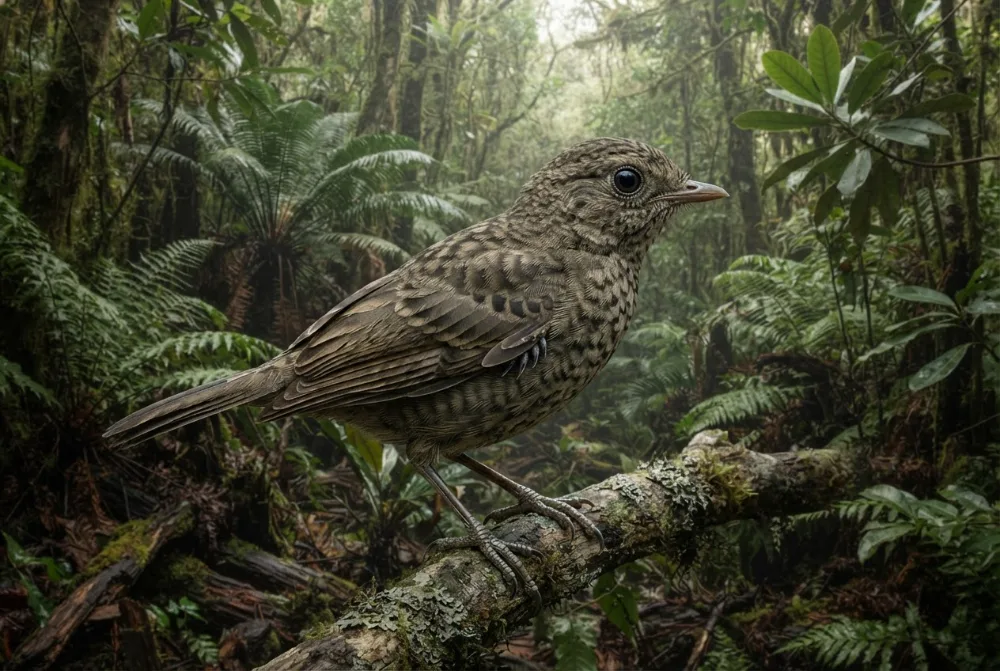
Navaornis
Navaornis was a starling-sized bird that lived about 80 million years ago in what is now Brazil. It had a toothless, large-eyed skull that looked almost like a modern bird, but it belonged to an ancient group called enantiornithines. Its beautifully preserved skull let scientists see inside its brain for the first time in such an old bird.12
מתי הוא חי?
כמה מהר הוא היה?


עובדות כיפיות
Navaornis had a toothless skull with large eyes, just like many birds today, but its brain still had some ancient features like a small cerebellum and a weakly expanded telencephalon.1
Its skull is the best-preserved Mesozoic bird skull ever found, preserved in three dimensions without being flattened.1
The fossil site where Navaornis was found is very small, only about 6 square meters, but it has yielded hundreds of enantiornithine bird bones.1
Navaornis belongs to a group called Enantiornithes, which were the most diverse birds of the Mesozoic and lived on every continent except Antarctica.12
Its inner ear (bony labyrinth) was shaped like that of many modern birds but was much larger.1
למומחי דינוזאורים
- שם מדעי
- Navaornis
- קיבל את שמו מ
- Chiappe et al. 20243
- קבוצה
- ציפורים קדומות
- משפחה / ענף
- Enantiornithes3
- סיווג
- Theropoda > Avialae3
- גיל הסלעים
- 84 עד 66 מיליון שנה (Campanian / Maastrichtian)3
- תצורות סלע
- Adamantina3
- מדינות
- ברזיל3
- ממצאי מאובנים
- 1 ב־The Paleobiology Database3
- גילוי
- The fossil site was discovered in 2004 by William Nava, and the holotype skull was found in 2016. The species was named Navaornis hestiae by Chiappe and colleagues in 2024.13
- עדיין שנוי במחלוקת
- Scientists are still debating exactly how Navaornis is related to other enantiornithines, because its toothless skull and modern-looking head make it hard to place in the family tree.1
מאיפה מגיעות העובדות
- Cretaceous bird from Brazil informs the evolution of the avian skull and brain | Nature (nature.com)
- Cretaceous bird from Brazil informs the evolution of the avian skull and brain (pmc.ncbi.nlm.nih.gov)
- Navaornis in The Paleobiology Database (CC BY 4.0): גיל, מקומות, תצורות סלע, סיווג.
לכל עובדה בעמוד הזה יש מספר שמוביל למקור שלה. אם טעינו במשהו, סליחה, אנחנו חובבי דינוזאורים, לא כתב עת מדעי. אפשר לכתוב לנו ל־[email protected] ואנחנו נתקן.
 רקס רעב! Dino Wiki הוא פרויקט של אבא בשביל הבן שלו שמת על דינוזאורים, בחינם, בלי פרסומות ובלי מעקב. מבוגרים יכולים להאכיל את רקס בחטיף כדי לעזור לו להישאר באוויר.להאכיל את רקס
 Archaeopteryx
 Hesperornis
 Ichthyornis
 Baptornis
 Jurapteryx
 Gobipteryx
 Tyrannosaurus
 Triceratops
 Velociraptor
 Spinosaurus
 Ankylosaurus
 Parasaurolophus