 חידון: איזה דינוזאור מסתתר בך?
 קרב דינוזאורים
 מרוץ דינוזאורים
 מיני־משחקים של דינוזאורים
 אלבום מדבקות
 רשימות הטופ של הדינוזאורים
 להפתיע אותי!
Polycotylus
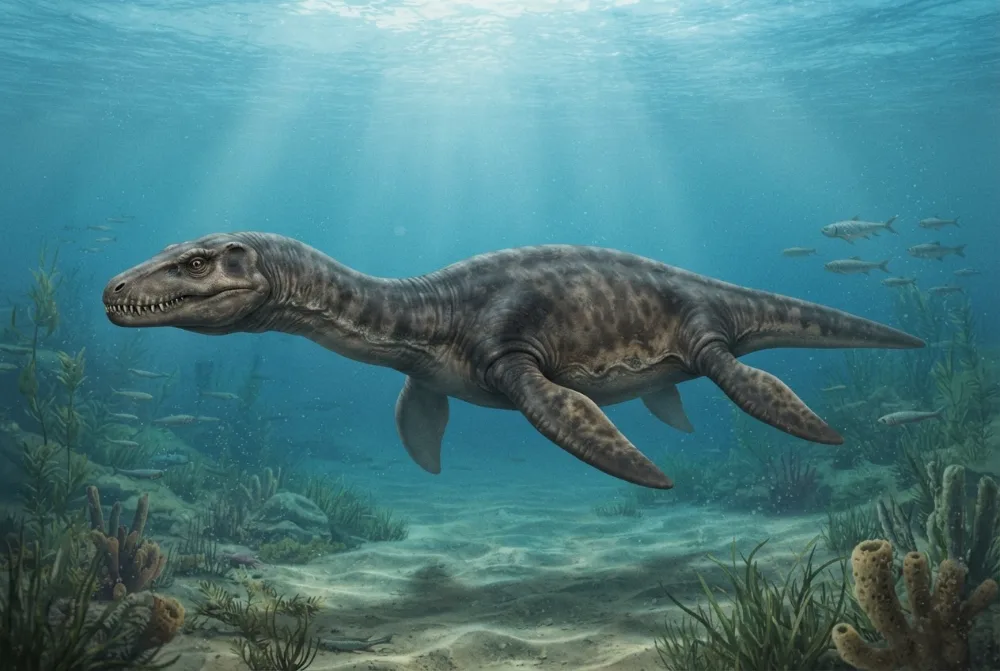
Polycotylus was a short-necked plesiosaur that swam in the warm seas of North America and Europe during the Cretaceous. It had a big head, strong flippers, and gave birth to live babies in the water, just like whales do today.1
מתי הוא חי?
כמה גדול הוא היה?
כמה ארוך הוא היה?
כמה כבד הוא היה?
 ארוך כמו 5 כלבים מהאף עד הזנב🍌ארוך כמו 30 בננות בשורה🍉כבד כמו 200 אבטיחים🧸כבד כמו 53 ילדי גן🎒כבד כמו 31 ילדי בית ספר🐻❄️כבד כמו 2 דובי קוטב🏊יכול לשחות לאורך בריכה גדולה (50 מ׳) ב־6.7 שניות
כמה גדול היה Polycotylus לעומתך?
רק חשבון בדפדפן שלך. שום דבר לא נשמר ולא נשלח לשום מקום.
כמה מהר הוא היה?


עובדות כיפיות
Polycotylus was named by famous paleontologist Edward Drinker Cope in 1869 from fossils found in Kansas.1
A fossil of Polycotylus found in Kansas contains a single large fetus inside the mother, proving that these plesiosaurs gave live birth.1
The baby Polycotylus was about 1.5 metres (4.9 feet) long, which is about 32 percent of the mother's length.1
Polycotylus had a short neck and a long head, making it look a bit like a pliosaur, but it is actually a type of plesiosaur called a polycotylid.1
Its name means 'much-cupped vertebrae' because the bones in its spine have deep cup-like hollows.1
Polycotylus lived in the Western Interior Seaway, a shallow sea that split North America in two during the Cretaceous.1
Scientists think Polycotylus gave birth to just one large baby at a time, a strategy called K-selection.1
השאלות הנפוצות ביותר על Polycotylus
?How big was Polycotylus?
Polycotylus was a medium-sized plesiosaur, measuring about 4.7 to 5.4 metres (15 to 18 feet) long and weighing over 1 metric ton (1.1 short tons).1
?Did Polycotylus have a short neck?
Yes, Polycotylus had a short neck and a long head, unlike the long-necked plesiosaurs like Elasmosaurus.1
?What did Polycotylus eat?
Polycotylus had thick teeth with striations on their surfaces, which suggests it ate fish and other marine animals, but the sources do not give a specific diet.1
?When did Polycotylus live?
Polycotylus lived toward the end of the Cretaceous period, about 84 to 66 million years ago.1
מנפץ מיתוסים
מיתוס: Many people think all plesiosaurs had long necks like the Loch Ness Monster.
האמת: Polycotylus had a short neck and a large head, very different from long-necked plesiosaurs like Elasmosaurus.1
למומחי דינוזאורים
- שם מדעי
- Polycotylus
- קיבל את שמו מ
- Cope 18693
- קבוצה
- פלזיוזאורים
- משפחה / ענף
- Polycotylidae3
- סיווג
- Plesiosauria > Sauropterygia3
- גיל הסלעים
- 152 עד 72 מיליון שנה (Kimmeridgian / Campanian)3
- תצורות סלע
- Niobrara, Frontier, Mooreville Chalk3
- מדינות
- ארה״ב, צרפת, רוסיה3
- ממצאי מאובנים
- 10 ב־The Paleobiology Database3
- גילוי
- Edward Drinker Cope named Polycotylus in 1869 from fragmentary bones found in the Niobrara Formation of Kansas. A nearly complete skeleton was later found in Alabama in 1949 but not described until 2002.1
- עדיין שנוי במחלוקת
- Scientists are not sure exactly how many species of Polycotylus existed, and some species may be the same as others.1
מאיפה מגיעות העובדות
- Polycotylus (en.wikipedia.org)
- PBDB Taxon (paleobiodb.org)
- Polycotylus in The Paleobiology Database (CC BY 4.0): גיל, מקומות, תצורות סלע, סיווג.
לכל עובדה בעמוד הזה יש מספר שמוביל למקור שלה. אם טעינו במשהו, סליחה, אנחנו חובבי דינוזאורים, לא כתב עת מדעי. אפשר לכתוב לנו ל־[email protected] ואנחנו נתקן.
 רקס רעב! Dino Wiki הוא פרויקט של אבא בשביל הבן שלו שמת על דינוזאורים, בחינם, בלי פרסומות ובלי מעקב. מבוגרים יכולים להאכיל את רקס בחטיף כדי לעזור לו להישאר באוויר.להאכיל את רקס
 Elasmosaurus
 Pliosaurus
 Plesiosaurus
 Cimoliasaurus
 Colymbosaurus
 Trinacromerum
 Stegosaurus
 Iguanodon
 Archaeopteryx
 Giganotosaurus
 Microraptor
 Deinonychus