 חידון: איזה דינוזאור מסתתר בך?
 קרב דינוזאורים
 מרוץ דינוזאורים
 מיני־משחקים של דינוזאורים
 אלבום מדבקות
 רשימות הטופ של הדינוזאורים
 להפתיע אותי!
Tropeognathus
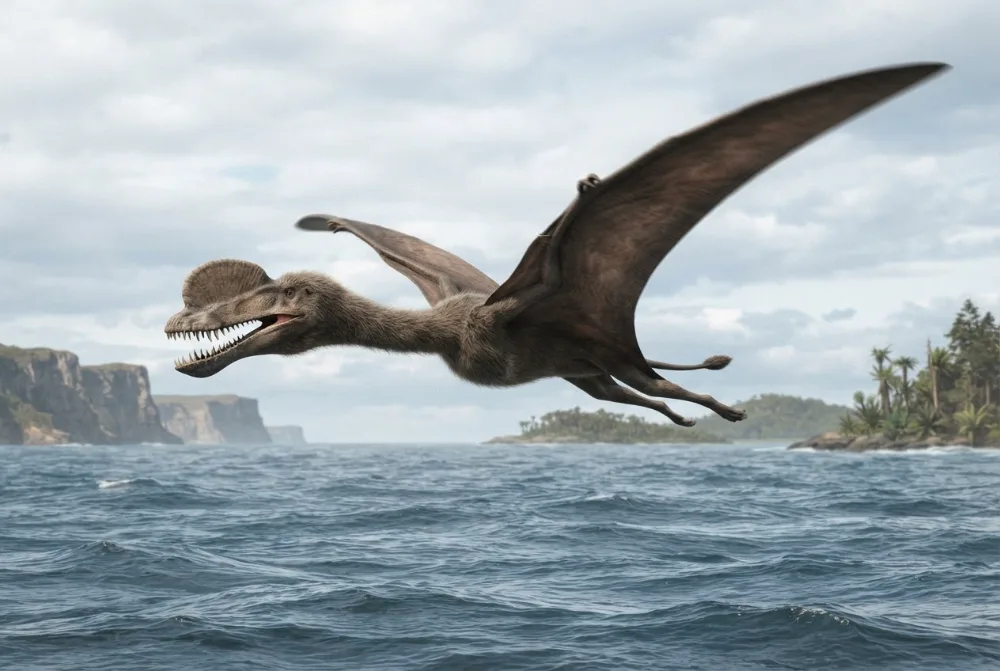
Tropeognathus was a giant flying reptile that soared over ancient seas. It had a big crest on its snout and a mouth full of teeth for catching fish.41
מתי הוא חי?
כמה גדול הוא היה?
כמה רחבות היו הכנפיים שלו?
 כנפיים רחבות כמו 5 אופניים בשורה⚽יכול לעוף לאורך מגרש כדורגל שלם ב־4.4 שניות
כמה גדול היה Tropeognathus לעומתך?
רק חשבון בדפדפן שלך. שום דבר לא נשמר ולא נשלח לשום מקום.
כמה מהר הוא היה?


עובדות כיפיות
Tropeognathus is one of the largest pterosaurs ever found in the southern continents (Gondwana).1
A huge specimen (MN 6594-V) had a wingspan of about 8.26 to 8.7 metres, as wide as a small airplane.1
It lived during the Early Cretaceous, about 119 to 113 million years ago.2
Tropeognathus had a low, blunt crest on the top of its skull, unlike some other pterosaurs with tall crests.1
Its name means 'keel jaw', because of the ridge on its lower jaw that looks like a boat's keel.4
The first fossil of Tropeognathus was a skull and lower jaw found in Brazil.4
השאלות הנפוצות ביותר על Tropeognathus
?How big was Tropeognathus?
Tropeognathus had a wingspan of about 8.26 to 8.7 metres (27.1 to 28.5 feet), about as wide as a small airplane.31
?Was Tropeognathus a dinosaur?
No, Tropeognathus was a pterosaur, a flying reptile, not a dinosaur. Pterosaurs are a separate group of reptiles that lived alongside dinosaurs.3
?What did Tropeognathus eat?
Tropeognathus ate fish, which it caught with its long jaws full of teeth while flying over ancient seas.3
?Could Tropeognathus fly?
Yes, Tropeognathus could fly. It was a flying reptile with a wingspan of about 8.5 metres (28 feet), making it one of the largest flying animals of its time.3
?Why did Tropeognathus have a crest?
Tropeognathus had a crest on its snout and a smaller one on its lower jaw, likely used for display, especially in males, and possibly for species recognition.3
?When did Tropeognathus live?
Tropeognathus lived during the Early Cretaceous, about 119 to 113 million years ago.3
?Where was Tropeognathus found?
Fossils of Tropeognathus were found in the Romualdo Formation in northeastern Brazil, in South America.3
?Was Tropeognathus bigger than a T. rex?
No, Tropeognathus was a flying reptile, not a dinosaur, and it was much smaller than a T. rex. T. rex was about 12 metres long, while Tropeognathus had a wingspan of about 8.5 metres (28 feet).3
למומחי דינוזאורים
- שם מדעי
- Tropeognathus
- קיבל את שמו מ
- Wellnhofer 19874
- קבוצה
- זוחלים מעופפים
- משפחה / ענף
- Anhangueridae4
- סיווג
- Pterosauria > Pterodactyloidea4
- גיל הסלעים
- 120 עד 113 מיליון שנה (Aptian)4
- תצורות סלע
- Romualdo4
- מדינות
- ברזיל4
- ממצאי מאובנים
- 2 ב־The Paleobiology Database4
- גילוי
- Tropeognathus was named by Peter Wellnhofer in 1987 based on a skull and lower jaw from the Romualdo Formation in Brazil.4
- עדיין שנוי במחלוקת
- Scientists are not sure if some very large pterosaur bones from the same area belong to Tropeognathus or to a different, even bigger species.1
מאיפה מגיעות העובדות
- scielo.br (scielo.br)
- PBDB Taxon (paleobiodb.org)
- Tropeognathus (en.wikipedia.org)
- Tropeognathus in The Paleobiology Database (CC BY 4.0): גיל, מקומות, תצורות סלע, סיווג.
לכל עובדה בעמוד הזה יש מספר שמוביל למקור שלה. אם טעינו במשהו, סליחה, אנחנו חובבי דינוזאורים, לא כתב עת מדעי. אפשר לכתוב לנו ל־[email protected] ואנחנו נתקן.
 רקס רעב! Dino Wiki הוא פרויקט של אבא בשביל הבן שלו שמת על דינוזאורים, בחינם, בלי פרסומות ובלי מעקב. מבוגרים יכולים להאכיל את רקס בחטיף כדי לעזור לו להישאר באוויר.להאכיל את רקס
 Pteranodon
 Quetzalcoatlus
 Dorygnathus
 Rhamphorhynchus
 Anhanguera
 Pterodactylus
 Stegosaurus
 Iguanodon
 Archaeopteryx
 Giganotosaurus
 Microraptor
 Deinonychus