 რომელი დინო ხარ? ქვიზი
 დინოების ბრძოლა
 დინოების რბოლა
 დინო მინი-თამაშები
 სტიკერების ალბომი
 დინო TOP სიები
 გამაოცე!
Caelestiventus
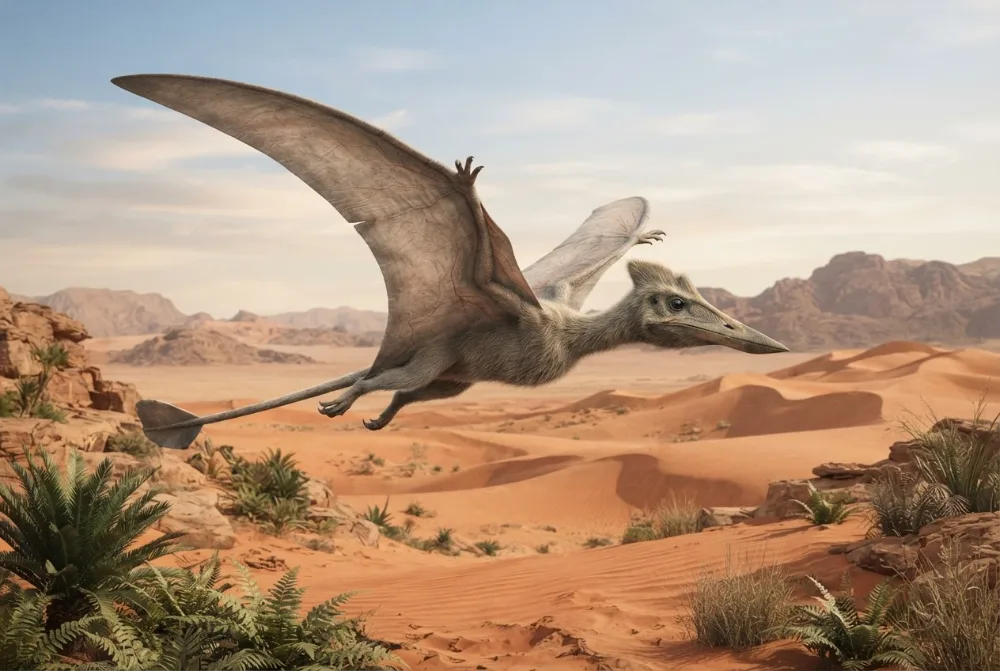
Caelestiventus was a flying reptile that lived in a hot desert during the Late Triassic, about 205 million years ago. It was one of the biggest pterosaurs of its time, with a wingspan over 1.5 meters (5 feet). Unlike most early pterosaurs, which are found in marine rocks, this one lived among sand dunes.21
როდის ცხოვრობდა?
რამხელა იყო?
რამდენად განიერი იყო მისი ფრთები?
 3 შინაური კატის სიგრძის, ცხვირიდან კუდამდე⚽მთელ ფეხბურთის მოედანს 7,3 წამში გადაუფრენდა
რამხელა იყო Caelestiventus შენთან შედარებით?
უბრალოდ მათემატიკა შენს ბრაუზერში. არაფერი ინახება და არსად იგზავნება.
რამდენად სწრაფი იყო?


სახალისო ფაქტები
Caelestiventus is the only known desert-dwelling non-pterodactyloid pterosaur, and it is 65 million years older than any other desert pterosaur.21
Its skull was 17.8 centimeters (7 inches) long, and most of the skull bones were preserved in three dimensions, not squashed flat like most Triassic pterosaur fossils.1
The lower jaw of Caelestiventus was hollow and air-filled, with large openings that may have helped reduce weight for flight.1
It had three different kinds of teeth: long fang-like spikes at the front, large leaf-shaped blades, and tiny blades further back.1
The only known fossil includes most of the skull and the last finger bone of the wing, which supported the wingtip.1
Caelestiventus is closely related to Dimorphodon, a pterosaur from the Early Jurassic of Britain.21
The quarry where it was found also contained bones of crocodile-like reptiles, lizards, and small meat-eating dinosaurs.1
ყველაზე ხშირი კითხვები: Caelestiventus
?Was Caelestiventus a dinosaur?
No, Caelestiventus was a pterosaur, a flying reptile, not a dinosaur.13
?How big was Caelestiventus?
It had a wingspan of at least 1.5 meters (4.9 feet) and a skull 17.8 centimeters (7 inches) long. It was one of the largest Triassic pterosaurs, and the only known specimen was not fully grown.1
?What did Caelestiventus eat?
Scientists are not sure, but its three kinds of teeth (fang-like spikes, leaf-shaped blades, and tiny blades) suggest it ate different foods, possibly insects or small animals.1
?Did Caelestiventus have feathers?
No, it did not have feathers. Like most pterosaurs, it was covered in small hair-like structures called pycnofibers.3
?When did Caelestiventus live?
It lived during the Late Triassic Period, about 205 million years ago.1
?Where was Caelestiventus found?
It was discovered in the Saints & Sinners Quarry in northeastern Utah, USA, in fossilized sand dunes.1
დინო ექსპერტებისთვის
- სამეცნიერო სახელი
- Caelestiventus
- სახელი დაარქვა:
- Britt et al. 20184
- ჯგუფი
- მფრინავი ქვეწარმავლები
- ოჯახი / კლადი
- Dimorphodontidae4
- კლასიფიკაცია
- Pterosauria4
- ქანების ასაკი
- 237-175 მილიონი წელი (Carnian / Toarcian)4
- ქანების წყებები
- Nugget Sandstone4
- ქვეყნები
- აშშ4
- ნამარხების ჩანაწერები
- The Paleobiology Database-ში: 14
- აღმოჩენა
- The fossil was discovered in 2007 by Dan Chure and George Engelmann in the Nugget Sandstone of Utah. It was named in 2018 by Britt and colleagues, honoring Robin Hansen, a geologist who helped with the excavation.14
- ჯერ კიდევ სადავოა
- Scientists are not sure if the hollow spaces in its skull and jaw were used for storing food, for making sounds, or for display.1
საიდან არის ფაქტები
- Caelestiventus (en.wikipedia.org)
- Caelestiventus hanseni gen. et sp. nov. extends the desert-dwelling pterosaur record back 65 million years | Nature Ecology & Evolution (nature.com)
- Caelestiventus hanseni - BYU Geology (geology.byu.edu)
- Caelestiventus in The Paleobiology Database (CC BY 4.0): ასაკი, ადგილები, ქანების წყებები, კლასიფიკაცია.
ამ გვერდზე ყოველ ფაქტს აქვს ნომერი, რომელიც მის წყაროზე მიუთითებს. თუ რამე შეგვეშალა, ბოდიში, ჩვენ დინოს მოყვარულები ვართ და არა სამეცნიერო ჟურნალი. მოგვწერე მისამართზე [email protected] და გავასწორებთ.
 რექსს შია! Dino Wiki მამის პროექტია დინოზავრების მოყვარული შვილისთვის, უფასო, რეკლამისა და ტრეკერების გარეშე. უფროსებს შეუძლიათ რექსს რამე გემრიელი აჭამონ, რომ საიტი ონლაინ დარჩეს.აჭამე რექსს
 Pteranodon
 Quetzalcoatlus
 Dorygnathus
 Rhamphorhynchus
 Anhanguera
 Pterodactylus
 Nothosaurus
 Massospondylus
 Plateosaurus
 Coelophysis
 Podokesaurus
 Simosaurus