 რომელი დინო ხარ? ქვიზი
 დინოების ბრძოლა
 დინოების რბოლა
 დინო მინი-თამაშები
 სტიკერების ალბომი
 დინო TOP სიები
 გამაოცე!
Henodus
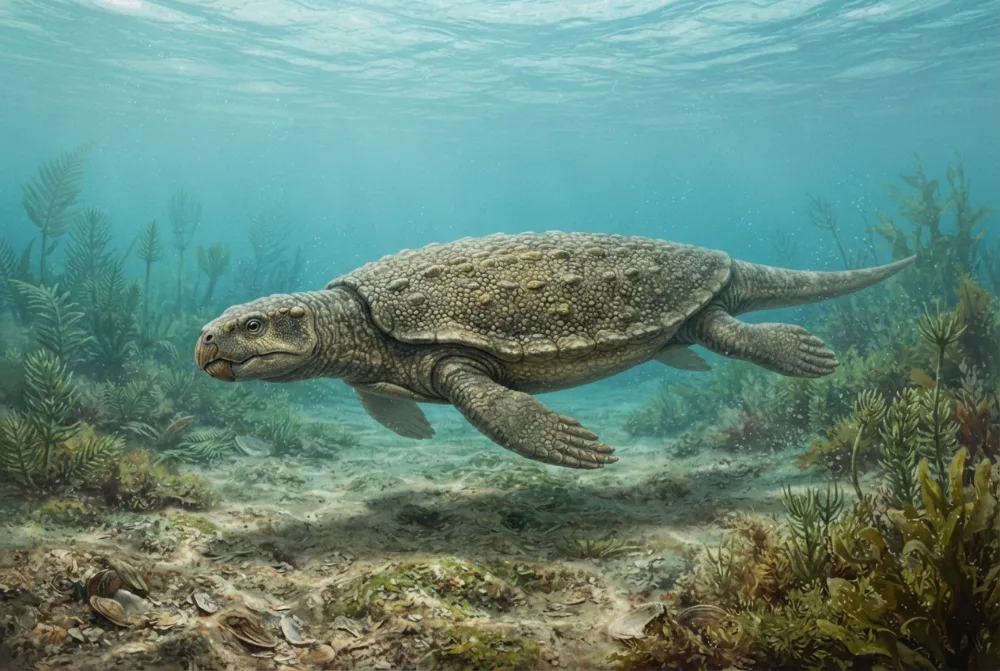
Henodus was a strange reptile that looked a bit like a turtle, but it wasn't one. It lived in shallow, salty lagoons during the Late Triassic, about 237 to 227 million years ago. It had a flat shell and a beak, and it probably used its special jaws to filter food from the water.13
როდის ცხოვრობდა?
რამხელა იყო?
რამდენად გრძელი იყო?
 2 შინაური კატის სიგრძის, ცხვირიდან კუდამდე🍌6 მწკრივად დალაგებული ბანანის სიგრძის🏊დიდი აუზის სიგრძეს (50 მ) 30 წამში გაცურავდა
რამხელა იყო Henodus შენთან შედარებით?
უბრალოდ მათემატიკა შენს ბრაუზერში. არაფერი ინახება და არსად იგზავნება.
რამდენად სწრაფი იყო?


სახალისო ფაქტები
Henodus is the only placodont found in rocks that were not from the open sea, so it probably lived in brackish or freshwater lagoons.1
Its shell was made of many small bony plates that formed a mosaic pattern, unlike a turtle's shell.1
Henodus had only one tooth on each side of its mouth, and the rest of its jaws were a beak.1
It had baleen-like denticles along its jaws, similar to some whales, which helped it filter small food from the water.1
Its weak limbs suggest it spent little or no time on land.1
Scientists think Henodus could close its jaws very quickly, which helped it catch small prey.1
Small snail shells were found near the skulls of Henodus, so it might have eaten those tiny snails.2
ყველაზე ხშირი კითხვები: Henodus
?How big was Henodus?
About 1 metre (3.3 feet) long.1
?What did Henodus eat?
It probably ate tiny snails, small crustaceans, and maybe plants. It had a beak and baleen-like denticles to filter food from the water.12
?Was Henodus a dinosaur?
No, it was a marine reptile called a placodont, not a dinosaur.1
?Could Henodus walk on land?
Probably not much. Its weak limbs suggest it spent little or no time on land.1
?When did Henodus live?
It lived during the Late Triassic period, about 237 to 227 million years ago.1
?Why did Henodus have a shell?
Its shell was made of many small bony plates that formed a mosaic pattern, and it probably protected Henodus from predators.1
მითების მსხვრეველი
მითი: Henodus was a turtle.
სიმართლე: Henodus looked like a turtle, but it was a different kind of reptile called a placodont. Its shell was made of many more bones, and its limbs were not inside its ribcage like a turtle's.1
დინო ექსპერტებისთვის
- სამეცნიერო სახელი
- Henodus
- სახელი დაარქვა:
- Huene 19363
- ჯგუფი
- ზღვის ქვეწარმავლები
- ოჯახი / კლადი
- Henodontidae3
- კლასიფიკაცია
- Placodontia > Sauropterygia3
- ქანების ასაკი
- 237-227 მილიონი წელი (Carnian)3
- ქანების წყებები
- Grabfeld3
- ქვეყნები
- გერმანია3
- ნამარხების ჩანაწერები
- The Paleobiology Database-ში: 13
- აღმოჩენა
- Henodus was named by Friedrich von Huene in 1936. The first fossils were found in the Grabfeld Formation near Tübingen, Germany.31
- ჯერ კიდევ სადავოა
- Scientists are not sure exactly what Henodus ate. Some think it was a filter feeder, others think it ate plants, and some think it ate small animals. It might have done all of these.2
საიდან არის ფაქტები
- Henodus (en.wikipedia.org)
- Dentition and feeding in Placodontia: tooth replacement in Henodus chelyops | BMC Ecology and Evolution | Springer Nature Link (link.springer.com)
- Henodus in The Paleobiology Database (CC BY 4.0): ასაკი, ადგილები, ქანების წყებები, კლასიფიკაცია.
ამ გვერდზე ყოველ ფაქტს აქვს ნომერი, რომელიც მის წყაროზე მიუთითებს. თუ რამე შეგვეშალა, ბოდიში, ჩვენ დინოს მოყვარულები ვართ და არა სამეცნიერო ჟურნალი. მოგვწერე მისამართზე [email protected] და გავასწორებთ.
 რექსს შია! Dino Wiki მამის პროექტია დინოზავრების მოყვარული შვილისთვის, უფასო, რეკლამისა და ტრეკერების გარეშე. უფროსებს შეუძლიათ რექსს რამე გემრიელი აჭამონ, რომ საიტი ონლაინ დარჩეს.აჭამე რექსს
 Nothosaurus
 Placodus
 Lariosaurus
 Cyamodus
 Cymatosaurus
 Proneusticosaurus
 Massospondylus
 Plateosaurus
 Coelophysis
 Podokesaurus
 Thecodontosaurus
 Eudimorphodon