 Сен кайсы динозаврсың? Тест
 Динозаврлар салгылашуусу
 Динозаврлар жарышы
 Динозавр мини-оюндары
 Стикер альбому
 Динозаврлардын ТОП тизмелери
 Мени таң калтыр!
Dsungaripterus
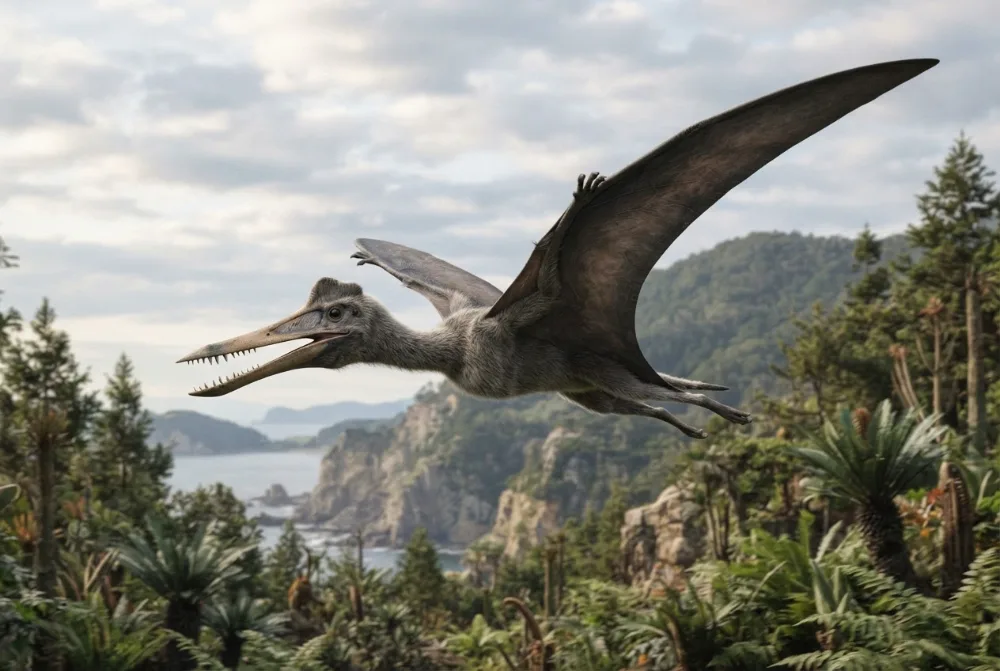
Dsungaripterus was a flying reptile with long, narrow, upturned jaws that worked like tweezers. It used its toothless beak tip to poke into cracks and grab hard-shelled prey, then crushed them with flat, knobbly teeth at the back of its mouth.12
Ал качан жашаган?
Ал канчалык чоң болгон?
Анын канаттары канчалык кенен болгон?
 катар тизилген 2 велосипеддей кенен канаттар⚽бүтүн футбол талаасын 6,4 секундда учуп өтмөк
СЕН менен салыштырганда Dsungaripterus канчалык чоң болгон?
Браузериңдеги жөн гана математика. Эч нерсе сакталбайт жана эч жакка жөнөтүлбөйт.
Ал канчалык ылдам болгон?


Кызыктуу фактылар
Dsungaripterus had a skull over 46 centimeters (18 inches) long, and its head and neck together were almost 1 meter (3.3 feet) long.1
Its jaws curved upward at the tip, and the front part had no teeth, probably covered by a horny sheath.2
It had bulbous, flat teeth at the back of its jaws, perfect for crushing the armor of shellfish.1
The bones of Dsungaripterus were thick-walled and sturdy, suggesting it spent a lot of time walking on the ground.1
It likely landed abruptly and flapped a lot, rather than soaring for long distances.1
Dsungaripterus had a low bony crest on top of its skull, running from the base of the skull to halfway to the beak.1
Fossils show grooves on the jaws that might have held a horny covering, protecting the beak while it probed for food.2
Эң көп берилген суроолор: Dsungaripterus
?How big was Dsungaripterus?
Dsungaripterus had a wingspan of 3 to 3.5 metres (9.8 to 11.5 feet). Its skull was over 46 centimetres (18 inches) long, and its head and neck together were almost 1 metre (3.3 feet) long.1
?What did Dsungaripterus eat?
It ate hard-shelled prey like shellfish. It used its toothless, upturned beak tip to poke into cracks and grab food, then crushed shells with its flat, knobbly back teeth.12
?Was Dsungaripterus a dinosaur?
No, Dsungaripterus was a pterosaur, a flying reptile, not a dinosaur. Pterosaurs were the first vertebrates to evolve powered flight.3
?Why did Dsungaripterus have an upturned beak?
The upturned, toothless beak tip was probably used to probe and remove prey from cracks in rocks or sandy, muddy environments. It may have been covered by a horny sheath for protection.12
?Could Dsungaripterus walk on the ground?
Yes, its thick-walled, sturdy bones suggest it was mostly terrestrial and spent a lot of time walking on the ground. Pterosaurs could walk on all four limbs.13
?When did Dsungaripterus live?
Dsungaripterus lived during the Early Cretaceous period, about 145 to 100 million years ago. Its fossils were found in China and possibly South Korea.1
Мифти талкалоочу
Миф: Dsungaripterus is often called a dinosaur.
Чындык: It was actually a pterosaur, a flying reptile that lived alongside dinosaurs but is not a dinosaur.1
Динозавр эксперттери үчүн
- Илимий аты
- Dsungaripterus
- Ат койгон
- Young 19644
- Топ
- Учуучу сойлоочулар
- Үй-бүлө / клада
- Dsungaripteridae4
- Классификация
- Pterosauria > Pterodactyloidea4
- Тоо тектеринин жашы
- 137 … 121 миллион жыл (Valanginian / Barremian)4
- Тоо тектеринин катмарлары
- Lianmuqin, Tsagaantsav, Hutubihe4
- Өлкөлөр
- Кытай, Монголия4
- Таш калдык табылгалары
- The Paleobiology Database боюнча 4 жазуу4
- Табылышы
- Dsungaripterus was named by Yang Zhongjian in 1964, based on a partial skull and skeleton from the Lianmuqin Formation in China. The species name weii honors paleontologist C.M. Wei.1
- Дагы эле талаштуу
- Scientists are still debating whether Dsungaripterus and Noripterus lived in the same place at the same time, or in different layers.2
Фактылар кайдан алынат
- Dsungaripterus (en.wikipedia.org)
- New anatomical information on Dsungaripterus weii Young, 1964 with focus on the palatal region (pmc.ncbi.nlm.nih.gov)
- Pterosaurs: The truth about these ‘flying dinosaurs’ | Natural History Museum (nhm.ac.uk)
- Dsungaripterus in The Paleobiology Database (CC BY 4.0): жашы, жерлери, тоо тектеринин катмарлары, классификациясы.
Бул барактагы ар бир фактынын булагын көрсөткөн номери бар. Эгер бир нерсени туура эмес жазсак, кечирип кой, биз илимий журнал эмес, динозаврлардын күйөрмандарыбыз. [email protected] дарегине жаз, биз оңдоп коебуз.
 Рекс ачка! Dino Wiki бул динозаврларды жакшы көргөн уулу үчүн атасы жасаган долбоор, акысыз, жарнамасыз жана трекерсиз. Чоңдор сайт иштей бериши үчүн Рексти тойгуза алышат.Рексти тойгуз
 Pteranodon
 Quetzalcoatlus
 Dorygnathus
 Rhamphorhynchus
 Anhanguera
 Pterodactylus
 Stegosaurus
 Iguanodon
 Archaeopteryx
 Giganotosaurus
 Microraptor
 Deinonychus