 Сен кайсы динозаврсың? Тест
 Динозаврлар салгылашуусу
 Динозаврлар жарышы
 Динозавр мини-оюндары
 Стикер альбому
 Динозаврлардын ТОП тизмелери
 Мени таң калтыр!
Europejara
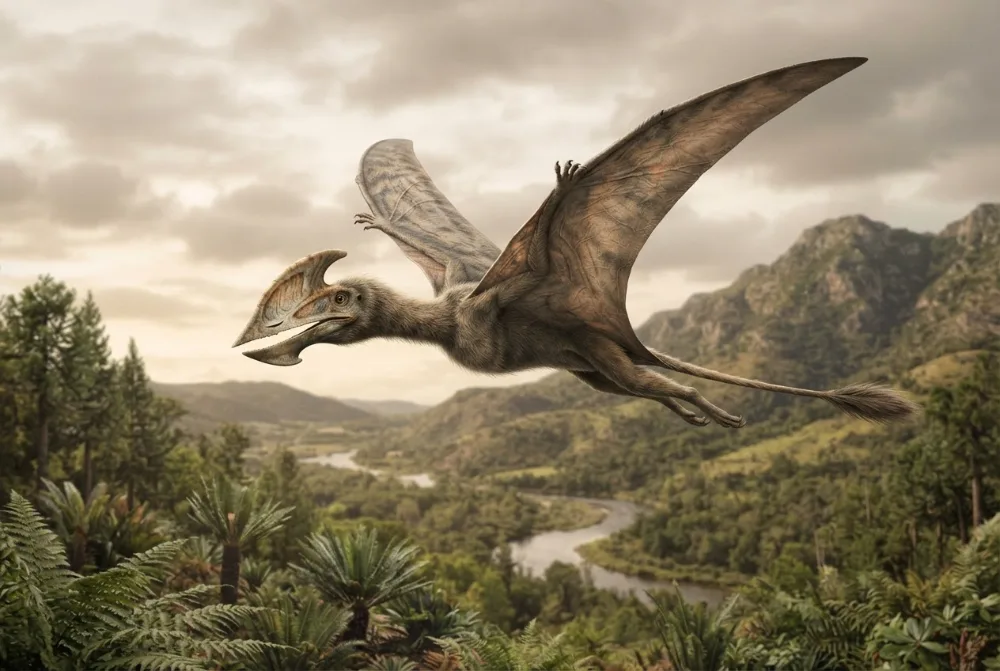
Europejara was a flying reptile with a big, bony crest on its chin that curved backwards. It lived in what is now Spain during the Early Cretaceous, about 130 to 125 million years ago. This pterosaur had no teeth and probably ate fruits and seeds.21
Ал качан жашаган?
Ал канчалык чоң болгон?
Анын канаттары канчалык кенен болгон?
 катар тизилген 2 велосипеддей кенен канаттар⚽бүтүн футбол талаасын 6 секундда учуп өтмөк
СЕН менен салыштырганда Europejara канчалык чоң болгон?
Браузериңдеги жөн гана математика. Эч нерсе сакталбайт жана эч жакка жөнөтүлбөйт.
Ал канчалык ылдам болгон?


Кызыктуу фактылар
Europejara is the oldest known toothless pterosaur, meaning it had no teeth at all.2
It was the first tapejarid pterosaur ever found in Europe. Before that, tapejarids were only known from China and Brazil.2
Europejara had a strange crest on its lower jaw that curved backwards, which is different from other tapejarids.2
Its wingspan was about 2 to 4 metres (6.6 to 13.1 feet), making it a medium-sized pterosaur.1
The only fossil found is a crushed skull and lower jaw, preserved in fine limestone from an ancient lake.2
Scientists think Europejara may have helped spread early flowering plants by eating their fruits and pooping out the seeds.2
Эң көп берилген суроолор: Europejara
?How big was Europejara?
It was a small to medium sized pterosaur. Its wingspan was about 2 to 4 metres (6.6 to 13.1 feet).1
?Did Europejara have teeth?
No, it had no teeth. It was the oldest known toothless pterosaur when it was discovered.12
Динозавр эксперттери үчүн
- Илимий аты
- Europejara
- Ат койгон
- Vullo et al. 20123
- Топ
- Учуучу сойлоочулар
- Үй-бүлө / клада
- Azhdarchoidea3
- Классификация
- Pterosauria > Pterodactyloidea3
- Тоо тектеринин жашы
- 126 … 121 миллион жыл (Barremian)3
- Тоо тектеринин катмарлары
- La Huérguina3
- Өлкөлөр
- Испания3
- Таш калдык табылгалары
- The Paleobiology Database боюнча 1 жазуу3
- Табылышы
- Europejara was named in 2012 by Romain Vullo and colleagues based on a skull found at Las Hoyas in Spain. The name means 'Europe's old being' and honors the ancient Olcades people.13
- Дагы эле талаштуу
- Scientists are not sure if Europejara was a fruit-eater or an omnivore that also ate insects and small animals. The evidence from its beak shape is not enough to be certain.2
Фактылар кайдан алынат
- Europejara (en.wikipedia.org)
- A New Crested Pterosaur from the Early Cretaceous of Spain: The First European Tapejarid (Pterodactyloidea: Azhdarchoidea) | PLOS One (journals.plos.org)
- Europejara in The Paleobiology Database (CC BY 4.0): жашы, жерлери, тоо тектеринин катмарлары, классификациясы.
Бул барактагы ар бир фактынын булагын көрсөткөн номери бар. Эгер бир нерсени туура эмес жазсак, кечирип кой, биз илимий журнал эмес, динозаврлардын күйөрмандарыбыз. [email protected] дарегине жаз, биз оңдоп коебуз.
 Рекс ачка! Dino Wiki бул динозаврларды жакшы көргөн уулу үчүн атасы жасаган долбоор, акысыз, жарнамасыз жана трекерсиз. Чоңдор сайт иштей бериши үчүн Рексти тойгуза алышат.Рексти тойгуз
 Pteranodon
 Quetzalcoatlus
 Dorygnathus
 Rhamphorhynchus
 Anhanguera
 Pterodactylus
 Stegosaurus
 Iguanodon
 Archaeopteryx
 Giganotosaurus
 Microraptor
 Deinonychus