 Сен кайсы динозаврсың? Тест
 Динозаврлар салгылашуусу
 Динозаврлар жарышы
 Динозавр мини-оюндары
 Стикер альбому
 Динозаврлардын ТОП тизмелери
 Мени таң калтыр!
Ал качан жашаган?

Ал канчалык чоң болгон?
Анын узундугу канча болгон?
Анын бойу канча болгон?
Ал канчалык оор болгон?
 тумшуктан куйрукка тизилген 6 иттей узун🍌катар тизилген 33 банандай узун🍉98 дарбыздай оор🧸26 бала бакча баласындай оор🎒15 окуучудай оор🏃100 метрди 6,4 секундда чуркап өтмөк (эң ылдам адамга 9,6 керек)
СЕН менен салыштырганда Gallimimus канчалык чоң болгон?
Браузериңдеги жөн гана математика. Эч нерсе сакталбайт жана эч жакка жөнөтүлбөйт.
Ал канчалык ылдам болгон?


Кызыктуу фактылар
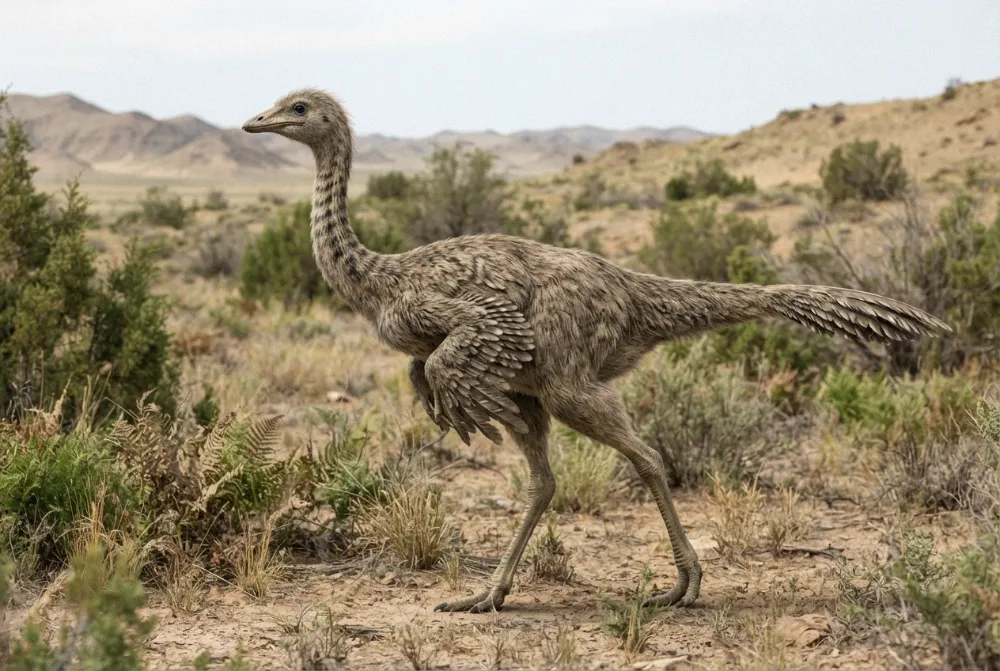
Gallimimus is the largest known ornithomimid, or ostrich dinosaur. Adults were about 6 meters (20 feet) long and weighed up to 490 kilograms (1,080 pounds).1
Its name means 'chicken mimic' because the bones in its neck look like those of chickens and other galliform birds.1
Gallimimus could run at speeds of 42 to 56 kilometers per hour (29 to 34 miles per hour), making it one of the fastest dinosaurs.1
Scientists think Gallimimus may have had feathers, like its relative Ornithomimus.1
Several Gallimimus skeletons were found together in a bone bed, which suggests they might have lived in groups.1
Gallimimus appeared in the movie Jurassic Park, running across a field in a famous scene that helped show dinosaurs as bird-like animals.1
Эң көп берилген суроолор: Gallimimus
?What did Gallimimus eat?
Gallimimus was probably an omnivore, eating both plants and small animals. It had a toothless beak and may have used it to filter food from water or to eat tough plants.21
?Did Gallimimus have feathers?
Yes, scientists are confident Gallimimus had feathers. There is no direct evidence on Gallimimus itself, but its close relative Ornithomimus had feathers, so it is highly likely.21
?How fast could Gallimimus run?
Gallimimus could run at speeds of 42 to 56 kilometers per hour (26 to 35 miles per hour). That is more than twice as fast as a fit human, but slower than a modern ostrich.21
?When did Gallimimus live?
Gallimimus lived during the Late Cretaceous period, about 70 million years ago.21
?Where was Gallimimus found?
Gallimimus fossils were found in the Gobi Desert of Mongolia. They were discovered by Polish-Mongolian expeditions in the 1960s.1
?How big was Gallimimus?
Gallimimus was about 6 meters (20 feet) long, 1.9 meters (6 feet) tall at the hip, and weighed around 400 to 490 kilograms (880 to 1,080 pounds). It was the largest known ornithomimid.21
Мифти талкалоочу
Миф: Gallimimus used its beak to filter small animals from water, like a flamingo.
Чындык: The ridges in its beak were more like those of plant-eating animals. Scientists now think Gallimimus was a herbivore that ate tough plants, not a filter-feeder.1
Динозавр эксперттери үчүн
- Илимий аты
- Gallimimus
- Ат койгон
- Osmólska et al. 19723
- Топ
- Төө куш динозаврлар
- Үй-бүлө / клада
- Ornithomimidae3
- Классификация
- Theropoda > Ornithomimosauria3
- Тоо тектеринин жашы
- 94 … 66 миллион жыл (Turonian / Maastrichtian)3
- Тоо тектеринин катмарлары
- Nemegt, Baruungoyot, Bissekty3
- Өлкөлөр
- Монголия, Өзбекстан3
- Таш калдык табылгалары
- The Paleobiology Database боюнча 30 жазуу3
- Табылышы
- Polish and Mongolian scientists found several Gallimimus skeletons in the Gobi Desert during the 1960s. The dinosaur was named Gallimimus bullatus in 1972 by Halszka Osmólska, Ewa Roniewicz, and Rinchen Barsbold.13
- Дагы эле талаштуу
- Scientists still debate what Gallimimus ate. Some think it was an omnivore that ate small animals and plants, while others believe it was mainly a plant-eater.1
Фактылар кайдан алынат
- Gallimimus (en.wikipedia.org)
- Gallimimus | Natural History Museum (nhm.ac.uk)
- Gallimimus in The Paleobiology Database (CC BY 4.0): жашы, жерлери, тоо тектеринин катмарлары, классификациясы.
Бул барактагы ар бир фактынын булагын көрсөткөн номери бар. Эгер бир нерсени туура эмес жазсак, кечирип кой, биз илимий журнал эмес, динозаврлардын күйөрмандарыбыз. [email protected] дарегине жаз, биз оңдоп коебуз.
 Рекс ачка! Dino Wiki бул динозаврларды жакшы көргөн уулу үчүн атасы жасаган долбоор, акысыз, жарнамасыз жана трекерсиз. Чоңдор сайт иштей бериши үчүн Рексти тойгуза алышат.Рексти тойгуз
 Ornithomimus
 Struthiomimus
 Deinocheirus
 Dromiceiomimus
 Archaeornithomimus
 Anserimimus
 Tyrannosaurus
 Triceratops
 Velociraptor
 Spinosaurus
 Ankylosaurus
 Parasaurolophus