 Сен кайсы динозаврсың? Тест
 Динозаврлар салгылашуусу
 Динозаврлар жарышы
 Динозавр мини-оюндары
 Стикер альбому
 Динозаврлардын ТОП тизмелери
 Мени таң калтыр!
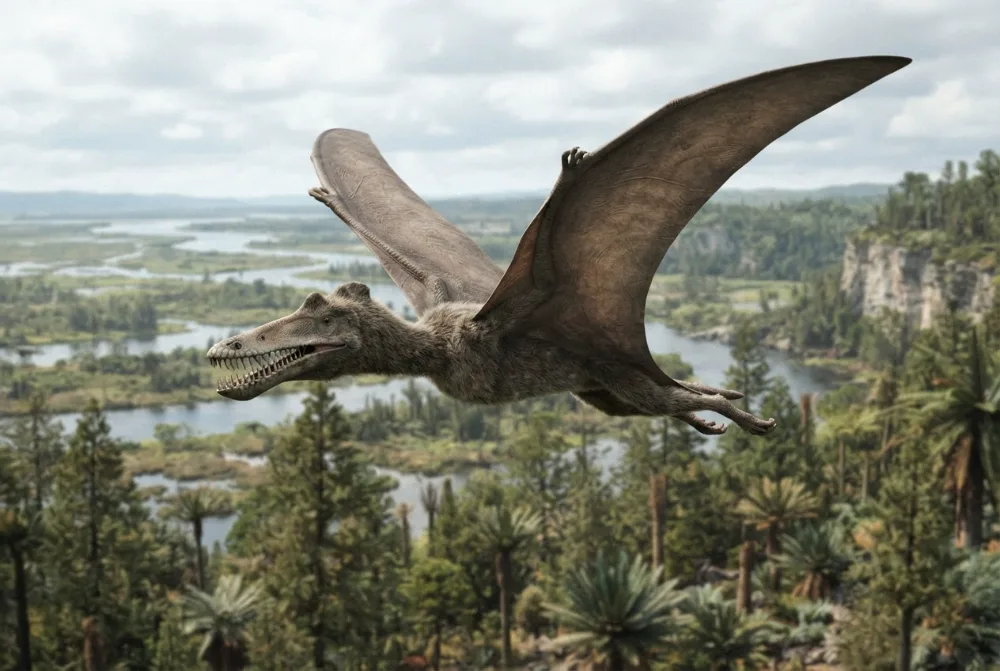
Istiodactylus
Istiodactylus was a flying reptile with a wide, blunt snout full of sharp, interlocking teeth. It lived about 120 million years ago and probably used its teeth like a cookie cutter to slice meat from big dead animals.12
Ал качан жашаган?
Ал канчалык чоң болгон?
Анын канаттары канчалык кенен болгон?
 катар тизилген 3 велосипеддей кенен канаттар⚽бүтүн футбол талаасын 5,5 секундда учуп өтмөк
СЕН менен салыштырганда Istiodactylus канчалык чоң болгон?
Браузериңдеги жөн гана математика. Эч нерсе сакталбайт жана эч жакка жөнөтүлбөйт.
Ал канчалык ылдам болгон?


Кызыктуу фактылар
Its skull was about 45 centimetres (18 inches) long and had a semicircle of 48 closely spaced, triangular teeth that interlocked to form a razor-edged outline.1
The lower jaw had a tooth-like projection that fit into the upper teeth, helping it bite cleanly.1
Some of its back vertebrae were fused into a structure called a notarium, which helped support its large wings.1
Its hindlimbs were very short, while its forelimbs and wing-finger were huge, making it a soaring specialist.1
For much of the 20th century, it was the only pterosaur known from three-dimensionally preserved fossils, giving scientists a rare look at pterosaur anatomy.12
Its teeth were unlike the long, curved fish-grabbing teeth of other pterosaurs, so scientists think it did not catch fish but instead scavenged.2
It lived in river and coastal environments in southern England, where the climate was warm, about 20 to 25 °C (68 to 77 °F).1
Эң көп берилген суроолор: Istiodactylus
?How big was Istiodactylus?
Its wingspan was about 4.3 to 5 metres. Its skull was about 45 centimetres long.12
?What did Istiodactylus eat?
It was a scavenger. It used its sharp, interlocking teeth like a cookie cutter to slice meat from dead animals.12
?Was Istiodactylus a dinosaur?
No, it was a pterosaur, a flying reptile that lived at the same time as dinosaurs but is not a dinosaur.1
?Could Istiodactylus fly?
Yes, it was a flying reptile with large wings. It may have been a soaring specialist, gliding long distances to find food.1
Мифти талкалоочу
Миф: Some people think Istiodactylus was a dinosaur because it lived with dinosaurs and had sharp teeth.
Чындык: Istiodactylus was a pterosaur, a flying reptile, not a dinosaur. Pterosaurs are a separate group of reptiles.1
Динозавр эксперттери үчүн
- Илимий аты
- Istiodactylus
- Ат койгон
- Howse et al. 20013
- Топ
- Учуучу сойлоочулар
- Үй-бүлө / клада
- Ornithocheiroidea3
- Классификация
- Pterosauria > Pterodactyloidea3
- Тоо тектеринин жашы
- 126 … 120 миллион жыл (Barremian / Aptian)3
- Тоо тектеринин катмарлары
- Wessex, Vectis, Yixian3
- Өлкөлөр
- Улуу Британия, Кытай3
- Таш калдык табылгалары
- The Paleobiology Database боюнча 6 жазуу3
- Табылышы
- The first fossil was found on the Isle of Wight in 1887, and in 1901 it was named Ornithodesmus latidens. In 2001, scientists moved it to its own genus, Istiodactylus.1
- Дагы эле талаштуу
- Scientists debate whether the Chinese species Istiodactylus sinensis really belongs to this genus or to a different one, and whether it is the same as another pterosaur called Longchengpterus.1
Фактылар кайдан алынат
- Istiodactylus (en.wikipedia.org)
- New Insights into the Skull of Istiodactylus latidens (Ornithocheiroidea, Pterodactyloidea) | PLOS One (journals.plos.org)
- Istiodactylus in The Paleobiology Database (CC BY 4.0): жашы, жерлери, тоо тектеринин катмарлары, классификациясы.
Бул барактагы ар бир фактынын булагын көрсөткөн номери бар. Эгер бир нерсени туура эмес жазсак, кечирип кой, биз илимий журнал эмес, динозаврлардын күйөрмандарыбыз. [email protected] дарегине жаз, биз оңдоп коебуз.
 Рекс ачка! Dino Wiki бул динозаврларды жакшы көргөн уулу үчүн атасы жасаган долбоор, акысыз, жарнамасыз жана трекерсиз. Чоңдор сайт иштей бериши үчүн Рексти тойгуза алышат.Рексти тойгуз
 Pteranodon
 Quetzalcoatlus
 Dorygnathus
 Rhamphorhynchus
 Anhanguera
 Pterodactylus
 Stegosaurus
 Iguanodon
 Archaeopteryx
 Giganotosaurus
 Microraptor
 Deinonychus