 Сен кайсы динозаврсың? Тест
 Динозаврлар салгылашуусу
 Динозаврлар жарышы
 Динозавр мини-оюндары
 Стикер альбому
 Динозаврлардын ТОП тизмелери
 Мени таң калтыр!
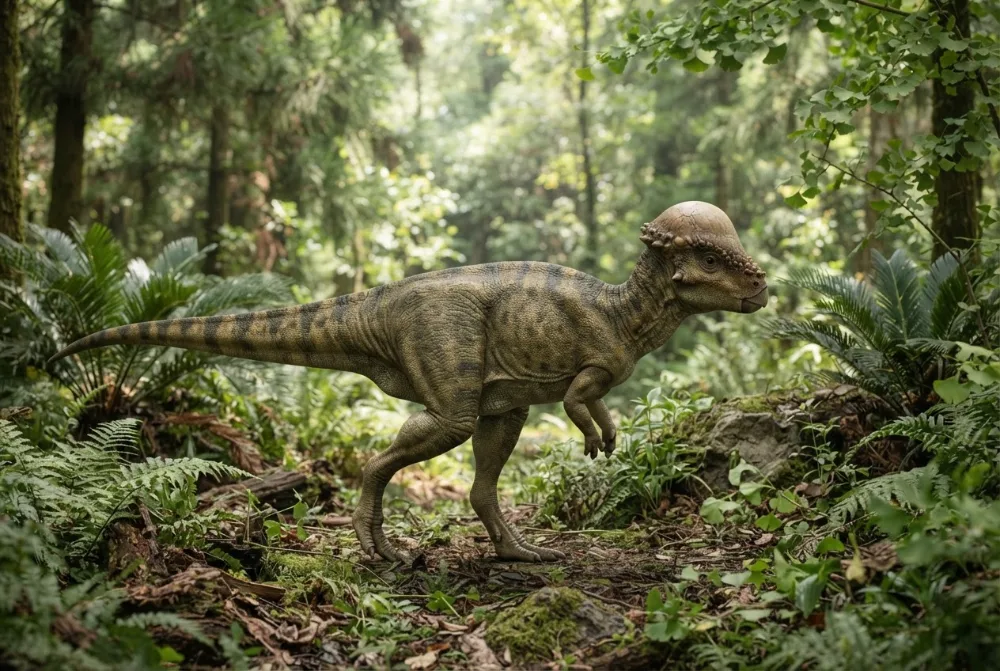
Sinocephale
Sinocephale was a small, dome-headed dinosaur that lived in what is now China. It walked on two legs and used its thick, bony skull to head-butt rivals. Only a piece of its skull has been found, but scientists think it was a plant-eater.15
Ал качан жашаган?
Ал канчалык чоң болгон?
Анын узундугу канча болгон?
Ал канчалык оор болгон?

 тумшуктан куйрукка тизилген 4 үй мышыгындай узун🍌катар тизилген 12 банандай узун12 үй мышыгындай оор🍉9 дарбыздай оор🧸2,5 бала бакча баласындай оор🎒1,5 окуучудай оор🏃100 метрди 8,2 секундда чуркап өтмөк (эң ылдам адамга 9,6 керек)
СЕН менен салыштырганда Sinocephale канчалык чоң болгон?
Браузериңдеги жөн гана математика. Эч нерсе сакталбайт жана эч жакка жөнөтүлбөйт.
Ал канчалык ылдам болгон?


Кызыктуу фактылар
Sinocephale is the first pachycephalosaurid dinosaur ever found outside of North America.2
Its skull had a heart-shaped outline when viewed from above, because the back edge was deeply curved inward.1
The only known fossil is a piece of the skull roof, called a parietal bone. The original was lost, but plaster casts were found and used for study.12
Sinocephale was originally named as a species of Troodon in 1953, then moved to Stegoceras, and finally got its own genus in 2021.1
It lived during the Late Cretaceous, about 83 to 66 million years ago, in a floodplain environment with rivers.51
Sinocephale is related to famous dome-headed dinosaurs like Pachycephalosaurus and Prenocephale.1
Эң көп берилген суроолор: Sinocephale
?How big was Sinocephale?
Nobody knows for sure, because only a piece of the skull roof has been found. The dome was about 7.5 centimetres (3 inches) thick, but the full body size is unknown.14
?Did Sinocephale have a heart-shaped skull?
Yes. The back edge of its skull was deeply curved inward, giving the skull a heart-shaped outline when seen from above.1
?When did Sinocephale live?
Sinocephale lived during the Late Cretaceous, about 83 to 66 million years ago, in what is now Inner Mongolia, China.1
?What did Sinocephale eat?
Scientists think it was a plant-eater, based on its dome-headed dinosaur relatives, though no teeth or jaws have been found.1
Мифти талкалоочу
Миф: Some people think Sinocephale was a theropod dinosaur like Troodon.
Чындык: Sinocephale is actually a pachycephalosaur, a dome-headed plant-eater, not a meat-eating theropod.1
Динозавр эксперттери үчүн
- Илимий аты
- Sinocephale
- Ат койгон
- Evans et al. 20215
- Топ
- Күмбөз баштуулар
- Үй-бүлө / клада
- Pachycephalosauridae5
- Классификация
- Ornithischia > Pachycephalosauria5
- Тоо тектеринин жашы
- 84 … 66 миллион жыл (Campanian / Maastrichtian)5
- Тоо тектеринин катмарлары
- Ulansuhai5
- Өлкөлөр
- Кытай5
- Таш калдык табылгалары
- The Paleobiology Database боюнча 1 жазуу5
- Табылышы
- The fossil was found in 1930 or 1931 by Swedish paleontologists in Inner Mongolia. It was named Troodon bexelli by Birger Bohlin in 1953, but later renamed Sinocephale bexelli in 2021.1
- Дагы эле талаштуу
- Scientists are not sure exactly how old the Ulansuhai Formation is, so the age of Sinocephale is still debated.1
Фактылар кайдан алынат
- Sinocephale (en.wikipedia.org)
- Description and revised diagnosis of Asia’s first recorded pachycephalosaurid, Sinocephale bexelli gen. nov., from the Upper Cretaceous of Inner Mongolia, China (web.archive.org)
- Sinocephale bexelli | Dinosaur Database by DinoAnimals.com (dinoanimals.com)
- Description and revised diagnosis of Asia’s first recorded pachycephalosaurid, Sinocephale bexelli gen. nov., from the Upper Cretaceous of Inner Mongolia, China (cdnsciencepub.com)
- Sinocephale in The Paleobiology Database (CC BY 4.0): жашы, жерлери, тоо тектеринин катмарлары, классификациясы.
Бул барактагы ар бир фактынын булагын көрсөткөн номери бар. Эгер бир нерсени туура эмес жазсак, кечирип кой, биз илимий журнал эмес, динозаврлардын күйөрмандарыбыз. [email protected] дарегине жаз, биз оңдоп коебуз.
 Рекс ачка! Dino Wiki бул динозаврларды жакшы көргөн уулу үчүн атасы жасаган долбоор, акысыз, жарнамасыз жана трекерсиз. Чоңдор сайт иштей бериши үчүн Рексти тойгуза алышат.Рексти тойгуз
 Pachycephalosaurus
 Stegoceras
 Prenocephale
 Sphaerotholus
 Foraminacephale
 Brontotholus
 Tyrannosaurus
 Triceratops
 Velociraptor
 Spinosaurus
 Ankylosaurus
 Parasaurolophus